 WhatsApp: +86 16626708626
 Email:
  Phone: +86 16626708626
Description
In industrial automation systems integrating CNC machinery, robotics, or legacy Fanuc equipment with broader PLC control, achieving fast, deterministic exchange of I/O data between a central controller and distributed slave devices can be challenging. Long cable runs, noise interference, or mismatched protocols often result in latency, data loss, or complex wiring that complicates expansions and increases downtime risk in process control environments. This is especially true when connecting Series 90-30 PLCs to Fanuc-specific field devices without resorting to multiple converters or custom interfacing. The GE IC693BEM321 addresses these issues directly as a dedicated I/O Link Master Module, enabling high-speed serial communication on the proprietary Fanuc I/O LINK for reliable transfer of up to 1024 discrete inputs and outputs across up to 16 slaves.
Engineers rely on the GE IC693BEM321 in situations demanding tight integration with Fanuc ecosystems, such as machine tool automation, robotic cells, or hybrid manufacturing lines where modular I/O expansion must maintain low latency and high reliability for signals. It supports seamless data exchange in noisy industrial settings, ensuring system stability without the overhead of broader fieldbus adaptations. Common applications include extending control reach from a 90-30 rack to remote operator panels, connection units, or additional PLCs acting as slaves, prioritizing deterministic performance and fault isolation. By handling high-speed I/O transfers natively, the GE IC693BEM321 reduces engineering overhead for protocol translation, making it essential for industrial automation setups focused on precision coordination, modular integration, and long-term signal integrity in Fanuc-compatible process control.
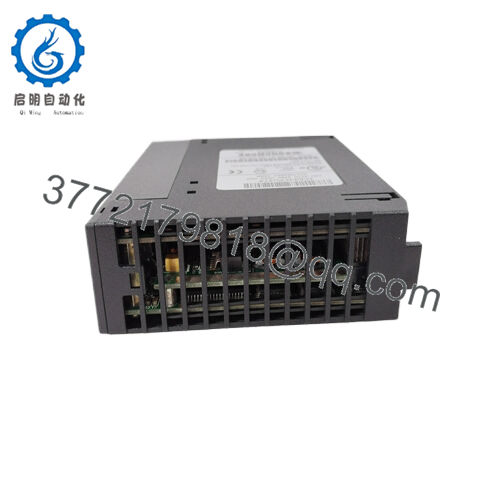
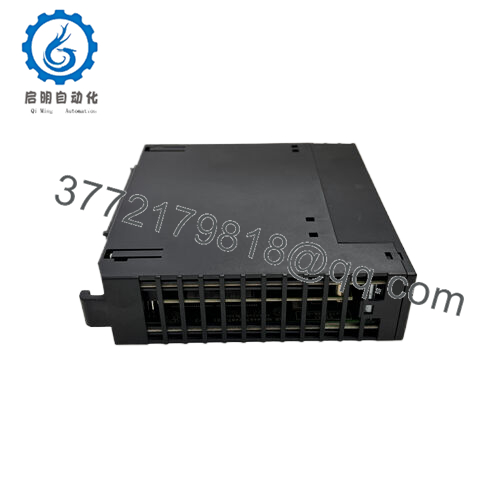
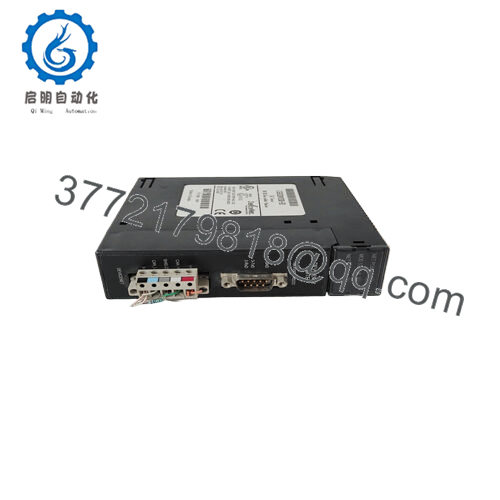
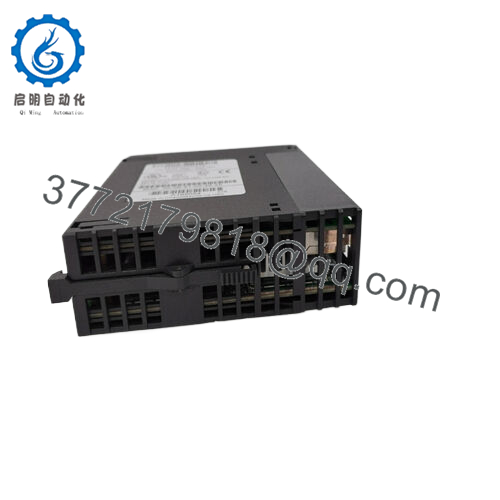
The GE IC693BEM321 functions as the master interface in a Fanuc I/O LINK network, installed in any I/O slot of a Series 90-30 backplane and connecting via a serial port to slave devices. It polls slaves cyclically, collecting up to 1024 discrete inputs while distributing 1024 discrete outputs, with data mapped directly to the PLC’s %I and %Q references for straightforward logic use.
Within the automation stack, the GE IC693BEM321 occupies the specialized communication layer, bridging the 90-30 CPU to proprietary Fanuc slaves like additional PLCs, operator interfaces, or I/O blocks. Configuration is performed using Proficy Machine Edition software or a handheld programmer, defining slave addresses and I/O mappings without complex protocol stacks. The module supports daisy-chain or branched topologies over shielded twisted-pair cabling, providing noise immunity suitable for machine-level installations.
Diagnostics include basic LED status for module health and link activity, with fault details reported to the CPU for logging. Multiple GE IC693BEM321 modules can coexist in one rack for independent links, allowing segmented networks. This positioning complements standard I/O architecture, fitting legacy migrations or targeted expansions where Fanuc compatibility is key, while maintaining backplane integration for efficient data flow.

- IC693BEM321
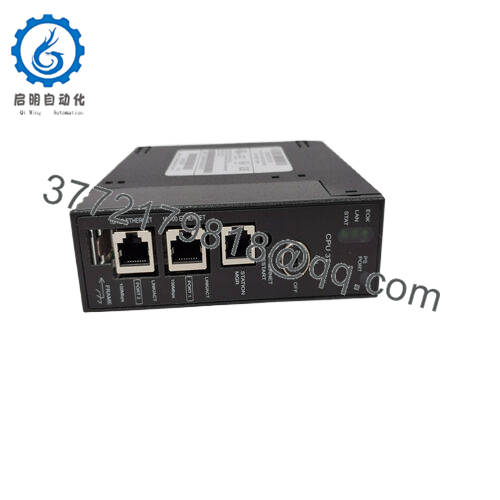
- IC693BEM321
| Specification | Details |
|---|---|
| Model Number | IC693BEM321 |
| Brand | GE (Emerson) |
| Type | I/O Link Master Module |
| Input Voltage | 5V DC (Backplane) |
| Operating Temp Range | 0°C to 60°C |
| Mounting Style | Series 90-30 Rack Slot |
| Dimensions | Standard 90-30 Module (Approx. 130 x 50 x 130 mm) |
| Weight | Approx. 0.5 kg |
| Interface/Bus | Fanuc I/O LINK Serial (1 Port) |
| Compliance | CE, RoHS |
| Supported Protocols | Proprietary Fanuc I/O LINK |
| Typical Power Draw | Approx. 400 mA @ 5V DC |
Choosing the GE IC693BEM321 delivers a component engineered for robust performance in machine-centric environments, where high-speed discrete I/O exchange ensures precise synchronization and minimal latency over the link. Its dedicated design maintains data integrity across extended runs, supporting long-term reliability even with vibration or electrical noise typical of factory floors.
In operation, the deterministic polling and fixed I/O mapping reduce engineering overhead during setup and scaling, allowing quick additions of slaves without reconfiguring broader networks. Fault reporting through the PLC simplifies diagnostics, enabling faster resolution and higher uptime compared to general-purpose interfaces.
Overall, the GE IC693BEM321 provides value by facilitating seamless Fanuc integration into 90-30 systems, offering performance consistency that extends equipment life and eases maintenance in modular setups.
The GE IC693BEM321 is commonly deployed in CNC machine tool applications, interfacing Series 90-30 controllers with Fanuc robots or auxiliary I/O for coordinated motion and discrete signaling in harsh, high-vibration conditions demanding critical system uptime.
In automotive assembly cells, it connects PLC logic to operator panels and remote connection units, supporting fast data cycles for real-time status and control amid EMI challenges. Material handling systems in manufacturing also utilize it for linking distributed slaves in process control environments requiring deterministic response over dedicated serial links.
These setups highlight the GE IC693BEM321‘s role in power plants or similar high-reliability scenarios adapted to machine automation.
IC693BEM320 – Companion I/O Link Slave/Interface module for remote drops
IC694BEM320 – RX3i-series I/O Link Interface for platform upgrades
IC694BEM321 – RX3i I/O Link Master equivalent
IC693BEM331 – Genius Bus Controller for broader distributed I/O networks
IC694BEM331 – RX3i Genius Bus Controller migration path
IC693BEM340 – FIP Bus Controller alternative for fieldbus integration
IC693CMM321 – Ethernet interface for modern network expansions
Before installing the GE IC693BEM321, verify an available slot in your 90-30 baseplate and confirm CPU firmware supports the module—most versions do, but check release notes. Plan serial cabling with shielded twisted pair, ensuring proper termination and length limits for your slave count.
Seat the module securely, then configure slave addresses and I/O sizes via software, mapping references carefully to avoid overlaps. For maintenance, monitor the OK and link LEDs for steady operation, and review CPU fault tables periodically for any communication errors. Inspect serial connectors yearly for secure fit in dusty or vibrating locations, and keep spare cables handy.
Functional tests, such as verifying data exchange with a single slave, confirm link integrity during scheduled checks. Hot-swap is supported in powered racks with caution to prevent signal glitches.