 WhatsApp: +86 16626708626
 Email:
  Phone: +86 16626708626
Description
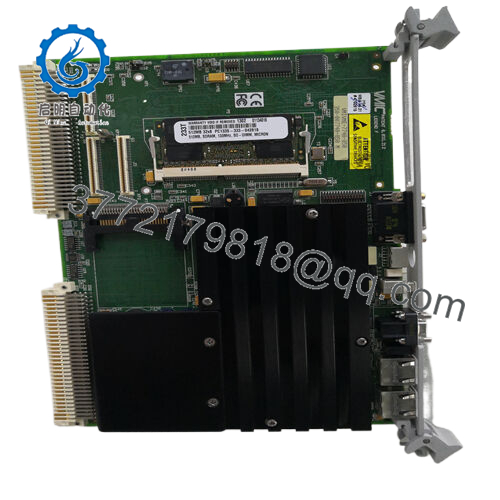
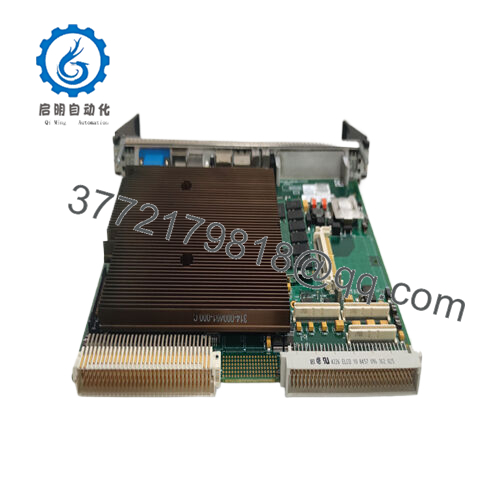
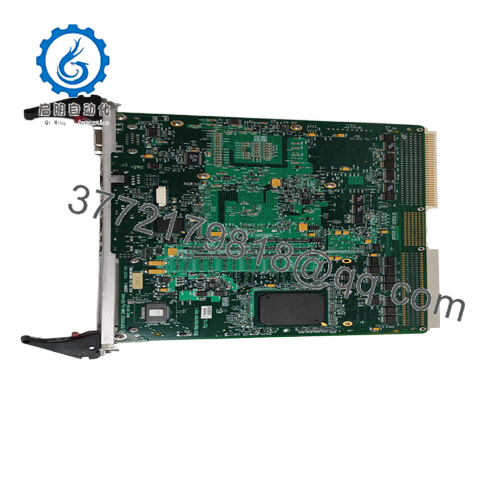
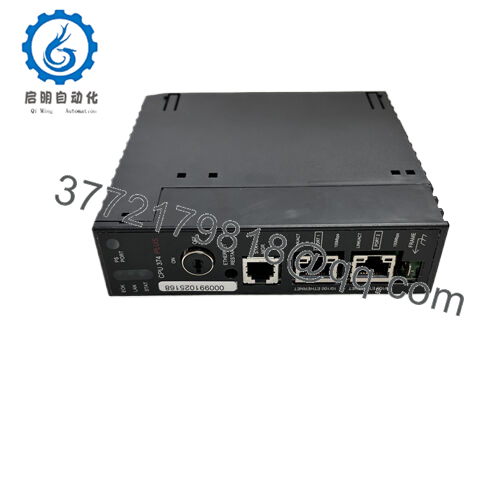
In industrial automation and process control environments, engineers often grapple with the limitations of lower-end PLC CPUs that struggle under heavier logic loads, larger I/O counts, or the need for advanced math operations, resulting in slower scan times, restricted program complexity, and challenges integrating custom communication or floating-point calculations. Legacy systems may also lack sufficient built-in serial ports for direct HMI/SCADA connectivity without add-on modules, increasing hardware costs and cabinet space requirements. This becomes critical during system expansions, retrofits of older relay-based controls, or applications demanding deterministic performance with moderate to high I/O density while maintaining cost efficiency. The GE IC693CPU351-GN addresses these needs as a robust, single-slot CPU module from GE Fanuc’s Series 90-30 PLC platform, featuring an 80386EX processor for enhanced throughput and support for floating-point math in complex control algorithms. Engineers frequently select the GE IC693CPU351-GN for upgrading from basic CPUs like the 311/313 series, where faster execution and expanded memory are required without migrating to entirely new platforms. Its three built-in serial ports enable direct integration with operator interfaces or Modbus devices, reducing reliance on expansion modules in distributed process control setups. In environments prioritizing high reliability for discrete and analog I/O signal handling, the GE IC693CPU351-GN delivers consistent performance, supporting up to 240KB of configurable user memory and built-in diagnostics for quicker fault isolation in industrial automation.
The GE IC693CPU351-GN functions as the central processor in the Series 90-30 architecture, residing in the CPU slot of a 5- or 10-slot baseplate where it communicates over the backplane with discrete, analog, and specialty I/O modules. It executes user logic programmed in ladder, instruction list, or C, scanning boolean and word operations at 0.22 ms per 1K of logic while managing timers, counters, and PID loops. In a typical system, it oversees up to eight racks (one CPU base plus seven expansion/remote) via parallel backplane bus, handling real-time data exchange without additional bus controllers for basic Genius I/O networks. The module supports override capabilities, run-time diagnostics, and configurable memory allocation, allowing flexible partitioning between registers, analogs, and program storage. Its three serial ports— one on the power supply connector plus two on the front—provide native SNP/SNP-X and Modbus RTU slave/master functionality, positioning it ideally for standalone or networked control without Ethernet (though add-on modules can extend to Genius or Profibus). When paired with PCM or CMM option modules, the GE IC693CPU351-GN enables advanced communication or custom protocols, fitting seamlessly into the broader automation stack alongside HMIs or higher-level controllers.

- IC693CPU351-GN
| Specification | Details |
|---|---|
| Model Number | GE IC693CPU351-GN |
| Brand | GE Fanuc (Emerson) |
| Type | Single-Slot CPU Module |
| Input Voltage | 5V DC (from baseplate power supply) |
| Operating Temp Range | 0°C to +60°C |
| Mounting Style | Baseplate slot (CPU position) |
| Dimensions | Standard Series 90-30 module (approx. 130 mm x 50 mm x 140 mm) |
| Weight | Approx. 0.5 kg |
| Interface/Bus | Backplane + 3 serial ports (RS-232/RS-485) |
| Compliance | UL, cUL, CE |
| Supported Protocols | SNP/SNP-X, Modbus RTU (slave/master), CCM |
| Typical Power Draw | 890 mA at 5V DC |
Deploying the GE IC693CPU351-GN gives you a CPU engineered for long-term performance in moderate-complexity applications, where the 25 MHz 80386EX processor ensures responsive execution even with floating-point operations or extensive register usage, minimizing cycle time variations that could affect process stability. This reliability translates to fewer nuisance faults and better handling of transient loads in control loops, while the ample memory allocation reduces the need for frequent program optimizations. Integration benefits from its drop-in compatibility with existing Series 90-30 racks and wiring, cutting engineering overhead during upgrades—you retain your I/O investment without rewiring terminals.
Overall, the GE IC693CPU351-GN provides value through consistent scan performance and diagnostic depth, supporting proactive maintenance that keeps downtime low. Its serial connectivity promotes straightforward commissioning of HMIs or data loggers, enhancing operational visibility without complex networking setups.
The GE IC693CPU351-GN is widely used in process control environments requiring critical system uptime, such as water/wastewater plants managing pump sequencing and level control under continuous operation, or food processing lines coordinating conveyors and batching in humid conditions. In discrete manufacturing like packaging or assembly facilities, it handles fast discrete I/O cycles and alarm management amid vibration and dust. These setups often involve legacy integrations in material handling or small-scale power distribution, leveraging the GE IC693CPU351-GN for reliable execution in harsh settings with high reliability demands.
IC693CPU350 – Lower-cost base model with similar architecture but reduced memory
IC693CPU360 – Step-up with 240KB memory and built-in Ethernet option
IC693CPU363 – Enhanced version supporting embedded Ethernet
IC693CPU364 – Higher-performance CPU with integrated Ethernet and faster processing
IC693CPU374 – Modern RX3i-compatible upgrade path with dual Ethernet
IC693CPU352 – Related higher-end model with additional features (discontinued)
IC693CMM321 – Ethernet add-on module for network connectivity
Before inserting the GE IC693CPU351-GN, confirm your baseplate power supply rating supports the current draw and that rack configuration aligns with expansion limits—verify no conflicting option modules occupy required slots. Check battery status on the power supply for retentive memory protection and ensure firmware compatibility with your programming software version. Prepare serial cables with proper termination if using built-in ports. For maintenance, periodically monitor front-panel LEDs for run/stop/fault indications during rounds, and test communication ports annually by forcing data exchanges. Inspect connectors for corrosion in humid environments, and backup program/firmware via serial transfer before major outages—simple tools like a laptop suffice for most diagnostics.