 WhatsApp: +86 16626708626
 Email:
  Phone: +86 16626708626
Description
Many products have not yet been launched, please contact us for more product information.
We have 16 shared warehouses worldwide, so please understand that sometimes it may take several hours to accurately respond to you. Of course, we will reply to your question as soon as possible.
In large industrial automation and process control systems using GE Fanuc Series 90-70 PLCs, expanding beyond a single rack’s slot capacity is a frequent necessity—whether for additional I/O density, distributed field devices, or accommodating more modules in complex applications like turbine control, material handling, or batch processing. Standard racks limit you to around 16-18 slots (depending on chassis), but when your I/O count, specialty cards, or redundancy needs exceed that, splitting into multiple racks introduces challenges: maintaining high-speed, deterministic communication without data corruption, minimizing cable length restrictions, and ensuring seamless backplane continuity across racks. Without proper expansion hardware, you risk slower scan times, signal integrity issues over distance, or incompatible interfaces that complicate wiring and diagnostics.
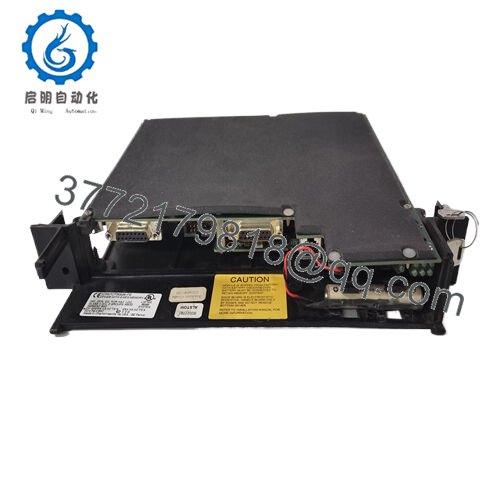
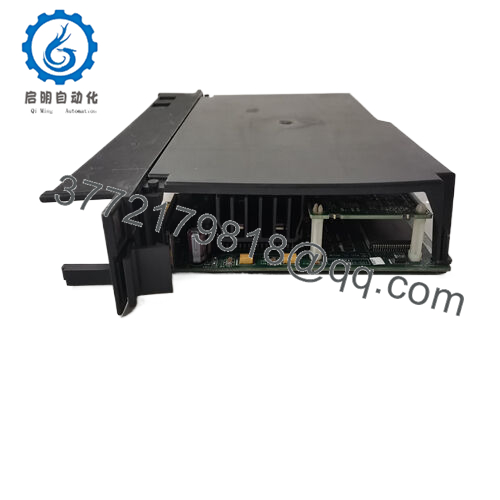
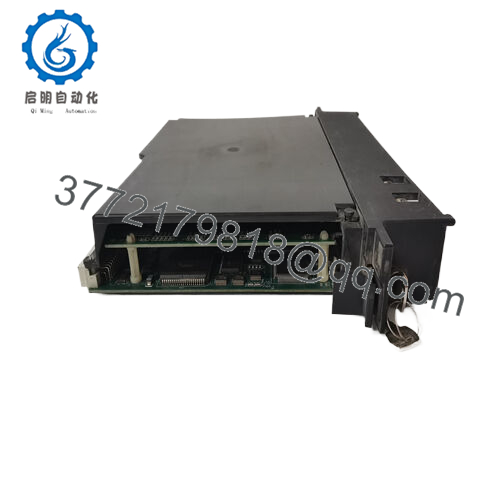
GE IC697BEM712 serves as a specialized bus expansion or interface module in the Series 90-70 family, commonly associated with rack-level connectivity solutions—often appearing in bundled rack-with-power-supply configurations. It facilitates reliable extension of the parallel backplane bus to additional racks, enabling up to several expansion chassis (typically paired with related modules like bus transmitters or receivers) while preserving fast data exchange and system coherence. This becomes critical in setups where high reliability is required across physically separated racks, such as in large control panels, multi-bay cabinets, or when retrofitting older systems to add capacity without migrating to newer platforms. By supporting controlled-distance parallel bus linking, GE IC697BEM712 helps avoid the latency or complexity of fieldbus alternatives in legacy environments, reducing engineering rework and ensuring system stability in demanding process control applications.
GE IC697BEM712 acts as a bus expansion component within the GE Fanuc Series 90-70 architecture, typically installed in a dedicated slot to bridge the main CPU rack to one or more expansion racks via parallel bus cabling. It handles high-speed data transfer between racks, maintaining compatibility with the VME-style backplane for consistent I/O scanning and CPU access. Often seen in complete rack assemblies that include power supplies, it connects via dual connectors (commonly 25-pin D-shell types) to upstream (CPU-side) and downstream (expansion-side) cables, supporting daisy-chaining or direct links with limited total length to preserve signal integrity.
In the automation stack, GE IC697BEM712 sits at the rack interconnection level, extending the local parallel bus beyond a single chassis—pairing conceptually with modules like IC697BEM711 (Bus Receiver) or IC697BEM713 (Bus Transmitter) to form multi-rack systems. It enables deterministic communication at rates around 500 Kbytes/sec (typical for family), with diagnostics limited to basic status indicators rather than advanced fault reporting. While not a Genius or fieldbus controller itself, it supports local expansion topologies where racks are co-located or within short cable runs (e.g., up to 50 feet total in related configs). This positions GE IC697BEM712 as a foundational piece for scalable Series 90-70 deployments, especially in centralized control setups where Ethernet or remote I/O protocols aren’t yet implemented.
Technical Highlights Summary
| Specification | Details |
|---|---|
| Model Number | IC697BEM712 |
| Brand | GE Fanuc (now Emerson) |
| Type | Bus Expansion / Interface Module (often in rack bundles) |
| Input Voltage | +5 V DC (backplane powered, typical for series) |
| Operating Temp Range | 0°C to 60°C (standard Series 90-70) |
| Mounting Style | Series 90-70 rack slot |
| Dimensions | Standard Series 90-70 single-slot size (approx. 145 x 34 x 140 mm) |
| Weight | Approx. 0.5–1 kg (module or bundled) |
| Interface/Bus | Parallel backplane expansion (25-pin D-shell connectors typical) |
| Compliance | CE, industrial standards (per Series 90-70) |
| Supported Protocols | Series 90-70 parallel bus (no fieldbus native) |
| Typical Power Draw | ~800 mA at +5 V (aligned with similar modules like BEM711) |

- IC697BEM712
Real-World Benefits
GE IC697BEM712 provides practical advantages in maintaining legacy Series 90-70 system viability without full replacement. Its role in enabling multi-rack expansion delivers more I/O and module capacity in a familiar architecture, avoiding the cost and downtime of platform migrations while supporting incremental upgrades. The parallel bus approach ensures low-latency data flow between racks, critical for applications needing synchronized discrete/analog control across distributed points—reducing scan time variability and improving response in time-sensitive processes.
Operators and maintainers benefit from the module’s simplicity: no complex configuration beyond proper cabling and slot placement, with status visible through rack LEDs or basic diagnostics. In harsh industrial settings, its rugged design contributes to high reliability over decades, minimizing unexpected failures in vibration-prone or electrically noisy environments. Overall, GE IC697BEM712 reduces engineering overhead for expansions, preserves installed base investments, and supports continuous uptime by keeping control logic centralized yet physically scalable—engineered for long-term performance in aging but still-critical systems.
Typical Use Cases
GE IC697BEM712 appears frequently in Series 90-70 installations requiring expanded rack capacity, such as large-scale manufacturing, power utilities, or process plants. In metals processing, pulp & paper, or automotive facilities, it’s used to extend racks for additional discrete I/O handling conveyors, motors, and safety interlocks—ensuring critical system uptime where a single rack can’t accommodate all points.
Legacy turbine or boiler control systems in power generation leverage it for multi-rack setups monitoring sensors and actuators across plant areas, maintaining deterministic performance under harsh conditions like heat and electrical interference. In water/wastewater or chemical batching, GE IC697BEM712 supports distributed I/O in control rooms or remote panels, handling mixed analog/digital signals with fast cycles for pump/valve sequencing and alarm response—delivering reliable process control without introducing fieldbus complexity in older architectures.
Compatible or Alternative Products
- IC697BEM711 – Bus Receiver Module (BRM) for downstream expansion racks, pairs closely with transmitters for multi-rack parallel bus.
- IC697BEM713 – Bus Transmitter Module (BTM) for upstream connection from CPU rack to enable local expansion (up to 50 ft total cable).
- IC697BEM731 – Genius Bus Controller for remote I/O drops over Genius network (alternative for longer-distance expansion).
- IC697PWR711 – Common 90-70 power supply often bundled in racks with IC697BEM712.
- IC697CHS782 – 17-slot rack chassis that hosts IC697BEM712 and other modules.
- IC697CPU772 – High-performance CPU that benefits from expanded racks via IC697BEM712.
- IC697BEM741 – FIP Bus Controller for fieldbus-based remote I/O (upgrade path from parallel expansion).
- IC697ACC701 – Accessories like cables or terminators for bus expansion setups.
Setup Notes & Maintenance Insights
Prior to installing GE IC697BEM712, verify compatibility with your Series 90-70 rack (e.g., IC697CHS782/783) and confirm firmware levels on the CPU and related modules—use Logicmaster 90-70 software for configuration checks. Ensure proper cabling: use shielded, specified parallel bus cables (typically 25-pin), route away from power lines to minimize noise, and respect maximum lengths (around 50 ft total in family configs). Ground shields correctly and test continuity before powering up.
During commissioning, power the system incrementally, monitor LEDs for bus status, and verify I/O response across racks via forced outputs/inputs in programming software. For ongoing maintenance, inspect connectors and cables semiannually for wear, corrosion, or loose pins—especially in vibrating environments. Clean dust from module vents if needed. Check status indicators regularly for faults; log any bus errors in the CPU fault table. Annual functional tests (simulate rack-to-rack data transfer) help confirm integrity. The module is passive/firmware-stable, so updates are rare, but coordinate with CPU firmware if upgrading the system.