 WhatsApp: +86 16626708626
 Email:
  Phone: +86 16626708626
Description
Real-World Use & Application Scenarios
In sprawling manufacturing plants where a single PLC rack just can’t handle the growing demand for I/O points or specialized modules, engineers turn to expansion solutions to keep operations humming without downtime. Picture a busy automotive assembly line in the Midwest, coordinating hundreds of sensors and actuators across multiple cabinets—GE IC697BEM713F steps in as the critical link, enabling seamless rack-to-rack communication over reliable bus lines. This module shines in industrial automation setups like chemical processing facilities, where safety demands precise control over distant valves and motors, or in water treatment plants managing expansive pump arrays amid harsh, dusty conditions.
The real challenge these environments face? Limited rack space forcing tough trade-offs between core CPU functions and peripheral gear. GE IC697BEM713F tackles this head-on by transmitting high-speed data—up to 500 Kbytes/sec—between the main CPU rack and up to seven remote expansion racks, each up to 50 feet away via parallel cabling. It supports key tasks like real-time polling of discrete inputs, analog signals, and high-speed interrupts, ensuring synchronized responses in control systems that can’t afford latency. Maintenance teams appreciate its status LEDs for quick diagnostics during shift changes, flagging issues like port failures before they cascade. Whether scaling a packaging line to add vision systems or retrofitting an oil refinery’s monitoring grid, this Bus Transmitter Module (BTM) delivers the backbone for robust, expandable architectures. Integrators value how it integrates into legacy upgrades, bridging older Series 90-70 PLCs with modern demands without full system overhauls.
Product Introduction & Positioning
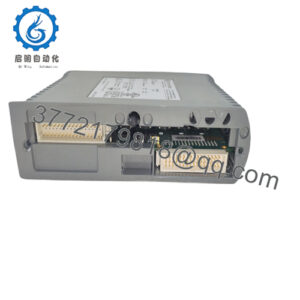
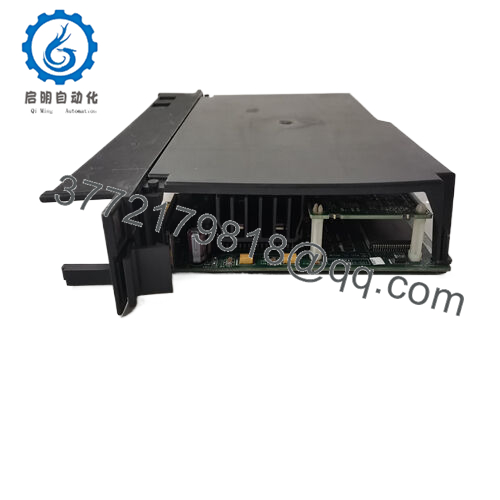
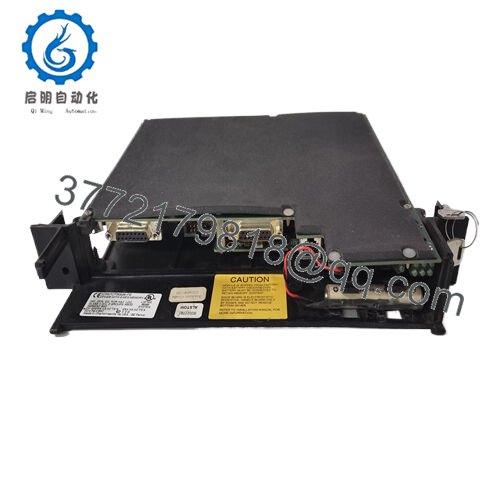
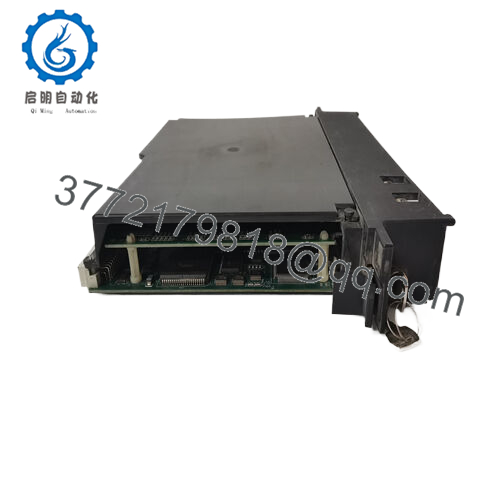
At its core, the GE IC697BEM713F is a Bus Transmitter Module designed exclusively for GE Fanuc’s Series 90-70 PLC platform, acting as the high-performance bridge for system expansion. It mounts in the main CPU rack (never slot 1, always right of interrupt modules) and connects via a dedicated parallel bus to remote Bus Receiver Modules, polling and managing data across extended setups. This positions it perfectly within larger control system architectures, where the CPU handles logic execution while the GE IC697BEM713F offloads rack expansion duties, supporting everything from discrete I/O to specialty cards without bottlenecking throughput.
What sets it apart for engineers? Its plug-and-play configuration—no DIP switches needed—means faster commissioning, and the dual ports (programmer and expansion) enable parallel programming alongside live operations. Valuable for system integrators upgrading brownfield sites, it ensures compatibility with Series 90-70‘s VMEbus backplane, handling 1.4A current draw while maintaining rock-solid stability. In a world of modular PLCs, this BTM isn’t just additive; it’s transformative, letting teams scale to 512+ I/O points or beyond with minimal rewiring. Bold reliability meets practical expandability, making GE IC697BEM713F a go-to for mission-critical deployments.

- IC697BEM713F
Key Technical Features & Functional Benefits
Engineers swear by the GE IC697BEM713F‘s blistering 500 Kbytes/sec data rate, which keeps expansion racks in perfect sync even under heavy polling loads—think coordinating 32K memory CPUs like the IC697CPU731 across a 50-foot cable run without signal degradation. Its three status LEDs deliver at-a-glance intel: MODULE OK confirms configuration and polling success, Programmer Port Enabled blinks during active comms, and Expansion Port Enabled tracks bus health, slashing troubleshooting time on the plant floor.
Built for the grit of industrial automation, this single-slot module boasts rugged VME-compatible design, drawing just 1.4A from the 5V backplane while shrugging off vibrations common in steel mills or conveyor-heavy warehouses. No fragile components here; thermal management and error-tolerant protocols ensure years of uptime, with the parallel interface rejecting noise better than serial alternatives. Compatibility extends to full Series 90-70 ecosystems, pairing effortlessly with power supplies like IC697PWR748 or I/O modules such as IC697MDL240.
Reliability isn’t hype—built-in diagnostics catch port faults early, and hot-swappable prep (power off first, of course) minimizes outages. For integrators, the lack of switches simplifies firmware loads via the programmer port, while expansion supports seven racks deep. In short, GE IC697BEM713F turns potential weak points into strengths, delivering speed, durability, and seamless integration that pays dividends in reduced engineering hours.
Detailed Technical Specifications
| Parameter | Value |
|---|---|
| Model | GE IC697BEM713F |
| Brand | GE Fanuc (Series 90-70) |
| Type | Bus Transmitter Module (BTM) |
| Power Supply | 5V DC (backplane), 1.4A max |
| Operating Temperature | 0°C to 60°C |
| Mounting | Single slot, CPU rack (not slot 1) |
| Dimensions | 3.8 x 29.2 x 22.9 cm |
| Weight | 0.4 kg |
| Interfaces | Programmer port, Expansion bus (parallel) |
| Certifications | UL, CE (industrial) |
| Cooling | Passive (convection) |
| Environmental Rating | IP20 (rack-mounted) |
| Data Rate | 500 Kbytes/sec |
| Max Cable Distance | 50 feet |
Related Modules or Compatible Units
IC697BEM711 – Fiber optic version for longer distances in noisy environments.
IC697RCM711 – Redundancy comms module for hot standby CPU setups.
IC697PWR748 – Matching 48VDC power supply for main racks.
IC697MDL240 – 120VAC discrete input module often expanded via BTM.
IC697CPU731 – Standard simplex CPU that pairs with GE IC697BEM713F for logic core.
IC697CMM711 – Serial coprocessor for added protocol support in expansions.
IC697BEM764 – VME-compatible BTM variant for third-party board integration.
Installation Notes & Maintenance Best Practices
Power down the entire rack before sliding the GE IC697BEM713F into place—position it right of any interrupt modules to avoid bus conflicts, and ensure 1U clearance above for airflow in crowded cabinets. Ground the chassis properly to shield against EMI from nearby drives, and verify cable specs: shielded twisted-pair, no longer than 50 feet, terminated at the receiver end. Reference the Series 90-70 programmer manual for rack addressing; missteps here can lock out expansion polling. Test comms incrementally—first programmer port, then expansion—using the LEDs as your guidepost.
Ongoing care keeps it humming: quarterly visual checks for dust buildup or loose terminations, especially in high-vibration spots like forging lines. Run diagnostics via the CPU software during planned outages, watching for flickering LEDs that signal cable wear or firmware drift—update to the latest Series 90-70 release annually for security patches. No field-serviceable parts inside, but signal integrity tests with a scope every six months catch degradation early. Integrators note that proactive log reviews via SNP protocol spot intermittent faults before they sideline a rack.