 WhatsApp: +86 16626708626
 Email:
  Phone: +86 16626708626
Description
In distributed industrial automation and process control systems, managing remote I/O points over long distances while preserving deterministic performance and fault tolerance poses ongoing difficulties, especially in expansive facilities where centralized rack-based I/O becomes impractical due to cabling costs, signal degradation, or environmental constraints. Reliance on proprietary fieldbuses or Ethernet can introduce complexity in legacy setups, higher latency, or vulnerability to network disruptions, impacting high reliability and real-time responsiveness.
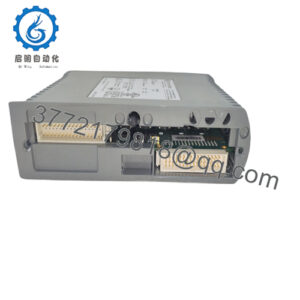
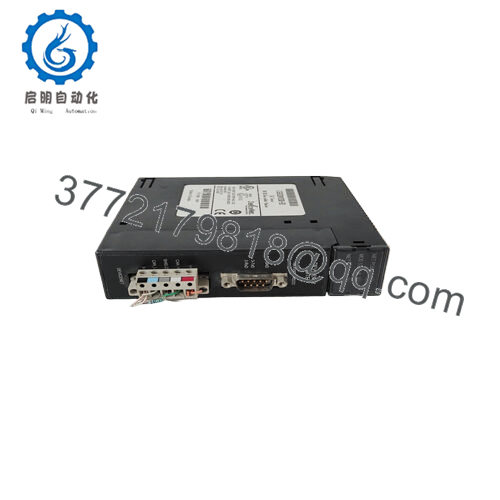
The GE IC697BEM731T tackles this head-on as a single-channel Genius Bus Controller in the GE Series 90-70 PLC platform, providing robust, noise-immune serial communication to up to 30 remote Genius I/O blocks or devices. It becomes indispensable in scenarios demanding distributed I/O signals across harsh or spread-out areas, such as extending control beyond the main rack without migrating to newer networks. Engineers often deploy the GE IC697BEM731T during system expansions, modernizing older Genius installations, or building resilient architectures that prioritize critical system uptime in industrial automation. Its token-passing protocol ensures predictable scan times and automatic fault reporting, avoiding the unpredictability of collision-based networks.
By enabling seamless integration of remote drops with the core PLC, this controller supports objectives like reduced wiring runs, enhanced diagnostics, and scalable growth in process control environments, delivering consistent data exchange even over thousands of feet of cable.
The GE IC697BEM731T operates as the interface master on a Genius serial bus within the Series 90-70 architecture, residing in a standard VME rack slot and coordinating cyclic data transfer with connected Genius I/O blocks via token passing. It integrates into the automation stack by handling all bus traffic—scanning inputs/outputs, managing global data broadcasts, and processing datagrams for peer-to-peer or host communication—while offloading these tasks from the main CPU.
Connected through a single serial port (with HHM support for configuration), it supports daisy-chain or multidrop topologies using shielded twisted-pair cable, achieving bus lengths up to 7500 feet at lower baud rates. Diagnostics are comprehensive: the module reports block faults directly to the PLC alarm processor, supports redundant configurations, and provides LED status for quick local verification. Configuration flows from GE’s programming tools (historically Logicmaster or CIMPLICITY), defining device addresses, data mappings, and optional global data without hardware switches.
In redundant setups, it pairs with backup controllers for bumpless failover. Positioned this way, the GE IC697BEM731T bridges local rack I/O with distributed Genius blocks, maintaining the Series 90-70’s deterministic execution in mixed local/remote architectures.

- IC697BEM731T
| Specification | Details |
|---|---|
| Model Number | IC697BEM731T |
| Brand | GE (Fanuc/Emerson) |
| Type | Genius I/O Bus Controller (Single Channel) |
| Input Voltage | 5 V DC (from backplane) |
| Operating Temp Range | 0°C to 60°C |
| Mounting Style | VME rack (single slot) |
| Dimensions | Standard IC697 module (approx. 11.2 x 1.3 x 10 inches) |
| Weight | Approx. 1.8 kg (4 lbs) |
| Interface/Bus | Genius serial bus (153.6 kbaud std, down to 38.4 kbaud) |
| Compliance | CE, UL, CSA (typical for series) |
| Supported Protocols | Genius proprietary token-passing |
| Typical Power Draw | 1.4 A at 5 V (7 W) |
Opting for the GE IC697BEM731T brings a module engineered for enduring operation in distributed Series 90-70 systems, where reliable remote communication directly bolsters control accuracy and availability.
Its noise-tolerant design and automatic fault handling ensure long-term performance, minimizing data loss or bus interruptions that could affect production. This leads to streamlined maintenance, as onboard diagnostics and PLC-integrated alarms enable predictive rather than reactive service, cutting unplanned outages.
Integration proves efficient—the GE IC697BEM731T reduces engineering overhead by leveraging existing Genius blocks and simple serial wiring, preserving investment in proven hardware while supporting redundancy for higher uptime. The token-based protocol delivers consistent scan cycles, vital for tight process loops.
In essence, the benefits center on dependable distributed control: robust data flow that enhances system resilience, allowing focus on process improvements over network management.
The GE IC697BEM731T excels in applications requiring remote I/O under challenging conditions, such as water/wastewater treatment plants where blocks monitor pumps and valves across vast sites, demanding tolerance for moisture, temperature swings, and long cable runs.
In manufacturing, particularly pulp and paper or mining, it facilitates process control environments with continuous uptime needs, distributing discrete and analog signals to machinery in dusty or vibratory settings. Utilities and oil/gas distribution often use it for critical system uptime in substation or pipeline monitoring, supporting fast fault detection amid electrical noise.
These deployments leverage the bus’s extended reach and inherent diagnostics for resilient operation in power plants or large-scale batch processing.
GE IC697BEM731J – Earlier revision commonly found in legacy systems
GE IC697BEM731S – Another late revision with equivalent functionality
GE IC697BEM733 – Bus Switching Module for redundant Genius bus paths
GE IC697BEM734 – Enhanced Genius controller variant for specific applications
GE IC693BEM331 – Genius Bus Controller for Series 90-30 PLCs (migration path)
GE IC660BBD* series – Typical remote Genius I/O blocks controlled by this module
GE IC697BEM711 – Parallel Bus Receiver for local rack expansion complement
Before installing the GE IC697BEM731T, confirm firmware compatibility with your CPU and programming software version to ensure proper configuration download. Verify bus wiring type (e.g., Belden 9182) consistency throughout the chain, install terminating resistors at both ends, and check total bus length against selected baud rate—lower rates for longer runs.
Slot placement allows flexibility but avoid adjacent high-heat modules; secure the HHM port cover if unused.
Maintenance involves regular LED checks for module and bus status, periodic cable inspections for shield integrity and connector tightness in harsh environments, and occasional bus health verification via configuration software or handheld monitor. Annual review of fault logs in the PLC helps catch degrading blocks early.