 WhatsApp: +86 16626708626
 Email:
  Phone: +86 16626708626
Description
In complex batch processing or high-throughput assembly lines, keeping the central controller responsive under heavy logic loads often separates smooth runs from bottlenecks. The GE IC697VRM015-B finds its place in multi-rack setups where steel rolling mills, wind turbine test beds, or synchronized robotics demand that position data, alarms, or setpoints update across distant nodes without the lag of traditional networks. Operators in semiconductor wafer fabs or offshore platforms lean on it when EMI from drives and welders threatens copper cabling, turning to fiber rings for bulletproof data mirroring that holds up through electrical noise or ground shifts. Deployed in industrial automation scenarios like coordinated motion control or real-time simulation, the GE IC697VRM015-B lets any Series 90-70 PLC write to shared memory, instantly broadcasting changes to peers over multimode fiber—perfect for retrofits avoiding full Ethernet overhauls. In pharmaceutical continuous manufacturing or large-scale conveyors, it solves the headache of desynchronized interlocks by reflecting status flags sub-millisecond fast, even across campus-scale distances. Engineers tap the GE IC697VRM015-B for its interrupt-driven handshaking, ensuring safety chains or recipe handoffs stay current without taxing scan cycles. Across automotive body shops or power generation tie-lines, it bridges legacy racks into unified behaviors, tackling environments where one dropped packet could halt lines worth millions.
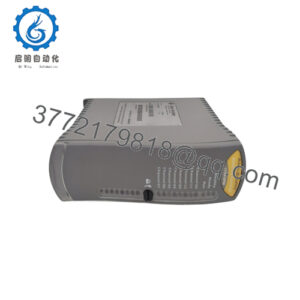
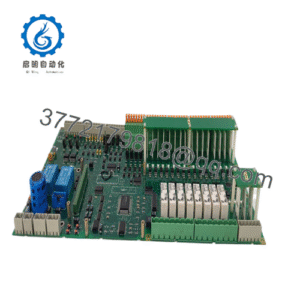
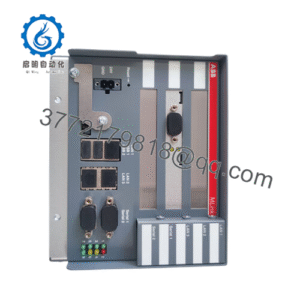
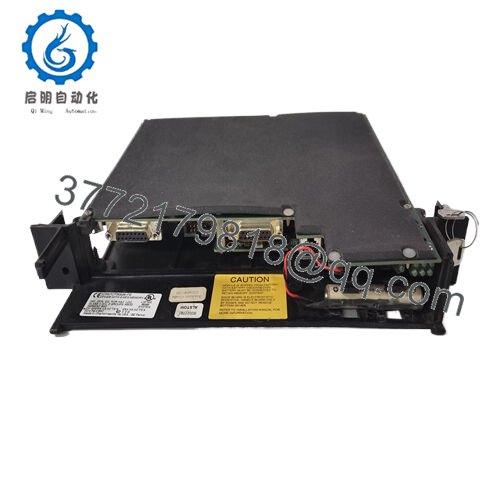
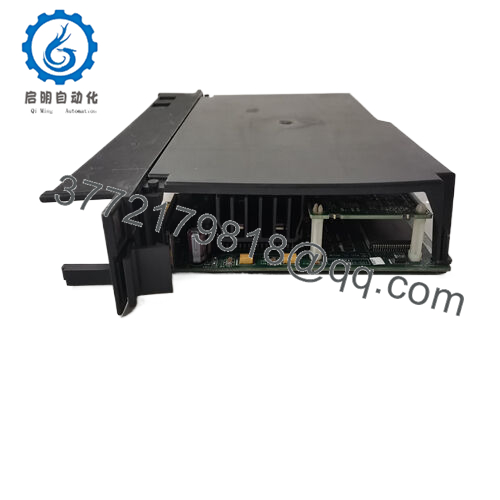
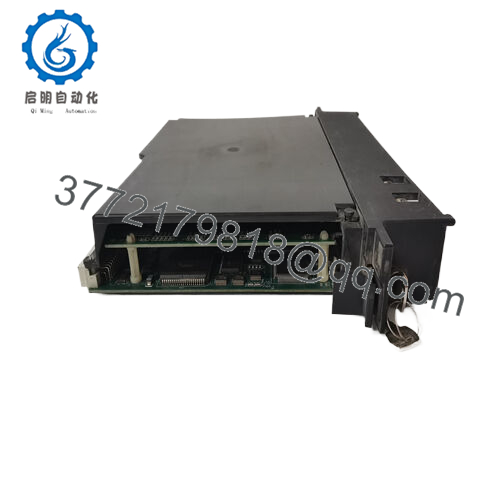
The GE IC697VRM015-B serves as a fiber-optic reflective memory module tailored for GE Fanuc Series 90-70 PLC systems, creating a high-speed shared data fabric over VME backplanes. It snaps into standard rack slots, mirroring 256 Kbytes of SRAM across up to 256 nodes in a self-healing ring—local writes propagate automatically via TAXI transceivers, no CPU involvement needed. In the broader architecture, the GE IC697VRM015-B enhances distributed control by supporting A24/A32 addressing and D8/D16/D32 transfers, aligning with CPUs, I/O, and coprocessors for seamless integration. Integrators value its plug-and-play nature, where jumpered node IDs and ST fiber ports build rings without custom software, extending 90-70 platforms into peer networks rivaling modern fieldbuses. For plants, the GE IC697VRM015-B means leveraging existing cabinets for synchronization that outruns Genius or serial polling, with onboard FIFOs smoothing traffic bursts to maintain determinism in tight loops.
Delivering 6.2 Mbytes/s peak in simplex mode, the GE IC697VRM015-B sustains longword transfers with 200-400 ns latencies, while redundant packet mode halves speed but boosts error resilience to cosmic-ray levels. Seven interrupt levels stack 512 events node-by-node, letting racks signal peers for sync points or faults with full traceability. EMI immunity shines through 1300 nm multimode fiber, certified for hazardous locations where sparks fly.
The single-slot 6U VME form factor of the GE IC697VRM015-B draws 5A at 5 VDC, convection-cooled for unattended cabinets, with diagnostics flagging fiber breaks or overflows via backplane interrupts. MTBF tops 142,000 hours, shrugging off vibration and 0-55°C swings common in gensets or marine controls.
Reliability compounds with parity scrubbing and auto-retries, making the GE IC697VRM015-B a set-it-and-forget fixture that outlives surrounding gear in 24/7 plants.

- IC697VRM015-B
Detailed Technical Specifications
| Parameter | Value |
|---|---|
| Model | GE IC697VRM015-B |
| Brand | GE Fanuc |
| Product Type | Fiber-Optic Reflective Memory Module |
| System Platform | Series 90-70 PLC (VMEbus compatible) |
| Memory Capacity | 256 kilobytes dual-ported SRAM |
| Transfer Rate | 6.2 Mbytes/s simplex; 3.2 Mbytes/s redundant |
| Topology | Fiber ring, max 256 nodes |
| Fiber Specs | 62.5/125 micron multimode, ST connectors |
| Node Distance | Up to 2 kilometers |
| Latency | 200-400 nanoseconds typical |
| Interrupts | 7 levels, 512-deep queue per node |
| Power Draw | 5 amps at +5 volts direct current max |
| Temperature Range | 0 to 55 degrees Celsius operating |
| Humidity | 20-80% non-condensing |
| Certifications | UL Class 1 Div 2, C-UL |
| Dimensions | Standard 6U VME single-slot |
GE IC697CPU772 – Paired CPU that populates shared memory in the GE IC697VRM015-B for multi-rack process coordination
GE IC697PWR724 – Power supply feeding the GE IC697VRM015-B alongside dense VME loads without derating.
GE IC697PCM711 – Coprocessor broadcasting results via the GE IC697VRM015-B to remote logic engines.
GE IC697CMM711 – Comms module augmented by the GE IC697VRM015-B for hybrid data sharing.
GE IC697BEM731 – Expansion unit linking racks synchronized through the GE IC697VRM015-B.
GE IC697HSC700 – Counter module mirroring pulses over the GE IC697VRM015-B for axis alignment.
GE IC697MDL653 – I/O reflecting states instantly via the GE IC697VRM015-B to peer PLCs.
Map fiber paths meticulously before fitting the GE IC697VRM015-B, securing 10cm minimum bends and grounding VME shields to chassis—test ring continuity with OTDR, setting jumpers last to avoid ID clashes. Position away from heat sources, labeling ports clearly; bench-verify local mirroring pre-install.
Quarterly fiber cleans and register polls keep the GE IC697VRM015-B humming—watch for FIFO backs or parity hits, reseating cables for intermittents. Rotate spares decennially, simulating full-ring stress during outages to validate redundancy before go-live.