 WhatsApp: +86 16626708626
 Email:
  Phone: +86 16626708626
Description
In high-speed synchronized manufacturing cells or distributed test stands, data latency can make or break coordination between distant PLCs. The GE IC697VRM015-B enters the picture where engineers need multiple Series 90-70 racks—or even separate systems—to share process variables, status flags, or event triggers instantaneously, without polling networks that introduce delays. Picture a steel mill coordinating multiple rolling stands, where roll gap positions and tension readings must mirror across controllers in under a millisecond; or wind tunnel labs where test parameters propagate to safety interlocks and data loggers over fiber runs spanning buildings. Deployed in industrial automation networks handling motion coordination, machine synchronization, or real-time simulation, the GE IC697VRM015-B forms a fiber-optic ring that broadcasts memory changes to all nodes automatically. In power plant turbine controls or automotive paint lines, it addresses the pain of cabling separate Ethernet or serial links by letting any rack write to its onboard RAM, instantly reflecting the data everywhere else on the loop. Operators in semiconductor fabs or pharmaceutical filling stations turn to this module when standard PLC communications fall short for sub-scan-time updates, ensuring drives, robots, and sensors stay perfectly aligned even across 2,000 meters of fiber. Used in control systems demanding deterministic data sharing, the GE IC697VRM015-B eliminates the guesswork of message queuing, making it a go-to for retrofits where upgrading to full PACSystems feels like overkill. Across oil rig drilling platforms or large-scale material handling, it tackles environments riddled with EMI by routing critical shared memory over immune multimode fiber, keeping synchronization rock-solid amid electrical storms.
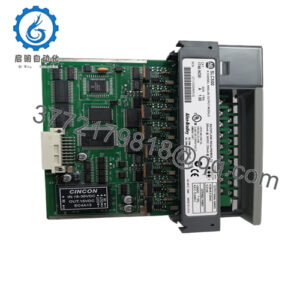
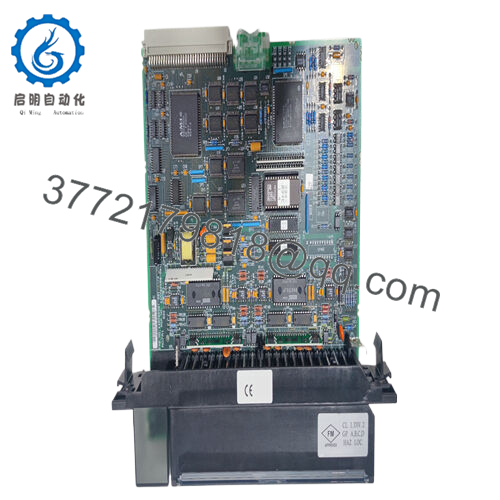
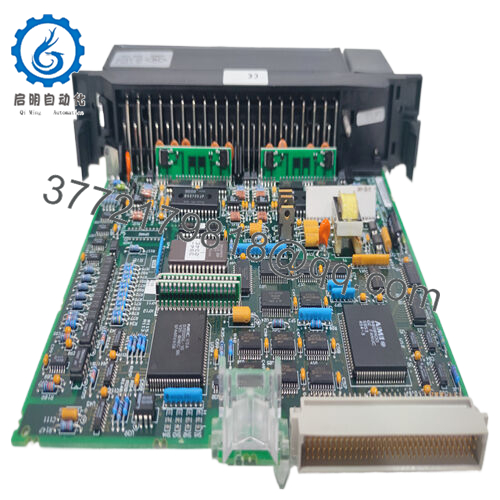
The GE IC697VRM015-B is a fiber-optic reflective memory module built for the GE Fanuc Series 90-70 PLC platform, enabling high-speed, multidrop data sharing across up to 256 nodes in a VMEbus-compatible setup. It slots into any standard rack position on the backplane, using its 256 Kbytes of dual-ported SRAM as a global mirror—writes from the local CPU or VME master go straight to local memory and transmit transparently to every other GE IC697VRM015-B on the ring. Positioned as the backbone for distributed control architectures, this module fits into Series 90-70 systems by decoding A24/A32 address spaces and supporting D8/D16/D32 data widths, so it plays nicely with CPUs, coprocessors, and I/O without custom drivers. For system designers, the GE IC697VRM015-B delivers value through zero-processor-overhead operation; the onboard logic handles TAXI chipset serialization at 170 Mbaud, buffering peaks in hardware FIFOs to sustain 6.2 Mbytes/s throughput. It supports node-specific interrupts—triggered by writing a simple register—to synchronize processes or flag data arrivals, all while daisy-chaining ST connectors for ring topology. In mixed VME/PLC environments, integrators prize how the GE IC697VRM015-B extends rack intelligence without gateways, keeping legacy 90-70 investments viable for peer-to-peer sharing that outpaces Genius bus or serial protocols hands down.

- IC697VRM015-B
What sets the GE IC697VRM015-B apart is its seamless reflective mechanism: change a memory location on one node, and it echoes everywhere instantly, with parity checks and TAXI error detection scrubbing bad packets before they propagate. Peak transfer hits 6.2 Mbytes/s on longword writes in simplex mode, dropping to 3.2 Mbytes/s with redundancy that sends each packet twice—cutting undetectable errors to one per 372,000 years at max rate. Access latencies hover at 200-400 nanoseconds, arbitration included, so even dense racks with CPUs pounding the bus keep data fresh without stalls. Interrupts stack up to 512 deep across seven levels, letting any node ping others for handshakes or alarms, with source IDs queued for quick forensics.
Hardware construction emphasizes reliability in tough spots—the GE IC697VRM015-B is a single 6U VME board with convection cooling, shrugging off 0-55°C operating heat and vibration common in mobile gensets or shipboard panels. Fiber links use standard 62.5-micron multimode at 1300nm, spanning 2km per hop without repeaters, and jumper-set node IDs from 0-255 make ring management straightforward during commissioning. Power pulls just 5A at +5VDC from the backplane, fitting snugly within power supply budgets alongside high-draw modules like CPUs or high-res I/O.
Over time, the GE IC697VRM015-B proves its mettle with MTBF over 142,000 hours and redundant modes that self-heal transmission glitches, plus UL Class 1 Div 2 hazardous location certification for explosive atmospheres. No moving parts mean it thrives unattended for years, with onboard diagnostics flagging fiber faults or FIFO overflows via VME interrupts—giving maintenance a clear path to isolate issues without ring teardown.
Detailed Technical Specifications
| Parameter | Value |
|---|---|
| Model | GE IC697VRM015-B |
| Brand | GE Fanuc |
| Product Type | Fiber-Optic Reflective Memory Module |
| System Platform | GE Fanuc Series 90-70 PLC (VMEbus) |
| Memory Capacity | 256 kilobytes SRAM (A24/A32:D32/D16/D8) |
| Data Transfer Rate | 6.2 Mbytes per second (non-redundant); 3.2 Mbytes per second (redundant) |
| Network Topology | Multidrop fiber-optic ring (up to 256 nodes) |
| Fiber Type | Multimode 62.5 micron core, ST connectors, 1300 nm, 170 Mbaud |
| Maximum Distance | 2,000 meters between nodes |
| Access Time | 200-400 nanoseconds |
| Interrupts | 7 levels, up to 512 stacked, node-specific |
| Power Consumption | 5 amps maximum at +5 volts direct current |
| Operating Temperature | 0 to 55 degrees Celsius |
| Storage Temperature | Negative 40 to 85 degrees Celsius |
| Form Factor | Single 6U VMEbus board |
| Relative Humidity | 20 to 80 percent, noncondensing |
| Certifications | UL 1604 Class 1 Div 2 Groups A,B,C,D; C-UL |
| MTBF | 142,400 hours |
GE IC697CPU772 – High-performance Series 90-70 CPU that leverages the GE IC697VRM015-B for real-time data sharing with remote racks in synchronized processes.
GE IC697PWR724 – Rack power supply commonly paired with the GE IC697VRM015-B to handle its modest +5V draw in fiber-linked control cabinets.
GE IC697PCM711 – Coprocessor module using the GE IC697VRM015-B to offload shared memory tasks or broadcast custom algorithm results across nodes.
GE IC697CMM711 – Communications coprocessor that complements the GE IC697VRM015-B when hybrid fiber and serial protocols are needed.
GE IC697BEM731 – Bus expansion module extending rack chains where the GE IC697VRM015-B synchronizes data over long distances
GE IC697HSC700 – High-speed counter sharing event data via the GE IC697VRM015-B for multi-axis motion synchronization across PLCs.
GE IC697MDL653 – Discrete I/O module whose status flags mirror instantly through the GE IC697VRM015-B to peer controllers.
GE IC697ALG230 – Analog module broadcasting process values over the GE IC697VRM015-B for distributed alarming and trending.
Site surveys before installing the GE IC697VRM015-B should map fiber routes for clean daisy-chain runs—avoid tight bends under 10cm radius on multimode cable—and verify backplane slot access without crowding high-heat neighbors like power supplies. Set node jumpers post-rack population to match your ring diagram, then loop-test continuity with an OTDR before powering up; polarity mismatches on ST ports kill rings fast. Ground VME frames to cabinet earth per NEC, and label each module’s ID visibly for troubleshooting—pair with a loopback plug during standalone bench verification to confirm SRAM writes echo locally first.
Maintenance on the GE IC697VRM015-B boils down to annual fiber endface cleans with lint-free swabs and inspection scope, plus logging interrupt FIFO counts via PLC diagnostics to spot traffic spikes or dropouts. Monitor onboard error registers quarterly for parity flags, resetting latched faults only after reseating fibers; redundancy mode cuts false alarms in marginal links. Firmware holds steady across revisions, but archive GFK-2089 manual snippets site-wide and rotate spares every 7-10 years to beat capacitor fade—simulated ring tests during shutdowns confirm throughput before recommissioning.