 WhatsApp: +86 16626708626
 Email:
  Phone: +86 16626708626
Description
GE IC698CPE010 is chosen for large, fast‑moving industrial applications where a classic PLC no longer offers enough processing power, memory, or networking flexibility. Typical use cases include high‑speed packaging lines, complex material handling systems, and coordinated motion cells where hundreds or thousands of I/O points must be scanned and controlled with tight timing. In continuous process industries—such as chemicals, power generation, and oil and gas—GE IC698CPE010 often serves as the central controller for PACSystems RX7i racks, orchestrating PID loops, sequences, and safety‑related interlocks while exchanging data with distributed controllers and SCADA in real time
The module is also used in brownfield upgrades where older Series 90‑70‑based systems are being modernized without replacing all existing VME‑style I/O. Here, GE IC698CPE010 provides a performance jump and modern Ethernet capabilities while maintaining access to legacy discrete and analog modules on the same rack. Its dual 10/100 Mbps Ethernet ports with built‑in switching make it attractive in plants that are standardizing on Ethernet for peer‑to‑peer control, historian links, and remote engineering access. In such architectures, the CPU handles deterministic machine control while simultaneously serving web‑based diagnostics pages, supporting Modbus/TCP, SRTP, and Ethernet Global Data for fast data exchange with drives, HMIs, and higher‑level systems. Because of this combination—high processing speed, generous memory, and strong networking—GE IC698CPE010 is used in industrial automation where engineers need a high‑end controller that behaves like a PLC but integrates like a modern PAC.
Product introduction and positioning
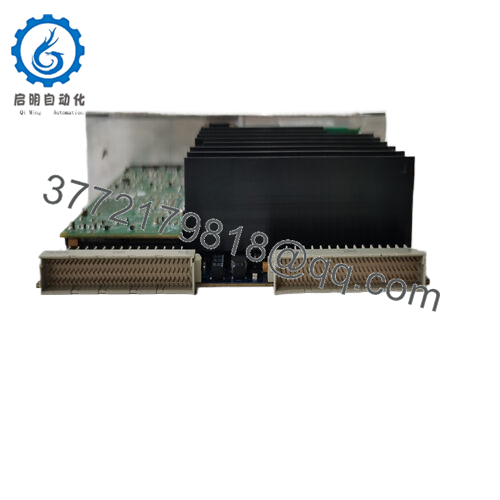
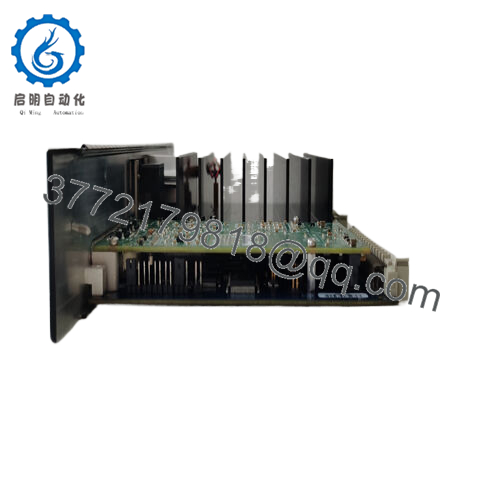
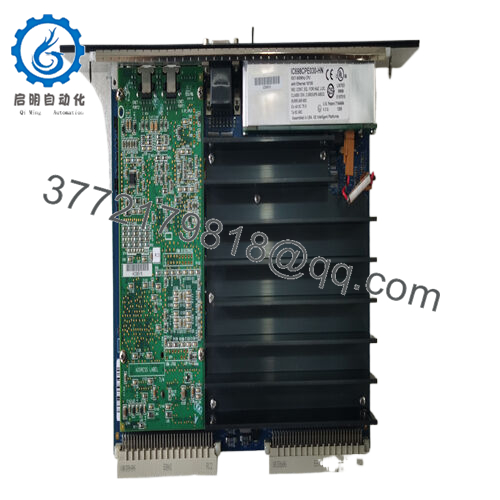
The GE IC698CPE010 is a high‑performance CPU module for the PACSystems RX7i platform, designed to provide real‑time control of machines, processes, and material handling systems. It leverages a 300 MHz Celeron‑class microprocessor and VME64 backplane architecture, placing it in the PAC (Programmable Automation Controller) class rather than a traditional low‑end PLC. This makes it suitable for complex control strategies, large application programs, and demanding communication requirements. Within an RX7i rack, the module occupies a CPU slot and interfaces with Series 90‑70‑style I/O, high‑speed counters, bus controllers, and other VME modules over the backplane.
From a system perspective, GE IC698CPE010 acts as the central brain of an RX7i node, sitting between field I/O and the plant network. Downstream, it manages discrete and analog I/O modules plus specialty cards; upstream, it uses embedded Ethernet ports and serial interfaces to connect to HMIs, SCADA, historians, and peer controllers. Engineers can program the CPU using ladder diagram, structured text, function block, and C, enabling both classic PLC logic and more advanced algorithms within a single controller. With 10 MB of battery‑backed RAM and 10 MB of non‑volatile flash user memory, GE IC698CPE010 comfortably hosts large projects with extensive tag databases, multiple program blocks, and sizeable historical or configuration data sets. Overall, it is positioned as a flagship CPU for RX7i systems where scalability, speed, and connectivity are critical.
Key technical features and functional benefits
A standout feature of GE IC698CPE010 is its processing performance. The 300 MHz CPU delivers a typical Boolean execution speed of about 0.33 ms per 1000 contacts/coils, allowing substantial logic networks to execute within tight scan times. This responsiveness is essential in high‑speed packaging, synchronized drives, and complex sequencing where slow scans can degrade product quality or cause coordination issues. The CPU also supports up to 512 program blocks with block sizes up to 128 KB, giving engineers flexibility to structure code by machine, unit, or functional area without running into rigid size limits.
Memory resources are another major strength. GE IC698CPE010 provides 10 MB of battery‑backed user RAM plus 10 MB of non‑volatile flash memory, enough to store large applications and data sets without external storage. Reference tables support up to 32 Kbits of discrete inputs and outputs (%I and %Q) and up to 32 Kwords each for analog inputs and outputs (%AI and %AQ), alongside a large %W bulk memory space and symbolic variables that can use most of the available user memory. This generous memory model enables large tag‑based projects and extensive historical or configuration data to reside directly in the controller, reducing dependence on external devices.
On the connectivity side, GE IC698CPE010 integrates two auto‑sensing 10/100 Mbps Ethernet ports and multiple serial interfaces (RS‑232, RS‑485, and a dedicated station‑manager port). The Ethernet interface supports Ethernet Global Data (EGD), SRTP, Modbus/TCP server and client, web‑based data monitoring, FTP access, and time synchronization via SNTP, giving integrators a wide range of options for tying the controller into plant networks and enterprise systems. With up to 16 combined web server and FTP connections, engineers can monitor and update systems remotely while still maintaining deterministic control performance. For legacy integration, compatibility with Series 90‑70 I/O and supported VME modules lets GE IC698CPE010 serve as a modern drop‑in brain for existing racks, reducing migration risk and protecting installed I/O investments.
From a reliability and environmental standpoint, GE IC698CPE010 is designed for industrial operation between 0 and 50 °C as standard, extendable to 60 °C with appropriate fan tray, and includes over‑temperature status bits for proactive monitoring. Battery‑backed memory retention ensures that user programs and critical data persist through power interruptions, while built‑in diagnostics and station management tools help maintenance teams identify network, I/O, or CPU issues quickly. Together, these features make the GE IC698CPE010 a long‑term, dependable choice for demanding control applications.

- IC698CPE010
Detailed technical specifications
| Parameter | Value |
|---|---|
| Model | GE IC698CPE010 |
| Brand | GE Fanuc / GE Intelligent Platforms / Emerson |
| Product type | PACSystems RX7i central processing unit (CPU) module |
| Processor | 300 MHz Celeron microprocessor |
| User RAM (battery backed) | 10 megabytes |
| User flash memory | 10 megabytes non‑volatile flash |
| Discrete I/O capacity | 32 Kbits each for %I and %Q tables |
| Analog I/O capacity | Up to 32 Kwords each for %AI and %AQ tables |
| Program blocks | Up to 512 blocks, maximum 128 KB per block |
| Boolean execution speed | Approximately 0.33 ms per 1000 Boolean contacts/coils |
| Power requirements | +5 VDC at about 3.2 A; +12 VDC at 0.042 A; −12 VDC at 0.008 A |
| Operating temperature | 0 to 50 °C standard; up to 60 °C with fan tray |
| Backplane / I/O interface | VME64 backplane, supports Series 90‑70 and specified VME I/O modules |
| Embedded Ethernet | Two 10/100 Mbps RJ‑45 ports with internal switch |
| Serial interfaces | RS‑232, RS‑485, and dedicated RS‑232 station manager |
Related modules or compatible units
IC698CPE020 – Higher‑performance RX7i CPU with a 700 MHz Pentium III‑class processor for applications needing even faster scan times and more headroom than GE IC698CPE010.
IC697MDL240 / IC697MDL241 – Series 90‑70 discrete input modules commonly used as local I/O under GE IC698CPE010 in retrofit and expansion projects.
IC697MDL340 / IC697MDL341 – Discrete output modules that provide on/off control of motors, valves, and solenoids driven by logic executed in GE IC698CPE010.
IC697VAL264 – 64‑channel analog input module supported by PACSystems RX7i, often paired with GE IC698CPE010 in high‑density measurement applications.
VME‑3122A‑40001x – High‑performance analog input voltage module that can be used with RX7i CPUs like GE IC698CPE010 for advanced analog acquisition.
IC697CMM7xx family – Communication modules that extend networking and fieldbus options for systems controlled by GE IC698CPE010, such as Genius or Profibus.
RX3i CPUs (IC695 series) – Newer PACSystems controllers often considered as future migration targets for installations currently based on GE IC698CPE010.
Installation notes and maintenance best practices
When deploying GE IC698CPE010, engineers should first verify that the RX7i rack and power supply can deliver the required +5 V and auxiliary voltages with adequate margin, especially in fully populated backplanes. Cabinet layout must provide sufficient ventilation and, where ambient temperatures approach the upper limit, include a suitable fan tray to maintain the CPU within its 0–50 °C (or extended) operating range. Careful grounding and bonding of the panel reduce noise on both Ethernet and serial cabling; Ethernet cables should be routed away from high‑current power lines, with proper shielding and strain relief where needed. Before commissioning, the CPU firmware, application program, IP settings, and EGD configuration should be documented and backed up, and time synchronization to an SNTP server enabled if consistent timestamps are important.
For maintenance, GE IC698CPE010 should be included in regular visual inspections of the RX7i rack. Technicians should check that the module is firmly seated, that connector fingers are clean, and that there are no obstructions around the cooling airflow paths. Battery status should be monitored and batteries replaced at recommended intervals to preserve RAM contents and clock accuracy; any battery work should follow documented procedures to avoid inadvertent memory loss. Built‑in diagnostics, event logs, and station‑manager tools over Ethernet or serial ports allow deeper investigation of communication or I/O problems without removing the module. Periodic verification that firmware revisions remain aligned with site standards and that configuration backups are current will help ensure that a replacement GE IC698CPE010 can be swapped in quickly in the event of a failure, minimizing downtime.