 WhatsApp: +86 16626708626
 Email:
  Phone: +86 16626708626
Description
In the blistering combustion zones of heavy-duty gas turbines, where exhaust gas temperatures spike to 1200°C during peak loads, controllers must track thermocouple arrays across liners and transitions to dodge hotspots that warp nozzles and force outages. Combined-cycle plants balancing HRSG selective catalytic reducers demand precise RTD profiling on catalyst beds, where 2°C drifts trigger ammonia slip and EPA violations. Steam turbine bypass stacks in cycling units rely on fast-acting monitors to quench sprays accurately, preventing quench cracks from thermal shock. The GE IS200TREAH2AED rises to these thermal management demands in industrial automation as a high-density temperature input module for Mark VIe turbine controls, acquiring signals from 24 thermocouples or RTDs with 16-bit precision to feed protection logic. Used in industrial automation for turbine exhaust monitoring and process control, it slots into IONet backplanes, applicable in control systems from frame 7FA to aeroderivatives.
Aero-engine test cells equip the GE IS200TREAH2AED for nozzle traverses, sampling K-type probes amid jet wash to validate CFD models. Refinery fired heaters use it for tube skin points, correlating gradients to coke buildup alarms. Biomass boilers lean on its burnout zone scans to optimize air staging, slashing unburned carbon penalties. In these unforgiving spots, the module handles Type J/K/T/E/N/R/S/B thermocouples plus 100Ω Pt RTDs, with burnout detection flagging open circuits before false-cold readings trip units. Engineers select it for drop-in compatibility with Mark VI legacy, preserving HMI faceplates during upgrades.
Solar thermal towers benefit from the GE IS200TREAH2AED‘s heliostat flux mapping, where arrayed sensors prevent receiver melts. LNG vaporizers deploy it for coil temps, ensuring cargo boil-off stays under 0.15% daily. By delivering calibrated heat data into industrial automation frameworks, it sharpens efficiency curves, extending hot sections from 24K to 48K hours.
Product Introduction & Positioning
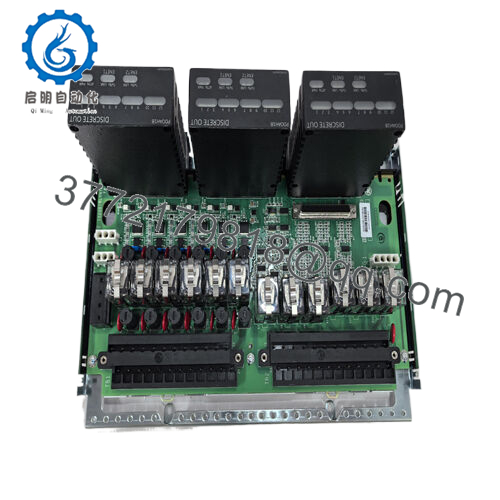
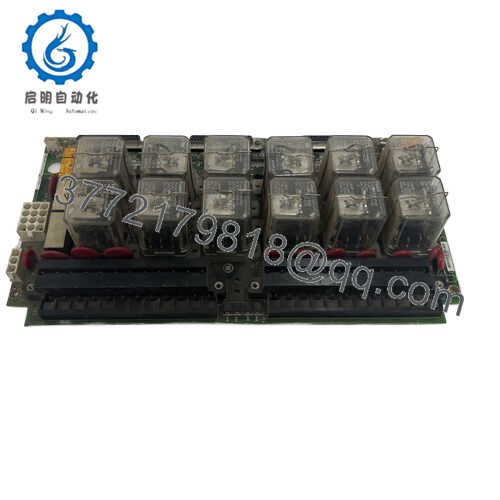
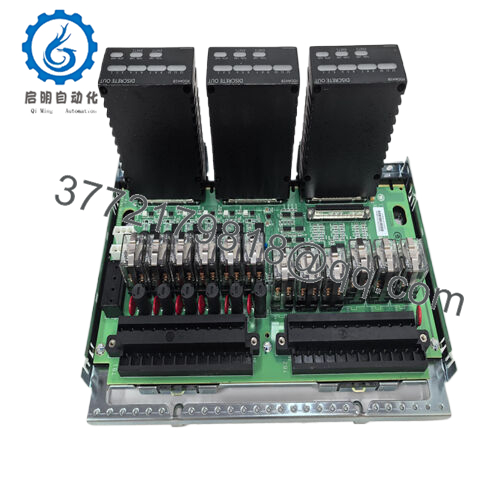
The GE IS200TREAH2AED operates as a 24-channel temperature acquisition board in GE’s Mark VIe Speedtronic series, conditioning millivolt signals from thermocouples and resistance sensors for VME processors like RTVI or ENIO. Each channel boasts isolated 24-bit Sigma-Delta ADCs sampling at 100 Hz, with CJC sensors per group ensuring 0.1°C accuracy across linearization tables for NIST curves. Rack-mounted in I/O assemblies, the GE IS200TREAH2AED streams data via QSPI to controller cores, supporting diagnostic overlays for drift tracking in ToolboxST.
Positioned for simplex or TMR redundancy, the GE IS200TREAH2AED integrates with UDH racks, offering HART passthrough on select channels for smart transmitters. Integrators prize its auto-ranging inputs (±80 mV TC, 0-500Ω RTD) and fault LEDs per bank, easing commissioning in multi-drop setups. In Mark VIe architecture, it feeds <T> references to turbine logic, enabling bias-corrected protections that comply with ISO 3977.
For OEMs, the GE IS200TREAH2AED scales via fiber IONets to remote packs, bridging to Proficy historian for lifetime trend storage. Programmable scaling and filters tailor it to custom probes, cementing Mark VIe as the benchmark for thermal safeguards in gigawatt fleets.

- IS200TREAH2AED
Key Technical Features & Functional Benefits
Plant techs bank on the GE IS200TREAH2AED‘s channel-to-channel isolation at 1500 Vrms, blocking ground faults from adjacent speed sensors that plague shared grounds. Low-noise preamps deliver 0.05°C resolution on K-types, with 50/60 Hz rejection >90 dB for clean reads amid generator hum. Onboard EEPROM stores cal factors, auto-loading on power-up to nix manual tweaks post-swaps.
Sleek VME formfactor fits dense <C> cores, passive-cooled with 5W draw from +5V rails—perfect for sealed turbine enclosures. Differential inputs swallow 100Ω common-mode swings, while RTD excitation currents (1 mA) minimize self-heating to 0.01°C error. Front barriers accept Phoenix contacts for 24 AWG field wire, with test points exposing raw millivolts for loop checks.
Endurance features conformal coating for 100% RH and H2S, projecting 25-year MTBF per Telcordia SR-332. Burnout logic flags sensor failsafe-high/low, and averaging modes smooth noisy probes for stable bias calcs. Field firmware flashes via Ethernet update thermal models on-the-fly, adapting to probe migrations without outages.
Detailed Technical Specifications
| Parameter | Value |
|---|---|
| Model | GE IS200TREAH2AED |
| Brand | GE (Emerson) |
| Type | 24-Channel Temperature Input Module |
| Power Supply | +5 VDC (1A), +3.3 VDC (0.2A) |
| Operating Temperature | -30°C to +65°C |
| Mounting | VME IONet Rack |
| Dimensions | 265 x 100 x 20 mm (L x W x H) |
| Weight | 0.35 kg |
| Interfaces | 24x TC/RTD inputs, QSPI bus |
| Certifications | Class I Div 2, IEC 61508 SIL 2 |
| Cooling | Conduction, passive |
| Environmental Rating | IP20, 95-100% RH |
Related Modules or Compatible Units
RTVI – VME processor hosting the GE IS200TREAH2AED for temperature scan coordination.
ENIO – Ethernet I/O node pairing with GE IS200TREAH2AED in remote drops.
IS200TBAOH2A – Analog output terminal complementing GE IS200TREAH2AED biases.
IS200VRTDH1A – RTD expander adding 12 more channels to GE IS200TREAH2AED banks.
UDH – Universal drive housing the GE IS200TREAH2AED in TMR configs.
TRTA – Legacy terminal upgraded by GE IS200TREAH2AED in Mark VI retrofits.
UCVV – Controller core aggregating GE IS200TREAH2AED data for logic.
Installation Notes & Maintenance Best Practices
Seat the GE IS200TREAH2AED in <R> slot 3-10 of IONet racks, seating firmly before latching—verify P2/P3 JTAG for firmware match via LED sequence. Strip TC wire 7mm into crimp ferrules, polarity per GEH-6725 (red +, yellow – on K); torque 0.4 Nm max to prevent creep. Single-point shield ground at TB1, routing 20 AWG quads in segregated trays from servo power. Calibrate CJT offsets in-situ with ice bath per channel, logging to HMI before enclosure seal.
Monthly optics check for dust on gold fingers—IPA wipe if haze cuts signals >1%. Quarterly, force 4-20 mA sim on 20% channels, verifying linearity ±0.2°C via %AI trends. Annual EEPROM dumps confirm cal retention; reflashing if checksums fail. Probe shear tests post-vibe events log burnout flags, preempting cold-leg faults in cyclic duty.