 WhatsApp: +86 16626708626
 Email:
  Phone: +86 16626708626
Description
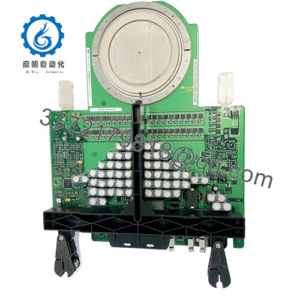
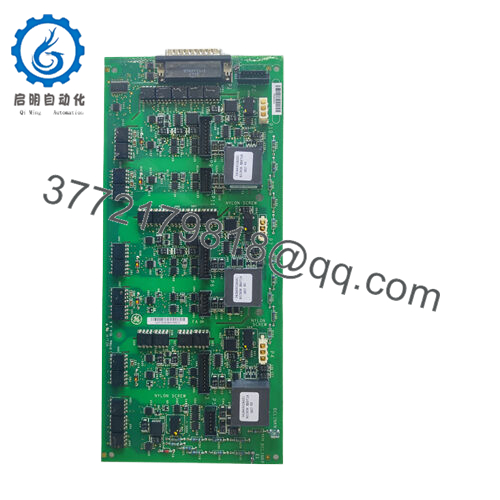
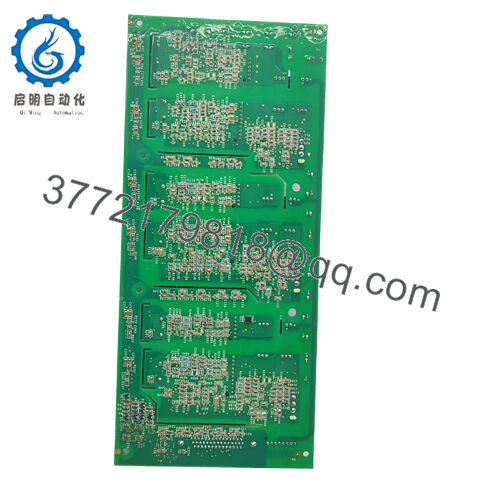
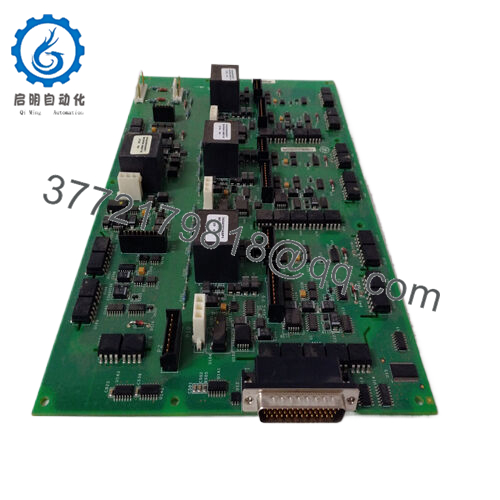
Product Model: GE IS210AEBIH1BED
Product Brand: GE Industrial Systems
Product Series: Mark VIe / IS210 Series
Product Features:
• High-density expansion board providing discrete input or bridge interface for Mark VIe and turbine control systems
• Supports 32 isolated input channels for dry contact devices with robust EMC/EMI protection
• Fully compatible with GE Speedtronic Mark VIe automation architecture and AEBI backplane
• Designed for critical applications in power generation, turbine control, and industrial monitoring environments
Technical Specifications
| Specification | Detail |
|---|---|
| Product Model | GE IS210AEBIH1BED |
| Series | Mark VIe / IS210 Series |
| Function | Digital Input Expansion / Bridge Interface Card |
| Channels | 32 isolated discrete input channels |
| Isolation Voltage | ~2500 VAC RMS typical |
| Backplane Interface | AEBI / VMEbus compatible |
| Operating Temp | 0°C to 60°C typical (manufacturer spec examples) |
| Connectivity | Dry contact devices (Form A/C) |
| Diagnostics | Built-in self monitoring |
| Mounting | Rack slot, keyed backplane |
| Coating | Conformal protection (PCB) |
| Application | Turbine, power generation, industrial control |

- IS210AEBIH1BED
Technical Features & Benefits
The GE IS210AEBIH1BED combines electrical robustness with functional sophistication, tailored to industrial control demands. Its 32 isolated discrete input channels — typically configured for dry contact devices — provide high channel density in a compact module. Optical or galvanic isolation inside each channel protects against ground loops, transients, and electrical noise that are common in turbine enclosures, generator rooms, or petrochemical plants with large motors and frequency drives.
Isolation ratings in such modules often reach 2500 VAC RMS or higher, ensuring signal integrity across industrial environments where large voltage differences could otherwise corrupt data or damage downstream electronics. This level of protection enhances reliability and extends service life, reducing lifecycle costs for operators and integrators.
Signal conditioning is another core strength. Before data enters the processing domain, the board filters and cleans the discrete inputs to suppress contact bounce, electrical spikes, or interference. This results in clean logic transitions that central controllers can interpret accurately and predictably. The result is tighter control loops, fewer false trips, and consistent system behavior under varied load conditions.
The card’s backplane interface — typically a VMEbus or similar standardized connector — facilitates rapid communication with the base rack and central controllers. This includes support for deterministic cycles, ensuring that discrete input states are scanned, buffered, and transmitted with low jitter. Field engineers rely on this precision in scenarios like turbine emergency shutdown (ESD) sequences, where milliseconds matter.
From a mechanical perspective, the board’s conformal coating and ruggedized construction protect the underlying electronic assembly from humidity, dust, and vibration. Industrial conformal coatings resist corrosive atmospheres and often comply with high-reliability standards for power and plant automation components. Such protection is vital in environments like offshore platforms, desert installations, or high-humidity turbine houses.
Diagnostics are integrated into the design as well. Engineers can monitor input health and channel statuses through system-level software or hardware LED indicators, enabling early fault detection. When integrated with trend logging or event systems, these diagnostics support predictive maintenance — operators can replace a single failing channel before it escalates into a system-level problem.
Finally, the board’s design supports scalability. Whether the application involves a handful of input signals or hundreds — across distributed racks — multiple IS210AEBIH1BED modules can be deployed in a coordinated array to meet varied capacity requirements without significant redesigns of the control architecture.