 WhatsApp: +86 16626708626
 Email:
  Phone: +86 16626708626
Description
GE IS210AEBIH3BEC is widely deployed in modern wind turbine control systems and other distributed industrial automation networks where reliable Ethernet communication and I/O bridging are critical to uptime and availability. In a typical wind farm, each turbine depends on deterministic, noise-resistant communication between the nacelle controller, pitch and yaw subsystems, and the central SCADA infrastructure; this is exactly the layer where GE IS210AEBIH3BEC is usually positioned. The card helps move operational data such as wind speed, blade angle, generator output, and temperature readings from local sensors and actuators into the main Mark VIe-based control platform used in many wind and gas turbine installations. Because these assets often sit in harsh, remote environments, operators look for communication hardware that can run continuously, handle transient network issues gracefully, and maintain stable links for status, alarms, and control commands over long periods.
Beyond wind, the same communication and I/O bridging capabilities make GE IS210AEBIH3BEC applicable in control systems for power generation auxiliaries, balance-of-plant subsystems, and other automation tasks where an Ethernet bridge interface is required between field devices and turbine or plant controllers. It is used in industrial automation architectures where Mark VIe or Mark VIe Wind systems need to connect to local I/O boards, remote monitoring terminals, or higher-level plant networks without sacrificing isolation and deterministic behavior. Engineers select this module when they need a compact, board-level component that simplifies Ethernet-based connectivity, supports standard 10/100 Mbps links, and maintains low power consumption suitable for dense control cabinets. In short, the card supports the core technical tasks of data acquisition, command distribution, and network bridging in turbine-focused control systems, helping asset owners meet availability, remote diagnostics, and performance monitoring requirements.
Product introduction and positioning
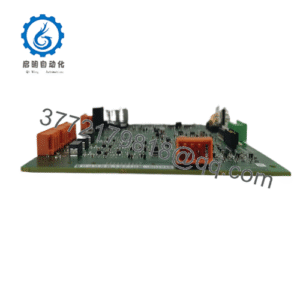
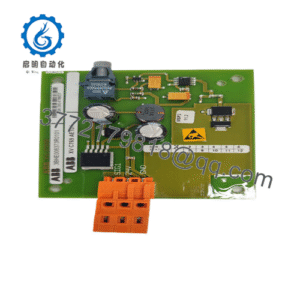
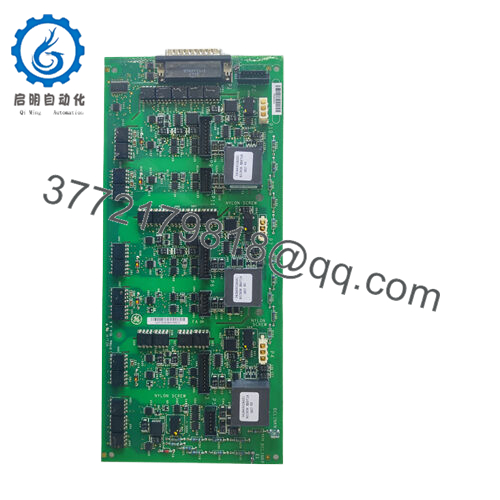
The GE IS210AEBIH3BEC is an Advanced Ethernet Bridge Interface card designed by General Electric for use within the Speedtronic Mark VIe and Mark VIe Wind control platforms. Functionally, it acts as a bridge interface or I/O board, providing Ethernet-based connectivity between turbine control processors, local I/O, and higher-level plant or SCADA networks. Within a typical control architecture, the card sits in the Mark VIe rack or associated assembly and serves as the communication path that links real-time controllers to external devices over standard 10/100 Mbps Ethernet, while still respecting the deterministic and safety requirements of turbine applications.
Because many wind and gas turbine installations are based on the Mark VIe platform, the GE IS210AEBIH3BEC is positioned as a drop-in, platform-matched module that integrates cleanly with existing GE I/O boards and network topologies. It is best understood as a specialized Ethernet bridge interface rather than a standalone PLC, which means it is normally engineered as part of a broader control solution instead of being specified alone. For system integrators and maintenance engineers, this positioning is valuable: using a native Mark VIe bridge interface reduces integration risk, keeps spares strategies simple, and helps ensure that firmware, diagnostics, and configuration tools remain consistent across the turbine system. The card balances compact size, low power draw, and adequate network bandwidth, making it a pragmatic choice for OEMs and operators who need reliable Ethernet connectivity inside constrained turbine cabinets.
Key technical features and functional benefits
From a functional standpoint, GE IS210AEBIH3BEC delivers a stable 10/100 Mbps Ethernet bridge interface with auto‑negotiation and support for full‑duplex and half‑duplex modes, allowing it to adapt to a range of industrial switches and network segments without complex field tuning. Two RJ‑45 ports provide flexible topologies—such as daisy‑chain or redundant paths—helping engineers design resilient communication links between the Mark VIe controller, local I/O, and supervisory systems. Low typical power consumption around 2 W, with a 3 W maximum, reduces thermal loading inside sealed turbine control cabinets and aligns well with the energy‑efficient design ethos of modern wind installations.
Hardware design of the GE IS210AEBIH3BEC focuses on compact form factor and robust industrial construction suitable for continuous service in turbine nacelles and power plant environments. Its small board dimensions and modest weight (approximately 0.65 lb) make it easy to accommodate in dense racks or retrofit projects where space is at a premium. Standard RJ‑45 connectors simplify field wiring, and the card’s classification as a PC‑board PLC/add‑on style module allows it to integrate smoothly alongside other GE Fanuc and Mark VIe boards.
Compatibility is another major strength for GE IS210AEBIH3BEC, since it is purpose‑built for GE’s Mark VIe and Mark VIe Wind turbine control series and is widely recognized in third‑party spares and refurbishment channels. This ensures that replacement units are readily available and that the module can coexist with other Mark VIe I/O, Ethernet switches, and field devices that are common in turbine and plant automation. For operators, this compatibility translates into simplified configuration using standard GE tools, predictable diagnostics behavior, and less time spent validating interoperability when swapping boards during outages.
Over the long term, the design approach behind GE IS210AEBIH3BEC supports reliability in demanding applications, including remote wind farms where maintenance windows are limited. The card is engineered for continuous operation within turbine control systems, and its low power consumption helps reduce heat‑related stress that can shorten electronic component life. Combined with the ability to source factory‑certified replacements and refurbished units from multiple global suppliers, this makes the module a practical, long‑life choice for asset owners seeking to maintain installed Mark VIe fleets over many years.
Detailed technical specifications
| Parameter | Value |
|---|---|
| Model | GE IS210AEBIH3BEC Advanced Ethernet Bridge Interface Card |
| Brand | General Electric (GE Fanuc / GE Energy) |
| Series | Speedtronic Mark VIe / Mark VIe Wind |
| Functional Type | Advanced Ethernet Bridge Interface / I/O Boar |
| Power Supply Input Voltage | 3.3 Volt Direct Current (±5 percent) |
| Typical Power Consumption | 2 Watt typical, 3 Watt maximum |
| Ethernet Interfaces | 2 × 10/100 Mbps RJ‑45 ports, full‑duplex and half‑duplex capable |
| Data Rate | 10/100 Mbps with auto‑negotiation |
| Product Weight | Approximately 0.29 kg (0.65 lb) |
| Approximate Dimensions | Around 14.8 cm × 10.3 cm × 17.2 cm (board and mounting envelope) |
| Mounting Style | Board‑level mounting in GE Mark VIe or Mark VIe Wind assemblies |
| Interfaces to System | Interfaces with Mark VIe turbine controllers and I/O subsystems |
| Typical Application Voltage | Used within low‑voltage electronic sections of turbine control racks |
| Cooling Method | Convection cooling within cabinet airflow; no dedicated fan |
| Environmental Use Case | Industrial turbine control environment, wind turbine nacelles, plant control rooms |

- IS210AEBIH3BEC
- IS210AEBIH3BEC
Related modules or compatible units
GE IS210AEBIH2BE – Similar Ethernet bridge interface from the same family, often used where a different hardware revision is specified by the Mark VIe system.
GE IS420ESWBH3A – GE Mark VIe Ethernet IONet switch that commonly works upstream of GE IS210AEBIH3BEC to aggregate multiple Ethernet nodes in the turbine cabinet.
GE IS220PAICH2B – Analog input I/O module that can reside on the same Mark VIe platform, feeding process variables that are communicated via modules such as GE IS210AEBIH3BEC.
GE IS210AEAAH1BGB – Purpose rack interface and control board used in power and process plants, often paired with Ethernet bridge and I/O boards for complete control solutions.
GE IS420ESWAH1A – Another Mark VIe Ethernet switch variant used with bridge interface cards to create redundant or segmented control networks.
GE IS210AEBIH3B – Unit code used for the same Mark VIe Wind bridge interface, referenced in some documentation and spares listings as a closely related designation.
GE IS210AEBIH3BED – Alternate ordering or revision code encountered in aftermarket listings, functionally similar and considered when matching existing installations.
Installation notes and maintenance best practices
When planning installation of GE IS210AEBIH3BEC, engineers should verify that the target Mark VIe or Mark VIe Wind rack location provides the correct 3.3 Volt Direct Current supply and adequate clearance for board insertion and cable bend radius. Cabinet layout should account for Ethernet cable routing from the two RJ‑45 ports to nearby switches or controllers, with attention to separation from high‑voltage conductors and sources of electromagnetic noise common in turbine housings. Grounding and bonding must comply with the overall control panel design so that Ethernet shield and reference potentials remain consistent across the system, reducing the risk of communication errors caused by ground loops or transient surges. Before energizing, it is good practice to confirm firmware or configuration compatibility with the plant’s Mark VIe software baseline and to document the board serial number and slot position for future traceability.
Ongoing care of GE IS210AEBIH3BEC usually centers on visual inspection, connection checks, and network diagnostics rather than mechanical upkeep. During scheduled outages, technicians should inspect the board for signs of discoloration, loose connectors, or contamination from dust or moisture, and verify that RJ‑45 latching and cable strain relief remain secure. Periodic review of SCADA or Mark VIe diagnostic logs can help identify intermittent link issues, packet errors, or port‑level alarms that may indicate developing problems in cabling or upstream switches rather than the card itself. When firmware or configuration tools recommend updates, these should be carried out under controlled conditions with full backups, so the Ethernet bridge remains aligned with the rest of the turbine control software stack over its service life.