 WhatsApp: +86 16626708626
 Email:
  Phone: +86 16626708626
Description
GE IS215AEPCH1B is typically found at the heart of modern wind turbine pitch systems, where precise and reliable blade control is directly tied to energy capture and turbine safety. In a utility-scale wind farm, each turbine must constantly adjust blade pitch to respond to gusts, turbulence, and changing wind direction, and this is exactly where GE IS215AEPCH1B is used in industrial automation and wind-specific control systems. The module works as the central pitch controller, coordinating feedback from encoders, limit switches, and power modules to keep blades in the optimal angle for power production while still maintaining strict overspeed protection thresholds. Operators and maintenance teams rely on it to process field current and voltage feedback, supervise the health of pitch drives, and execute fast, deterministic actions during high-wind or grid-fault events.
In harsh onshore and offshore environments, GE IS215AEPCH1B helps address challenges like temperature extremes, vibration, and electrical noise that can compromise less specialized electronics. Its design supports redundant control sections and robust communication with turbine SCADA and higher-level plant systems, making it applicable in control systems where uptime and fault transparency are non‑negotiable. The module is often used in multi‑MW wind turbines configured with dual or triple redundant pitch channels, so that any single fault in one axis or controller can be tolerated without immediate loss of production. In practice, this means asset owners use GE IS215AEPCH1B not only to maximize annual energy production but also to manage structural loads and extend the mechanical life of blades, hubs, and main bearings through precise, profile‑based pitch control.
Product introduction and positioning
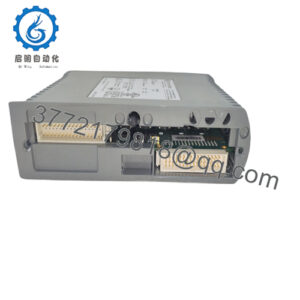
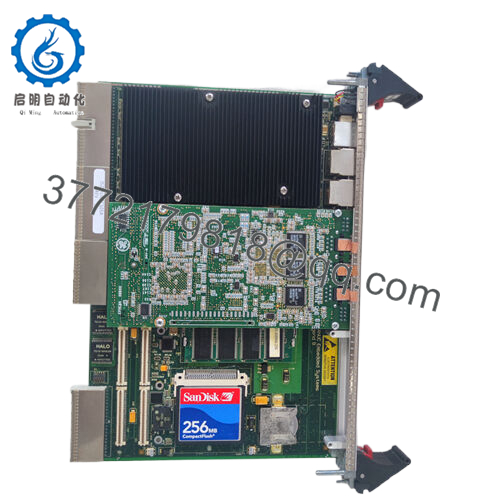
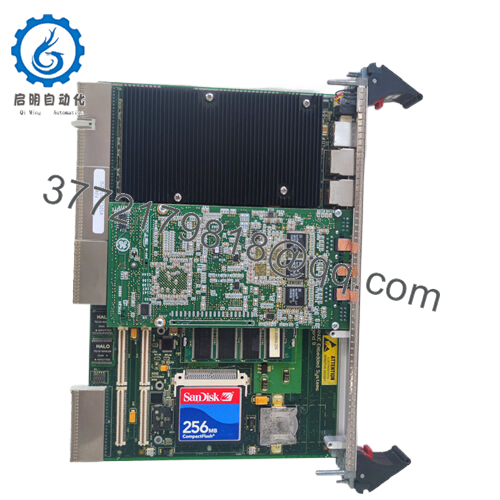
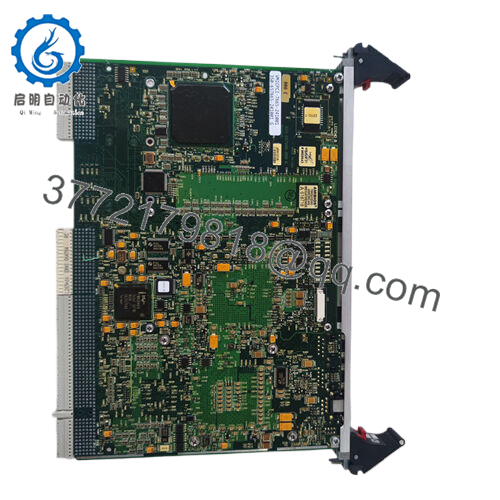
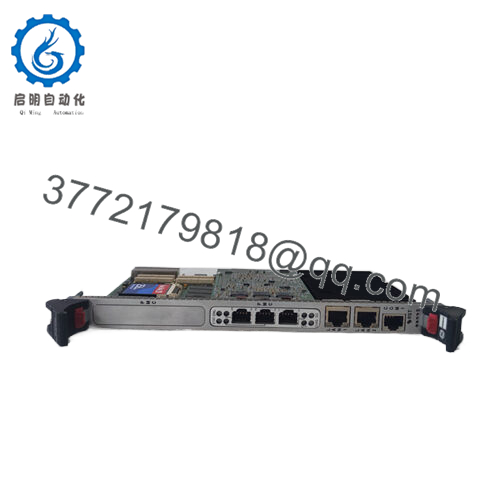
The GE IS215AEPCH1B is a pitch center controller module designed for GE Mark VIe wind turbine control systems, where it serves as the core logic and coordination element for the blade pitch subsystem. Rather than acting as a general-purpose PLC, it is a dedicated pitch control board that supervises pitch motor drives, evaluates field current and voltage feedback, and executes pitch movement commands based on turbine control algorithms. Within the Mark VIe architecture, GE IS215AEPCH1B interfaces with distributed I/O, speed and position sensors, and auxiliary power components to ensure that each blade axis responds correctly to changing wind and grid conditions.
The module is positioned in the control system as part of a dual or multi‑channel pitch platform, often categorized as a dual system or H2‑type configuration that supports up to three redundant control sections. This positioning is important for engineers and integrators, because it defines how GE IS215AEPCH1B interacts with other Mark VIe boards, fiber‑optic links, and field devices in a safety‑critical path. Its compatibility with turbine SCADA and diagnostic tools makes it valuable in fleets where operators expect unified alarm handling and trending across the main controller and pitch subsystem. For retrofit or life‑extension projects on GE wind turbines, specifying GE IS215AEPCH1B helps maintain platform consistency, which simplifies spare strategies, training, and long‑term support.

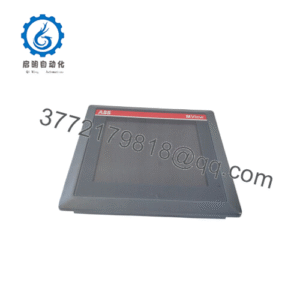
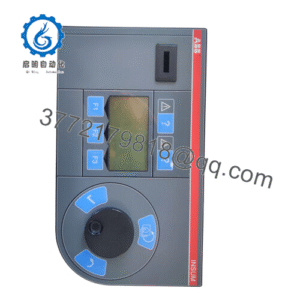
- IS215AEPCH1B
Key technical features and functional benefits
Functionally, GE IS215AEPCH1B is built around high‑integrity pitch control, combining real‑time processing with dedicated interfaces for current and voltage feedback from the pitch drives. It can manage multiple pitch axes within a dual or triple‑redundant configuration, allowing each blade to be controlled independently while still following coordinated commands from the main turbine controller. This architecture supports fast response during events such as overspeed conditions or grid loss, where blades must be feathered rapidly to protect the turbine from excessive mechanical loading. The result is a module that delivers both stable, fine‑tuned control in normal operation and aggressive action when protective shutdowns are required.
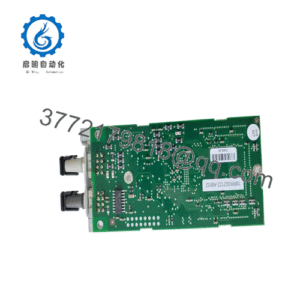
On the hardware side, GE IS215AEPCH1B is engineered as an industrial-grade board suitable for the confined nacelle environment, with an operating temperature capability that supports sub‑zero climates as well as elevated temperatures inside sealed housings. Its design supports fiber‑optic links for galvanic isolation between auxiliary power boards and feedback interfaces, which contributes to high noise immunity in electrically noisy turbine environments. This isolation helps prevent ground loops and transient propagation from damaging sensitive control electronics, especially where long cable runs and high switching currents are present.
Compatibility is a major advantage for GE IS215AEPCH1B, as it is specifically intended for use within GE Mark VIe wind turbine platforms and associated pitch systems. It integrates with SCADA and turbine control software used across GE wind fleets, which means diagnostics, alarms, and trending are available within the same toolset operators already know. For service providers, this reduces commissioning time and minimizes the risk of integration issues when replacing or upgrading pitch electronics in existing turbines.
From a reliability perspective, GE IS215AEPCH1B is designed with redundancy and fault tolerance in mind, recognizing that pitch control is a critical safety function. Support for multiple control sections and fiber‑optic isolation helps the system continue operating even when a single section experiences a fault, which is crucial for maintaining safe operation until a planned maintenance window. Combined with its robust environmental capabilities and availability of replacement units through multiple global channels, the module offers a long, dependable service life in demanding wind energy applications
Detailed technical specifications
| Parameter | Value |
|---|---|
| Model | GE IS215AEPCH1B Pitch Center Controller Module |
| Brand | General Electric (GE Energy) |
| Series | Mark VIe Wind Turbine Control System |
| Product Type | Wind pitch center controller / I/O terminal module |
| Primary Function | Blade pitch angle control with field current and voltage feedback processing |
| System Configuration | Dual system (H2) with up to three redundant control sections |
| Operating Voltage | Nominal 24 Volt Direct Current pitch system supply (application dependent) |
| Operating Temperature Range | Approximately –30 °C to +65 °C (wind turbine environment) |
| Signal Handling | Analog input and analog output channels for pitch drive contro |
| Feedback Interfaces | Field current and voltage feedback from pitch motors and drives |
| Communication Links | Fiber‑optic links for isolation between auxiliary and feedback boards |
| Noise Immunity | High noise immunity enabled by fiber‑optic isolation and robust design |
| Typical Application Environment | Onshore and offshore wind turbine nacelles and control cabinets |
| Country of Manufacture | United States of America (USA) |
Related modules or compatible units
GE IS220PRTDH1A – Resistance temperature device input module used with Mark VIe systems, often providing temperature feedback to turbines where GE IS215AEPCH1B manages pitch.
GE IS220PTCCH1A – Thermocouple input module in the Mark VI/Mark VIe family that can supply additional thermal data to the same control platform as GE IS215AEPCH1B.
GE IS215ACLEH1B – Application Control Layer module that executes higher‑level control logic and communicates over Ethernet, working alongside pitch controllers in Mark VI systems.
GE IS215ACLEH1BC – Processor card used in EX2100 and related control cabinets, providing CPU resources that can coordinate with turbine and pitch subsystems using modules like GE IS215AEPCH1B.
GE IS220PTURH1B – Turbine control I/O module (not shown above but commonly paired in Mark VIe) used to handle speed and shaft signals that feed into pitch and main control decisions.
GE IS220PRTDH1A – Often installed in the same Mark VIe racks to monitor bearing and generator temperatures, complementing the mechanical protection strategy supported by GE IS215AEPCH1B.
Installation notes and maintenance best practices
Before installing GE IS215AEPCH1B, engineers should verify that the target Mark VIe wind cabinet provides the correct 24 Volt Direct Current supply range, environmental conditions, and backplane connections required for the pitch controller. The board should be mounted only in its designated slot or rack position so that fiber‑optic and feedback links align properly with auxiliary and drive interface boards. Careful attention to cable routing is important: pitch feedback and command lines should be separated from high‑voltage cables and inverter output conductors to minimize induced noise and preserve the high‑noise immunity that the fiber‑optic architecture offers. Before energizing, technicians should confirm that configuration data, turbine type settings, and redundancy parameters match the turbine’s software baseline and that all safety interlocks associated with pitch movement are tested in a controlled environment.sxrsrobot+2
In service, GE IS215AEPCH1B benefits from a maintenance approach that focuses on diagnostics rather than frequent physical intervention. During planned outages, technicians should perform visual checks for discoloration, contamination, or connector loosening, paying special attention to fiber‑optic terminations and feedback wiring. Review of event logs and SCADA trends is useful to detect early signs of degradation, such as intermittent pitch errors, slower‑than‑expected blade movements, or repeated watchdog alarms tied to the pitch system. When firmware or configuration updates are introduced for the Mark VIe platform, they should be applied to GE IS215AEPCH1B under controlled procedures with backups and rollback plans, ensuring that all redundant control sections remain synchronized and qualified for operation.