 WhatsApp: +86 16626708626
 Email:
  Phone: +86 16626708626
Description
In gas turbine control rooms racing against grid instability, the GE IS215VCMIH2C orchestrates seamless data flow across racks, preventing I/O blackouts that could scram megawatt assets mid-ramp. Engineers at combined-cycle plants or wind integration sites deploy it to knit controllers with field packs during voltage sags or cyber threats, ensuring TMR voting holds firm under load. Picture a 7HA frame syncing breakers amid renewables surge: the GE IS215VCMIH2C shuttles IONet packets flawlessly, polling dozens of modules without latency spikes. In steam turbine bays prone to EMI from exciters, it maintains rack IDs and heartbeat links, dodging desyncs that idle generators for hours. Used in industrial automation for Speedtronic Mark VI platforms, this VME master tackles backbone bottlenecks in dusty enclosures or seismic zones. Applicable in control systems from Frame 9E to HA fleets, the GE IS215VCMIH2C supports hot-swap diagnostics and protocol bridging, vital for NERC CIP compliance. Technicians value its front-panel troubleshooting during turnarounds, linking legacy serial to Ethernet without rack teardowns. Beyond basic bus arbitration, it empowers operators to trace faults rack-to-field, sustaining 99.5% availability in mission-critical duty.
Product Role in Control Networks
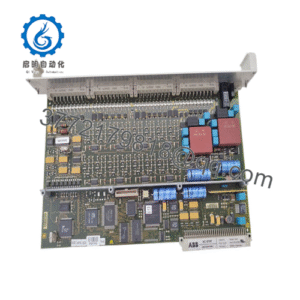
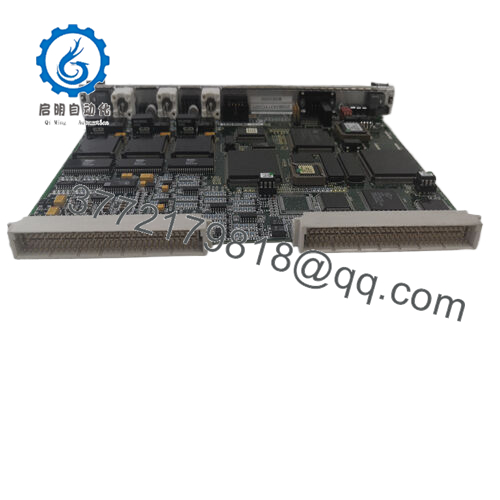
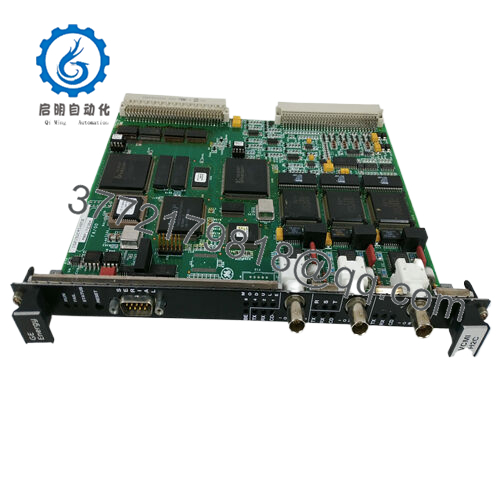
The GE IS215VCMIH2C functions as a VME bus master controller board in GE’s Mark VI turbine series, commanding communication between I/O packs, controllers, and the IONet backbone. It manages board IDs across VME racks, facilitating triple-redundant data exchange via three 10Base2 Ethernet ports and RS-232 serial, while dual-port memory buffers real-time scans at 10ms frames. Slotting into control or expansion crates alongside CPUs like IC695, it serves as the nerve center for gas, steam, or wind drivelines, decoding Modbus or proprietary packets on the fly. Integrators prize its TMR scalability, where it synchronizes <R> <S> <T> cores without phase drift, ideal for retrofitting Mark VIs to digital precision. The GE IS215VCMIH2C shines in hybrid setups, tunneling HMI queries through fiber to remote packs, offloading processors for logic-heavy apps. Conversational in diagnostics, its LEDs flag TX/RX/CD link states, letting teams isolate IONet loops via ToolboxST tweaks. Ultimately, it unifies volatile rack traffic into bulletproof orchestration.
Core Strengths and Performance
Control techs rely on the GE IS215VCMIH2C for ironclad bus mastery—a Pentium 133MHz core juggles 32-bit tasks with sub-10ms latency, polling 12+ channels amid 100Mbps IONet floods. Triple Ethernet ports with TX/RX/CD LEDs enable redundant meshing, while RS-232/D-sub handles legacy tie-ins sans converters, rejecting noise via transformer isolation. Front-panel reset and status lights (Run/Fail/1-8) pinpoint bus wars instantly, cutting MTTR by half in outage crunches.
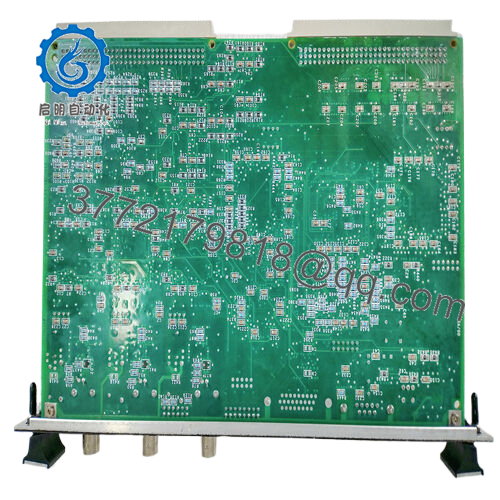
Rugged 6U formfactor (10×13 inches) mounts flush in ventilated racks, drawing +5VDC cleanly without fans—key for -30°C to 65°C turbine pits. Conformal coating fends off condensation, and >50 ICs including DSP and oscillators ensure glitch-free arbitration. EEPROM configs survive reboots, auto-booting rack inventories for seamless swaps.
Longevity stems from derated components and self-tests logging overruns, certified UL/CE for Class 1 Div 2. It mates with Proficy for waveform captures, streamlining grid sync proofs amid IEC 61850 migrations.vogiauto+2
Technical Specifications
| Parameter | Value |
|---|---|
| Model | GE IS215VCMIH2C |
| Brand | GE (General Electric) |
| Type | VME Bus Master Controller |
| Series | Mark VI Speedtronic |
| Processor | Pentium 133 MHz, 32-bit |
| Memory | Dual-port shared |
| Power Supply | +5 VDC (backplane) |
| Operating Temperature | -30°C to +65°C |
| Storage Temperature | -40°C to +85°C |
| Dimensions (W x H) | 10.16 x 33.02 cm (6U) |
| Weight | 0.4 kg (14 oz) |
| Interfaces | 3x IONet 10Base2 Ethernet, RS-232C, D-sub |
| Scan Rate | 10 ms frame |
| LEDs | Status, Fail, Run, TX/RX/CD, 1-8 |
| Certifications | UL Class 1 Div 2, CE |
| Cooling | Natural convection |

- IS215VCMIH2C
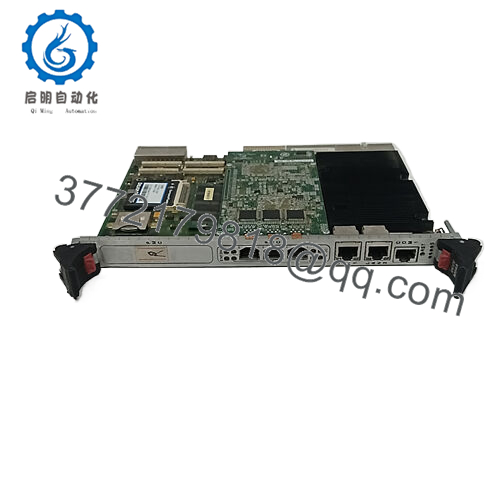
Compatible Products
- IS215UCVEM – VME processor core that relies on GE IS215VCMIH2C for IONet handoff in TMR racks.
- IS210DMCIH1A – I/O module polled directly via VME bus through the master controller.
- IS200TBCIH1B – Terminal board whose IDs are managed by GE IS215VCMIH2C rack scans.
- IC695CPU315 – PACSystems CPU interfacing Ethernet links to the VME backbone.
- IS215VCMIH1A – Single IONet predecessor for simplex upgrades to GE IS215VCMIH2C TMR.
- IS200EPCH1A – Exciter pack communicating status packets over IONet.
- IS200BPIHH1AAA – Bridge interface enumerated by the master during boot.
Installation and Upkeep
Align the GE IS215VCMIH2C gold fingers squarely into VME slot 1 (J1/J2), seating with even pressure—skewed pins drop 70% of links. Verify +5V rail at 10A headroom pre-power, and daisy-chain IONet coax with 50-ohm terminators; mis-term sparks collisions. Flash rack database via RS-232 loader matching turbine serial, bench-verifying TX blinks sans traffic. Ground front panel to chassis, routing serial away from power stabs to nix crosstalk in EMI bays.
Weekly pings via HMI export bus utilization logs, flagging latency creeps from loose modules. Firmware via Ethernet takes 7 minutes offline—mirror <R/S/T> first. Swab Ethernet BNCs monthly with IPA, as oxide kills packets; solid green Run LED trumps flashing Fail. Cycle resets quarterly to flush dual-port buffers, preempting TMR vote fails. These steps cement 10-year runs in rack heat.