 WhatsApp: +86 16626708626
 Email:
  Phone: +86 16626708626
Description
The GE IS220UCSAH1AK is part of GE’s Mark VIe controller family and is used as a standalone embedded processor module for real‑time turbine and balance‑of‑plant control in distributed systems. In typical gas, steam, and wind turbine applications, units in the IS220UCSA series act as the main Speedtronic controller, executing application code, coordinating I/O packs over the IONet Ethernet network, and interfacing with HMI and plant DCS systems. The “H1A/K” style variants are machine‑integrated modules, panel‑mounted inside control cabinets, and are applied where users need a compact, Ethernet‑rich controller with enough processing headroom for advanced sequencing, protection, and monitoring.
1. Real‑World Use & Application Scenarios
In power generation, the GE IS220UCSAH1AK is deployed in Mark VIe‑based gas and steam turbine control systems where it manages start‑up, loading, synchronization, and protection functions while exchanging real‑time data with I/O packs distributed around the turbine and auxiliaries. Operators rely on this class of controller in combined‑cycle blocks, simple‑cycle peaking units, and cogeneration plants because it can run complex application code with tight frame times and synchronize with I/O packs to within microseconds using IEEE 1588‑based time protocols. In industrial automation beyond core turbines, it is used to supervise fuel skids, lube‑oil systems, cooling water systems, and other balance‑of‑plant equipment, making it applicable in control systems that must integrate multiple subsystems into one coherent platform.
Oil and gas facilities—such as LNG terminals, compressor stations, and refinery units—also use GE IS220UCSAH1AK‑class controllers where Mark VIe systems drive large mechanical loads and need high reliability, remote diagnostics, and strong cybersecurity baselines. Because this controller family exposes multiple Ethernet ports, it fits well into modern segmented architectures where one network serves I/O (IONet) and others connect to operator stations, plant historians, and remote support access points. For users with an installed GE fleet, choosing GE IS220UCSAH1AK helps standardize software (ControlST), spare parts, and engineering practices across gas, steam, and wind assets, while still allowing site‑specific logic and interfaces.
2. Product Introduction & Positioning
The GE IS220UCSAH1AK is an embedded Mark VIe controller module derived from the IS220UCSAH1A platform, which is described as a machine‑integrated Speedtronic processor for GE turbine control systems. It belongs to the UCSx controller line, a series of stand‑alone industrial computers that run application code and communicate with Mark VIe I/O packs over dedicated Ethernet networks (IONet) using IEEE 1588 time synchronization. Functionally, it consolidates the CPU, memory, Ethernet interfaces, real‑time operating system, and local diagnostics in a single compact module that mounts directly in a control panel.
Within a typical Mark VIe architecture, the GE IS220UCSAH1AK sits at the top of the control hierarchy: beneath it are the IS220‑series I/O packs and terminal boards that interact with field devices; above and beside it are HMIs, engineering workstations, and plant DCS gateways. It executes the turbine and plant control application, distributes setpoints and commands to I/O packs, and collects status, alarms, and process data for visualization and logging. Engineers appreciate this controller because it is tightly integrated with ControlST software, uses a proven embedded PowerPC‑class processor (667 MHz range for IS220UCSAH1A), and includes multiple Ethernet ports for flexible network design. The GE IS220UCSAH1AK fits into projects where high availability, deterministic control, and long‑term OEM support are more important than using general‑purpose PLC hardware.
3. Key Technical Features & Functional Benefits
From a performance perspective, the GE IS220UCSAH1AK leverages the same core design as the IS220UCSAH1A, which uses a Freescale PowerPC‑based processor (Power QUICC II‑class) at about 667 MHz, supported by 256 MB of DDR SDRAM. This combination gives sufficient horsepower for complex turbine and plant logic, including both ladder‑style rungs and block‑structured applications, while maintaining real‑time determinism under the QNX Neutrino operating system. Fast Ethernet networking on multiple ports allows the controller to maintain low‑latency communication with I/O packs and HMIs, and IEEE 1588‑driven time synchronization keeps I/O and controllers aligned to within around 100 microseconds, which is crucial for protection and event recording.
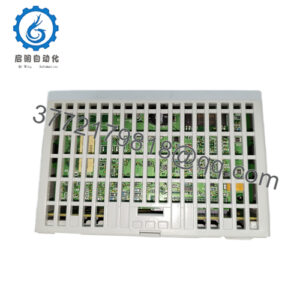
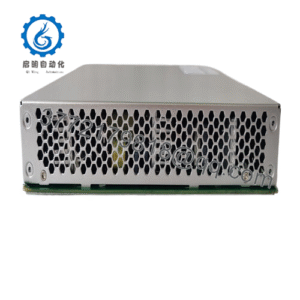
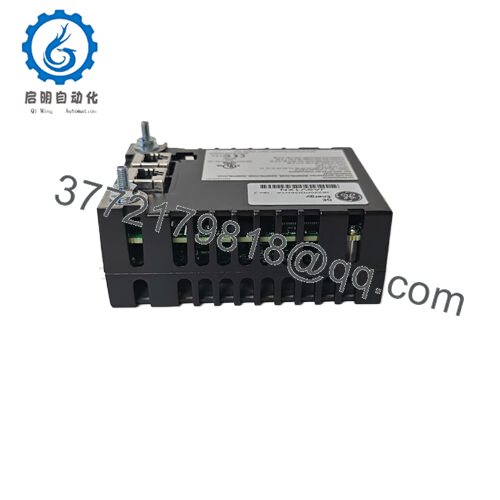
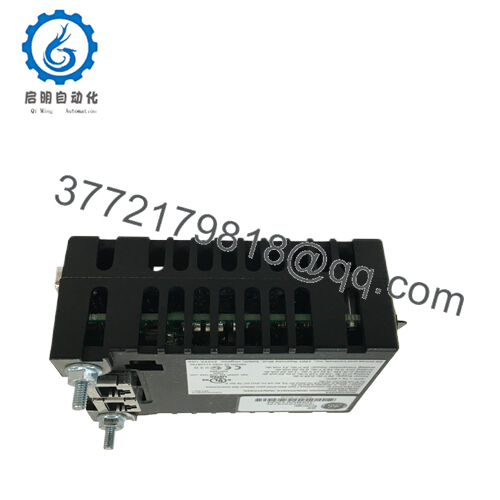
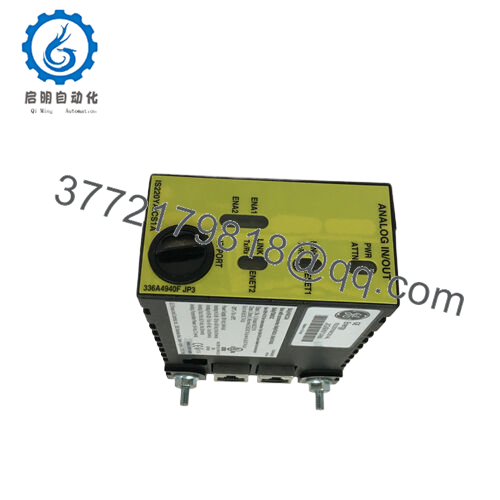
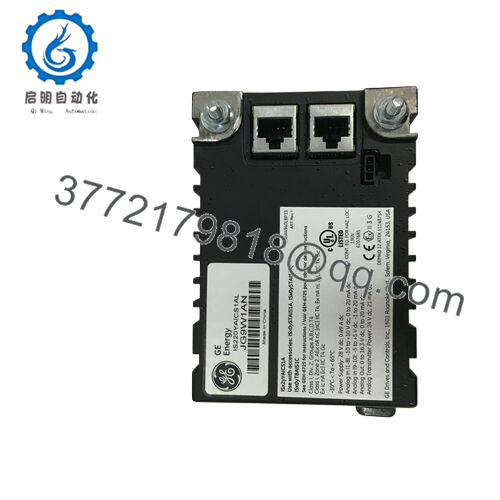
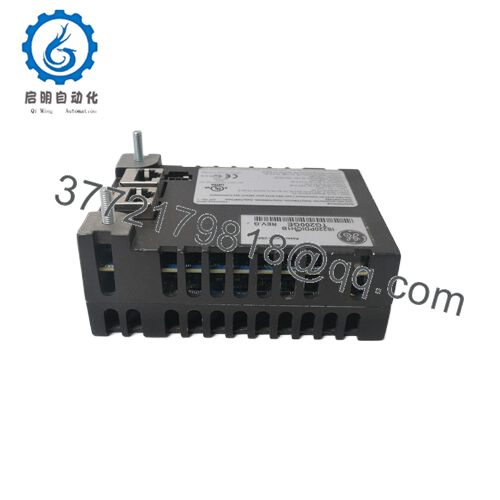
In terms of hardware design, the GE IS220UCSAH1AK is a panel‑mounted embedded module with a robust metal housing and front faceplate that includes multiple female connectors and a USB service port. Status LEDs on the front indicate power, boot, online status, flash activity, DC level, link/activity on Ethernet ports, and diagnostic state, giving technicians immediate feedback on controller health. The unit operates without a dedicated cooling fan, relying on convection and cabinet airflow; its specified operating range of roughly 0 to 65 °C allows installation in typical turbine control rooms and well‑designed enclosures near the machine skid. The construction is intended for indoor IP20‑class environments, with the cabinet providing additional environmental protection.
Compatibility is a major strength. The GE IS220UCSAH1AK is designed to work natively with Mark VIe I/O packs over IONet and can participate in UCx‑based redundant configurations described in GE’s Mark VIe controller documentation. It uses ControlST as its configuration and programming environment, aligning with the broader Mark VIe/EX2100e ecosystem and simplifying engineering across turbines, excitation systems, and auxiliary controls. Multiple Ethernet ports support separation of IONet from plant‑wide networks, and the controller can interface with HMIs and remote access systems over standard TCP/IP while still maintaining deterministic behavior on the I/O side. For users wanting to modernize older Speedtronic platforms (such as Mark V/VI) while reusing as much wiring and field hardware as practical, GE IS220UCSAH1AK‑class controllers form the backbone of upgrade packages.
Reliability is supported by a wide input‑voltage range and industrial‑grade design. The IS220UCSAH1A specification, which the GE IS220UCSAH1AK follows, lists a DC input range of 18–32 V (often powered nominally at 24–28 V), with tolerance for brownouts within defined limits. The controller is specified for 5–95% non‑condensing relative humidity and includes onboard flash memory for application storage, reducing moving parts and eliminating disk failures. By combining rugged electronics, a fanless design, and rich diagnostics, the GE IS220UCSAH1AK offers long service life in baseload and cycling duty plants, and it supports predictive maintenance by making health and status data easily visible to operators and engineers.
4. Detailed Technical Specifications
| Parameter | Value |
|---|---|
| Model | GE IS220UCSAH1AK (UCSA‑series Mark VIe controller variant) |
| Brand | General Electric (GE) / GE Vernova |
| Product Type | Embedded Mark VIe controller module (Speedtronic processor) |
| Control System Series | Mark VIe turbine and balance‑of‑plant control |
| Processor | Freescale PowerPC Power QUICC II‑class, approximately 667 MHz (per IS220UCSAH1A reference) |
| System Memory | 256 MB DDR SDRAM (typical for IS220UCSAH1A platform) |
| Operating System | QNX Neutrino real‑time operating system |
| Input Voltage Range | 18–32 V DC (nominal 24–28 V DC) |
| Ethernet Ports | Multiple (up to 5) Ethernet ports for IONet and plant‑wide networks |
| Time Synchronization | IEEE 1588‑based synchronization via R, S, T IONets |
| Operating Temperature | Approximately 0 to 65 °C (panel‑mounted, fanless operation) |
| Relative Humidity | 5–95% non‑condensing |
| Mounting | Panel‑mounted embedded controller module with front faceplate connectors and status LEDs |
| Typical Applications | Gas/steam/wind turbine control, generator and BoP control, industrial Mark VIe automation |

- IS220UCSAH1AK
5. Related Modules or Compatible Units
IS220UCSAH1A – Base UCSA controller variant for Mark VIe, sharing the same core hardware and used as a general‑purpose embedded controller.
IS220UCSBH1A / UCSBH3A / UCSBH4A – Other UCSx controller family members with different CPU speeds and power profiles, suitable for alternative performance points.
IS220‑series I/O Packs (e.g., IS220PDOAH1B, IS220PAOCH1B) – Discrete and analog I/O packs that exchange data with GE IS220UCSAH1AK over IONet.
IS220PSCxH1A Modbus Packs – Serial Modbus I/O packs used to interface Mark VIe controllers such as GE IS220UCSAH1AK to third‑party serial devices.
UCSE/UCxE Controllers – Newer Mark VIe controller line (UCSE family) with higher CPU performance and different voltage ranges, used in similar roles in newer projects.
6. Installation Notes & Maintenance Best Practices
Before installing the GE IS220UCSAH1AK, engineers should verify that the control panel provides the correct DC supply range (18–32 V) with adequate margin and that the grounding scheme matches Mark VIe guidelines to minimize noise and ground‑loop issues. Panel layout should allow unobstructed access to the front faceplate connectors and LEDs, and enough vertical space for proper convection cooling given the fanless design. Ethernet cabling to IONet networks should be routed separately from high‑voltage and high‑current conductors, respecting bend radius and shielding recommendations; IONet segments should be clearly labeled to avoid cross‑connection with plant‑wide networks. During commissioning, ControlST must be used to assign controller identity, configure IONet ports, set application frame rates, and validate time synchronization with I/O packs.
Once in service, the GE IS220UCSAH1AK requires relatively low physical maintenance but benefits greatly from regular diagnostic review. During planned outages, technicians should inspect connectors and wiring for looseness or damage, confirm that LED indications match expected power/online states, and ensure cabinet temperatures stay within specification. In ControlST, it is good practice to review alarm/event logs, IONet statistics, and time‑sync status to identify early signs of network congestion or hardware degradation. Keeping a current back‑up of the controller application and configuration, along with at least one spare GE IS220UCSAH1AK‑equivalent controller on site, allows rapid replacement if a fault occurs, significantly reducing downtime risk for critical turbine assets.