 WhatsApp: +86 16626708626
 Email:
  Phone: +86 16626708626
Description
In Mark VIe distributed control systems for gas turbines, steam turbines, and combined-cycle plants, handling large volumes of discrete contact inputs reliably presents ongoing challenges—particularly from long field cable runs, potential ground loops, electrical noise from nearby switchgear or motors, and the need for grouped termination that supports redundancy without excessive marshalling cabinets or custom barriers. False contact states can disrupt sequencing, permissive logic, trip resets, or safety interlocks, leading to extended startup times, spurious alarms, or—in worst cases—missed protection events that impact critical system uptime and asset integrity.
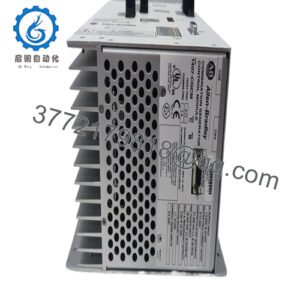
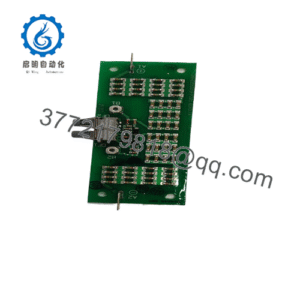
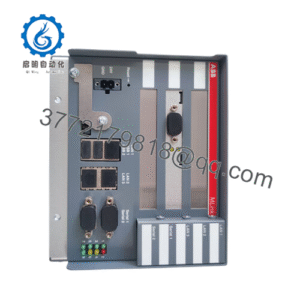
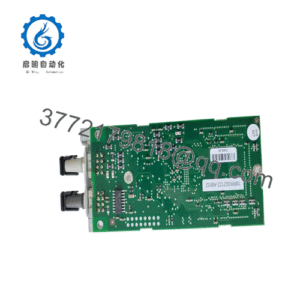
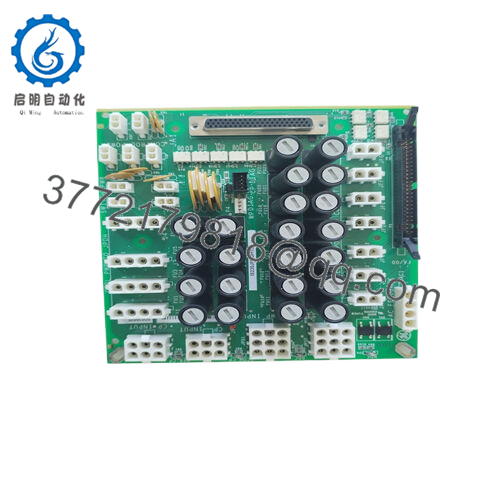
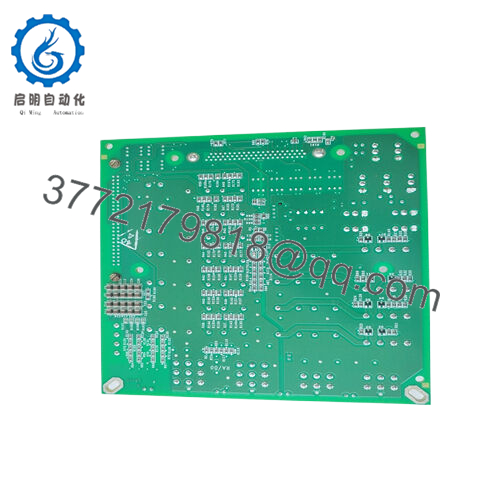
The GE IS230TCISH6C directly resolves these issues as a Contact Input Terminal Board (TBCI-series variant, often associated with TBCIS2C or similar assemblies) in GE’s Mark VIe and Mark VIeS ecosystems. This DIN-rail or panel-mountable board provides termination and initial conditioning for multiple dry contact inputs (typically 24 per board, with pairs supporting up to 48 in common configurations), delivering optically isolated signals to downstream I/O packs for clean, noise-immune processing. It becomes indispensable in turbine applications requiring high-density discrete monitoring—such as valve limit switches, breaker status, permissive contacts, or auxiliary device feedbacks—while enabling TMR (triple modular redundant) setups for safety-critical loops. By standardizing contact termination with built-in isolation and surge protection, GE IS230TCISH6C reduces wiring complexity, improves signal fidelity in harsh industrial environments, and supports compliance with protection standards like API 670 or IEC 61511.
Within the Mark VIe architecture, the GE IS230TCISH6C serves as the field-side termination point, mounting on DIN rails in local or remote I/O enclosures near devices or in control room cabinets. It accepts dry contact wiring via screw terminals, applies excitation (often 24 V DC or 125 V DC depending on variant/configuration) where needed for wetting, and routes isolated signals to an attached or nearby I/O pack (e.g., PDIA or similar discrete input packs) over the internal wiring harness or backplane links. The board integrates into the IONet Ethernet network via the I/O pack, allowing deterministic scanning and diagnostics to reach the controller or safety modules.
In TMR configurations—common for Mark VIeS SIL-rated protection—the board supports redundant contact paths, with multiple units voting on critical inputs to eliminate single-point failures. Built-in features like contact wetting voltage selection and surge suppression help maintain integrity over extended distances, while channel diagnostics (open/short detection) feed back to the HMI for proactive troubleshooting. This positioning in the I/O subsystem minimizes custom field engineering, supports distributed placement for shorter cable runs, and keeps the focus on turbine logic rather than contact reliability headaches.
| Specification | Details |
|---|---|
| Model Number | IS230TCISH6C |
| Brand | GE (General Electric) |
| Type | Contact Input Terminal Board (TBCI-series variant) |
| Input Voltage | Typically 24 V DC or 125 V DC (excitation/wetting configurable) |
| Operating Temp Range | -30°C to +65°C (Mark VIe standard) |
| Mounting Style | DIN rail or panel mount |
| Dimensions | Approx. standard TBCI form factor (e.g., ~10–15 cm W x 20–25 cm H) |
| Weight | Approx. 0.5–1 kg |
| Interface/Bus | Screw terminals to field contacts; connects to I/O pack for IONet |
| Compliance | CE, RoHS, hazardous location (with system approvals) |
| Supported Protocols | Compatible with Mark VIe IONet Ethernet via I/O pack |
| Typical Power Draw | Low (passive termination; excitation via system supply) |

- IS230TCISH6C
Deploying the GE IS230TCISH6C delivers dependable contact signal quality that keeps turbine sequencing accurate and protection logic trustworthy, directly supporting smoother startups, fewer forced outages, and higher equivalent availability in baseload or cycling operations. Its isolation and surge features effectively neutralize noise and ground issues common in turbine halls, reducing diagnostic time spent chasing intermittent contacts and allowing teams to trust discrete data for critical decisions.
The board’s flexible excitation options and high-density termination optimize cabinet space and wiring practices, especially valuable in retrofits or expansions where adding marshalling is costly. In redundant TMR architectures, it enhances fault tolerance for safety functions, enabling continued safe operation during partial failures while feeding detailed diagnostics into Mark VIe tools for trend analysis and predictive alerts. Engineered within GE’s long-supported Mark VIe platform, GE IS230TCISH6C standardizes contact handling across fleets, simplifies spares stocking, and lowers overall lifecycle costs through reduced rework and improved maintainability.
In heavy-duty gas turbine combined-cycle power plants, the GE IS230TCISH6C terminates limit switches and status contacts for fuel valves, breakers, and starting permissives, ensuring reliable inputs during rapid ramping or emergency trips under noisy electrical conditions. Steam turbine cogeneration facilities use it for auxiliary monitoring in industrial processes, where continuous uptime depends on accurate discrete feedback amid vibration and transients.
Utility peaking plants and oil & gas compressor stations also rely on GE IS230TCISH6C for high-density contact inputs in distributed setups, supporting fast, noise-immune response in applications requiring SIL compliance and deterministic performance.
For compatible or alternative options within the Mark VIe discrete input family, consider:
IS230TCISH1A – Earlier or base revision of contact input terminal board for standard applications
IS200TBCIS2CCD – Closely related base assembly often paired or equivalent in many configurations
IS230TCISH7C – Similar variant with potential differences in channel count or excitation
IS220PDIAH1B – Discrete input I/O pack that interfaces directly with TCISH terminal boards
IS230TBCIH2C – Alternative TBCI-series board for specific contact input densities
IS230SDIIH1A – Isolated digital input module for complementary or distributed setups
WROBH1A – Hazardous location terminal board options for mounting in classified areas
IS230STCIH2A – Turbine contact input variant for primary discrete handling in control loops
Before installing the GE IS230TCISH6C, verify excitation voltage matches your contact wetting requirements (24 V or 125 V DC common) and confirm compatibility with the downstream I/O pack revision to ensure proper recognition. Use shielded twisted-pair wiring for field runs, grounded at one end only, and torque screw terminals per specs to prevent loose connections. Check system grounding scheme to avoid loops, and ensure adequate spacing for heat dissipation in dense DIN-rail arrangements.
Ongoing maintenance includes annual inspections of terminals for corrosion or loosening—especially in humid or corrosive turbine environments—and visual checks for board integrity. Monitor Mark VIe diagnostics for open/short alarms or contact inconsistencies during routine outages, and perform loop checks with simulated contacts to validate response. Failures are rare, usually from external factors like wiring damage, overvoltage transients, or moisture ingress; maintain spares for quick swaps in critical paths.