 WhatsApp: +86 16626708626
 Email:
  Phone: +86 16626708626
Description
In distributed Mark VIe and Mark VIeS control architectures for gas turbines, steam turbines, generators, and industrial processes, the core requirement is a compact, reliable controller that executes deterministic application logic with high availability, minimal latency, and robust networking—without fans, batteries, or moving parts that could fail in harsh environments. Traditional controllers often introduce single points of failure through mechanical components or limited redundancy options, leading to unplanned downtime during critical operations like load ramping, synchronization, or emergency shutdowns. In power generation plants and heavy industrial sites, where critical system uptime ties directly to revenue and safety, engineers need a self-contained processing unit that supports TMR (triple modular redundancy), seamless IONet communication to distributed I/O, and long-term lifecycle stability under vibration, temperature extremes, and electrical noise.
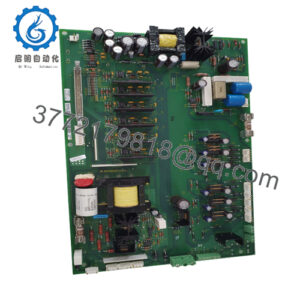
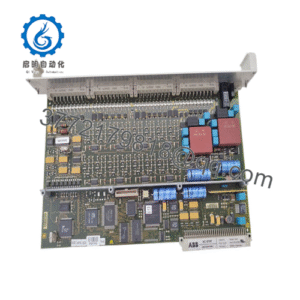
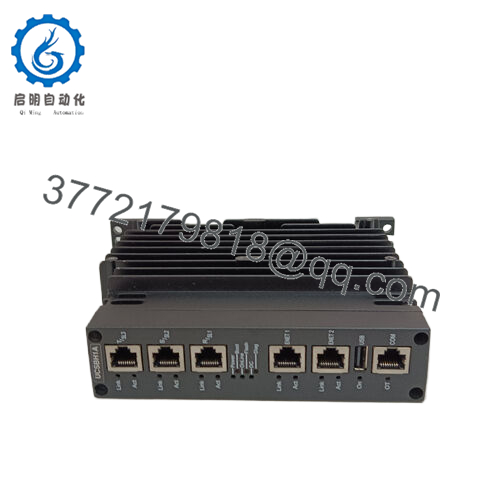
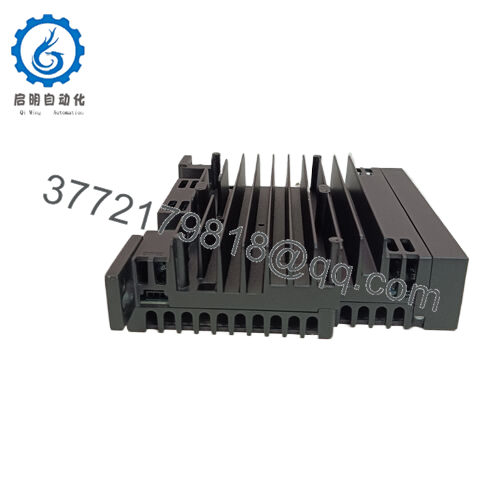
The GE IS420UCSBH1A fulfills this role as the UCSB Controller (a key variant in the UCSA/UCSB/UCSC/UCSD family) within GE’s Mark VIe platform, also applicable to EX2100e exciters and LS2100e static starters. This fanless, battery-free, single-module controller runs application-specific turbine control, protection, and sequencing logic on an embedded Intel processor, communicating deterministically with I/O packs across the plant. It proves essential in baseload combined-cycle setups, peaking plants, or retrofits where reliability trumps raw compute power, delivering the processing backbone for fast scan times, fault-tolerant operation, and integration with plant-wide HMIs or SCADA. By eliminating common failure modes like fan dust buildup or battery maintenance, GE IS420UCSBH1A reduces risk in turbine control environments, supports high reliability demands, and enables engineers to prioritize process optimization over hardware upkeep.
In the Mark VIe stack, the GE IS420UCSBH1A mounts in a dedicated panel or rack slot (typically in the control cabinet near the turbine or in a conditioned room), serving as the central processor that hosts and executes ControlST or ToolboxST-configured application code. It interfaces directly with the IONet Ethernet network—GE’s high-speed, deterministic I/O backbone—to exchange data with distributed I/O packs (PDTx, PSTx, etc.), Ethernet switches (ESWA series), and other controllers in redundant configurations. Dual or triple redundant setups use multiple UCSB units voting on outputs for safety-critical functions, while single-unit deployments suit less stringent applications.
The controller handles real-time tasks like governor control, overspeed protection interfacing, sequencing, and alarms, with internal flash storage for application code and non-volatile data. Its design supports hot-swappable redundancy switching (in TMR systems) and diagnostic reporting back to the HMI for health monitoring. Positioned at the apex of the control hierarchy, GE IS420UCSBH1A bridges field I/O to supervisory layers, enabling scalable architectures from standalone turbines to fleet-wide coordinated controls without custom middleware or excessive cabling.
| Specification | Details |
|---|---|
| Model Number | IS420UCSBH1A |
| Brand | GE (General Electric / GE Vernova) |
| Type | UCSB Controller Module (Mark VIe series) |
| Input Voltage | 18–30 V DC (nominal 24/28 V DC) |
| Operating Temp Range | -30°C to +65°C (approx. -22°F to 149°F) |
| Mounting Style | Panel/rack mount (dedicated slot) |
| Dimensions | Compact module form factor (approx. standard Mark VIe controller size) |
| Weight | Approx. 2.4 lbs (1.1 kg) |
| Interface/Bus | IONet Ethernet (multiple ports for redundancy), internal flash storage |
| Compliance | CE, RoHS, UL E207685, ATEX Zone 2 Group IIC (hazardous location capable) |
| Supported Protocols | IONet (Mark VIe deterministic Ethernet), compatible with ControlST/ToolboxST |
| Typical Power Draw | 15.6 W nominal, 26.7 W peak |

- GE IS420UCSBH1A
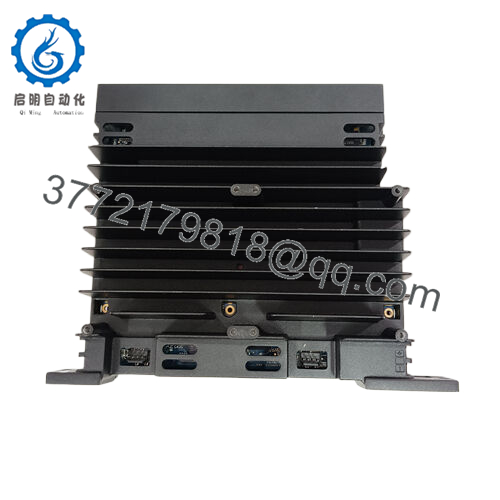
Implementing the GE IS420UCSBH1A provides rock-solid processing reliability that keeps turbine logic executing predictably, supporting tighter control tolerances, faster response to transients, and higher overall plant availability. Its fanless, no-battery construction eliminates routine maintenance items, cutting service intervals and reducing exposure to failures in dusty or high-vibration turbine environments—translating to lower OPEX and fewer forced outages.
In redundant TMR configurations, the controller enables true fault tolerance: a single unit failure doesn’t compromise protection or control, allowing seamless bumpless transfer and continued safe operation. Diagnostics integrated into GE’s ToolboxST environment offer deep visibility into CPU health, network status, and application execution, shifting teams toward predictive strategies. As part of the enduring Mark VIe platform, GE IS420UCSBH1A ensures long-term spares availability and software compatibility, simplifying fleet management and upgrades while minimizing engineering rework across turbine models.
Heavy-duty gas turbine applications in combined-cycle power plants rely on the GE IS420UCSBH1A for core governor, sequencing, and protection logic, maintaining precise speed/load control during grid disturbances or startup sequences in high-demand environments. Steam turbine and generator excitation systems (via EX2100e integration) use it for synchronized operation in cogeneration or utility peaking facilities, where continuous uptime is essential for process stability.
Industrial oil & gas compressor trains and large mechanical drive setups deploy GE IS420UCSBH1A in distributed Mark VIe controls, handling complex sequencing and safety interlocks under harsh conditions. These uses showcase its strength in vibration-prone, high-reliability scenarios requiring deterministic performance and hazardous-area compliance.
For compatible or alternative options within the Mark VIe controller family, consider:
IS420UCSBH3A – Later revision of UCSB with potential hardware/firmware enhancements for newer applications
IS420UCSBH4A – Updated variant offering improved processing or compatibility in recent Mark VIe builds
IS420UCSC series (e.g., IS420UCSCS2A) – Similar compact controller with comparable software but different form or features
IS420UCSA – Base UCSA model for non-hazardous or standard applications
IS420UCSD – Specialized variant for specific redundancy or safety-focused setups
IS420UCSBH1B – Close revision with minor component updates for interchangeability
IS420PPNGH1A – Related processor/network module in extended Mark VIe configurations
IS420ESWAH series – IONet switches that pair directly with UCSB for network redundancy
Before installing the GE IS420UCSBH1A, confirm power supply matches the 18–30 V DC range and verify IONet network topology (cabling, switches, IP assignments) aligns with your TMR or simplex configuration to prevent communication faults. Check controller firmware revision compatibility via ToolboxST, ensure proper grounding and shielding for Ethernet ports to minimize noise, and allocate ventilation in the panel—though fanless, dense racks still require airflow. Load application code and perform initial diagnostics to validate boot and network health.
Ongoing maintenance focuses on periodic visual inspections for dust accumulation on heatsinks (clean gently if needed), connector security, and power supply stability during outages. Monitor ToolboxST diagnostics for CPU utilization, IONet packet errors, or thermal trends; run application validation tests annually or per plant procedures. Failures are uncommon—typically from power transients, network issues, or physical damage rather than processor wear; keep hot spares configured and ready for rapid swap in redundant systems.