WhatsApp: +86 16626708626
 Email:
 Phone: +86 16626708626
Description
Core Product Summary
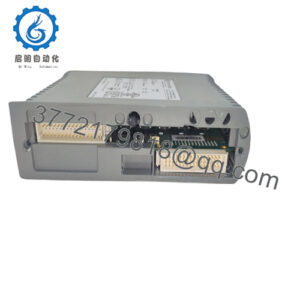
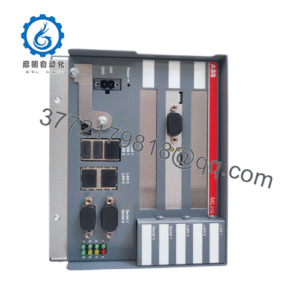
The GE IS420UCSBH1A is a standalone UCSB controller that executes application-specific control logic in Mark VIe systems. It uses a 600 MHz Intel EP80579 processor and the QNX Neutrino real-time operating system. Rather than hosting application I/O on a local backplane, the controller exchanges process data with distributed I/O packs through dedicated IONet Ethernet interfaces.
The module includes 256 MB of ECC DDR2 SDRAM, 2 GB of NAND flash, two supervisory or peer-communication Ethernet interfaces, and three IONet ports. Its single-module construction incorporates the power supply and requires neither a cooling fan nor a battery. Installation requires direct panel mounting with unobstructed vertical airflow through the cooling fins. The UCSBH1A has a nominal power consumption of 15.6 W and a peak requirement of 26.7 W.
Key Technical Specifications
| Parameter | Specification |
|---|---|
| Manufacturer | General Electric |
| Exact part number | IS420UCSBH1A |
| Functional designation | UCSB |
| Product type | Standalone application controller |
| Documented application platforms | Mark VIe, EX2100e, and LS2100e |
| Processor | 600 MHz Intel EP80579 |
| Operating system | QNX Neutrino |
| Working memory | 256 MB DDR2 SDRAM with error-correcting code |
| Nonvolatile memory | Flash-backed SRAM and 2 GB NAND flash |
| Direct application I/O | No application I/O hosted on the controller |
| Primary Ethernet interface | ENET1, RJ-45, 10/100 Mb/s |
| Secondary Ethernet interface | ENET2, RJ-45, 10/100 Mb/s |
| IONet interfaces | Three RJ-45 Ethernet ports for R, S, and T I/O networks |
| Nominal power consumption | 15.6 W |
| Peak power requirement | 26.7 W |
| Power input connection | 28 V DC micro-mini Mate-N-Lok |
| Ambient rating for enclosure design | −30 to +65 °C |
| Cooling | Fanless; vertical airflow through cooling fins must remain unobstructed |
| Battery | No battery required |
| Mounting | Direct panel mounting |
| Engineering application | ToolboxST |
| OPC UA dependency | Mark VIe controller firmware version 5.01 or later |
The processor and application-platform identification apply to IS420UCSBH1A; the remaining specifications are documented UCSB characteristics explicitly covering UCSBH1A.
Engineering Selection Highlights
- The controller hosts no direct application I/O → field signals require distributed I/O packs and the associated IONet infrastructure rather than direct wiring to the controller.
- Three dedicated IONet interfaces serve the R, S, and T networks → controller and I/O-network redundancy must follow the selected system architecture.
- ENET1 and ENET2 support supervisory and peer communications → their assigned UDH or CDH roles must match the application network configuration.
- A 26.7 W peak power requirement accompanies the 15.6 W nominal consumption → power-distribution capacity should account for peak demand, not nominal operation alone.
- Fanless construction depends on unobstructed vertical airflow through the fins → mounting orientation and nearby cabinet hardware affect installation suitability.
- OPC UA requires firmware version 5.01 or later → the controller’s installed firmware is a selection dependency when this protocol is required.
- IS420UCSBH1A is identified separately from the UCSBS1A safety controller → the H1A designation must not be treated as evidence of Mark VIeS functional-safety capability.
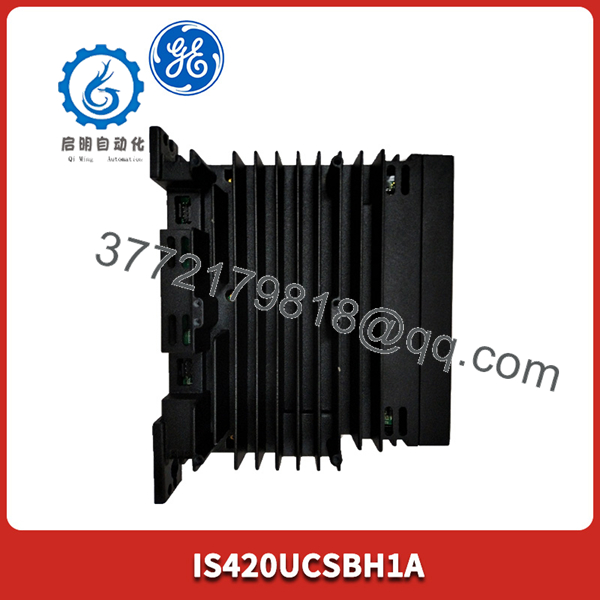
IS420UCSBH1A
System Compatibility & Integration Requirements
| Item / Dependency | Verified Compatibility or Requirement | Practical Note |
|---|---|---|
| Application platform | Mark VIe, EX2100e, or LS2100e controller | Hardware identification alone does not establish the loaded application configuration. |
| Distributed I/O | Mark controls I/O packs communicating through IONet | The controller provides processing and communications, not local field-signal terminals. |
| IONet infrastructure | Dedicated Ethernet networks connected through R, S, and T interfaces | IONet is a private, special-purpose network for Mark controls equipment. |
| ENET1 | Typically assigned to UDH communications | Used for communications with HMIs, historians, and other controllers. |
| ENET2 | Typically assigned to CDH peer communications | Network role depends on the application configuration. |
| Engineering tool | ToolboxST | Used for controller configuration and Ethernet-based access after IP assignment. |
| Application software | Software specific to the intended application | Controller commissioning includes the required application configuration. |
| OPC UA | Controller firmware version 5.01 or later | Protocol availability depends on firmware. |
| Power connection | 28 V DC input through a micro-mini Mate-N-Lok connector | Power and communication wiring follow the installed system configuration. |
These relationships are documented for the UCSB architecture and the IS420UCSBH1A application designation.
Dimensions, Mounting & Connection Notes
- The controller mounts directly to panel sheet metal as a single module.
- Keyhole mounting features allow the module to engage installed mounting screws before being secured.
- The cooling fins must be oriented for vertical airflow, with the airflow path unobstructed.
- Power enters through a 28 V DC micro-mini Mate-N-Lok connector.
- RJ-45 connections provide ENET1, ENET2, and the R, S, and T IONet interfaces.
- The USB connection supports initial UDH IP-address setup and controller backup/restore functions.
- A backup/restore push-button is located on the bottom of the module.
- The UCSBH1A ambient rating for enclosure design is −30 to +65 °C.
Detailed Product Overview
The IS420UCSBH1A combines application processing, memory, internal power conversion, and network interfaces in a panel-mounted module. Its 600 MHz Intel EP80579 processor runs QNX Neutrino and executes application code expressed through control blocks and logic. The controller supports analog and discrete blocks, with Boolean logic represented in relay-ladder format. This makes the loaded control application, rather than the hardware part number alone, central to its operating role.
The separation between processing and I/O is an important integration boundary. The UCSB does not contain application I/O channels. Instead, distributed I/O packs exchange process information with it over dedicated IONet connections. The R, S, and T ports support the system’s I/O-network architecture, while ENET1 and ENET2 provide separate paths for supervisory and peer communications. IONet is not a general-purpose plant Ethernet connection; it is reserved for the supported Mark controls equipment.
ENET1 is typically used for the Unit Data Highway, connecting the controller with HMIs, historians, and other controllers. ENET2 is typically used for the Control Data Highway and peer communications. Supported communications include EGD, Modbus, and OPC UA, although OPC UA requires controller firmware version 5.01 or later. Consequently, an interface requirement should be checked against the configured network role and installed firmware, not simply the presence of an Ethernet connector.
The fanless, battery-free design changes the maintenance items associated with the controller but does not remove installation constraints. Heat must leave through the cooling fins, so direct panel mounting must preserve unobstructed vertical airflow. Cabinet power design must also accommodate the 26.7 W peak requirement alongside the 15.6 W nominal consumption.
Controller replacement includes configuration recovery. The UCSB backup/restore function preserves controller configuration, including the UDH IP address, using a USB device and the module’s recovery button. A ToolboxST download may still be required after restoration to return the controller to an online, controlling state. Physical installation therefore represents only one part of returning the module to service.
Applications & System Role
The IS420UCSBH1A occupies the application-processing layer of a distributed control architecture. It executes control code while separate I/O packs interface with field equipment. Process inputs and outputs move between the controller database and those I/O packs over IONet, separating application execution from field-signal termination.
Its documented platform roles include Mark VIe control, EX2100e excitation control, and LS2100e static-starter control. These are application contexts for the controller hardware, not a statement that a unit loaded for one platform can be transferred to another without the required software and system configuration.
In redundant UCSB configurations, network communications also carry controller state, initialization, status, and synchronization information. Dual systems exchange information between the designated controller and its partner; triple modular redundant systems additionally exchange values used for voting among the three controllers.
FAQ
What is the GE IS420UCSBH1A?
The GE IS420UCSBH1A is a standalone UCSB application controller identified for Mark VIe, EX2100e, and LS2100e systems. It executes application-specific control code and communicates with distributed I/O.
Which processor and memory does it use?
It uses a 600 MHz Intel EP80579 processor, 256 MB of ECC DDR2 SDRAM, flash-backed SRAM, and 2 GB of NAND flash.
Does the controller provide direct field I/O connections?
No. The UCSB does not host application I/O; field signals are handled by distributed I/O packs communicating with the controller through IONet.
What Ethernet interfaces are available?
The controller provides ENET1, ENET2, and three IONet interfaces for the R, S, and T networks. ENET1 is typically used for UDH communications, while ENET2 is typically used for CDH peer communications.
Does the IS420UCSBH1A require a fan or battery?
No. The UCSBH1A is fanless and requires no battery, but installation must maintain unobstructed vertical airflow through its cooling fins.
What software is used to configure it?
ToolboxST is used for controller configuration and engineering access. Once the controller has an IP address, ToolboxST communicates with it over Ethernet.
Does it support OPC UA?
Yes, OPC UA is supported on the Mark VIe UCSB controller with firmware version 5.01 or later. Its use also depends on the application’s network configuration.
Is IS420UCSBH1A the UCSB safety-controller model?
No. IS420UCSBH1A is identified as a Mark VIe, EX2100e, or LS2100e controller; UCSBS1A is the separately identified Mark VIeS safety-controller designation.