 WhatsApp: +86 16626708626
 Email:
  Phone: +86 16626708626
Description
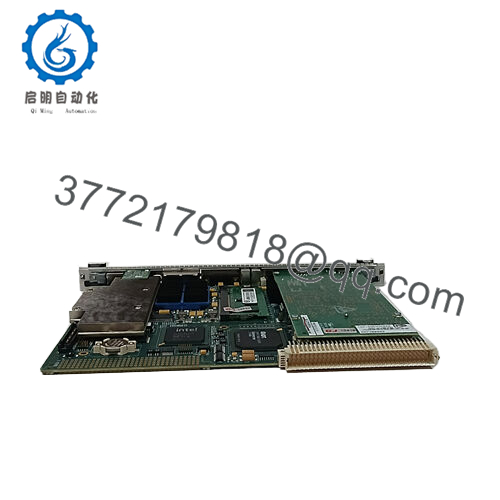
The GE VMIC-7487A is a high-performance, single-slot VMEbus processor module engineered for the most demanding real-time computing tasks. In industries such as power generation, pharmaceutical manufacturing, and aerospace simulation, the synchronization of complex data streams requires a controller that can process information with absolute determinism. You will typically find the GE VMIC-7487A acting as the primary system controller in a VME64 rack, where it manages the flow of data between high-speed analog inputs and digital control outputs. In a modern gas turbine control system, for example, the GE VMIC-7487A is tasked with executing millisecond-level logic to adjust fuel-to-air ratios based on real-time sensor feedback. These environments are often plagued by high electrical noise and temperature fluctuations; the industrial-grade architecture of the GE VMIC-7487A is specifically designed to maintain computational integrity under these stresses. It is widely used in industrial automation for applications that require a combination of high-speed processing and a vast array of local I/O connectivity. Because it supports a wide range of real-time operating systems, the GE VMIC-7487A is also applicable in control systems that must integrate legacy code with modern, high-bandwidth communication protocols. Its design ensures that even in the event of a peripheral failure, the core processing unit remains stable, preventing a localized error from cascading into a total system shutdown.
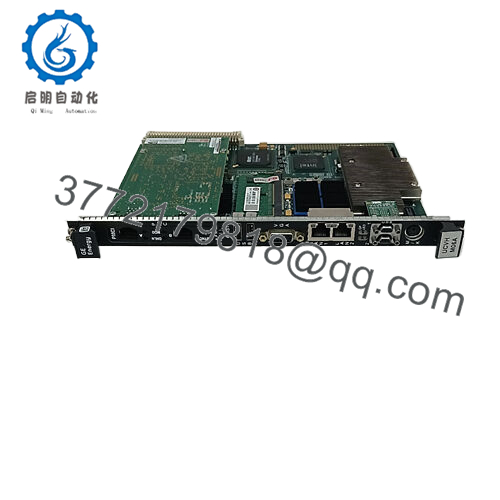
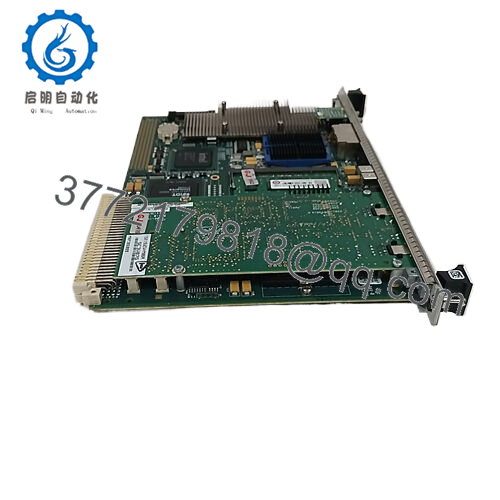
Technically defined as a 6U VME Single Board Computer (SBC), the GE VMIC-7487A is built around the Intel processor architecture, providing a familiar and powerful environment for embedded developers. It serves as the “command center” of the VME chassis, utilizing a high-performance VMEbus interface to communicate with other cards across the backplane. Within a distributed control architecture, the GE VMIC-7487A handles the high-level decision-making tasks, such as alarm management, data logging, and network communications via its onboard Ethernet ports. For engineers and system integrators, the value of the GE VMIC-7487A lies in its massive onboard memory and flexible storage options, which often include support for CompactFlash or solid-state IDE drives. This eliminates the need for moving parts like traditional hard drives, which are prone to failure in vibration-heavy industrial settings. The GE VMIC-7487A is positioned as a “workhorse” controller that balances raw CPU throughput with the rugged physical requirements of a VMEbus environment. By integrating the GE VMIC-7487A into a system, integrators can consolidate multiple lower-power boards into a single slot, freeing up valuable rack space for additional I/O or specialized expansion modules.
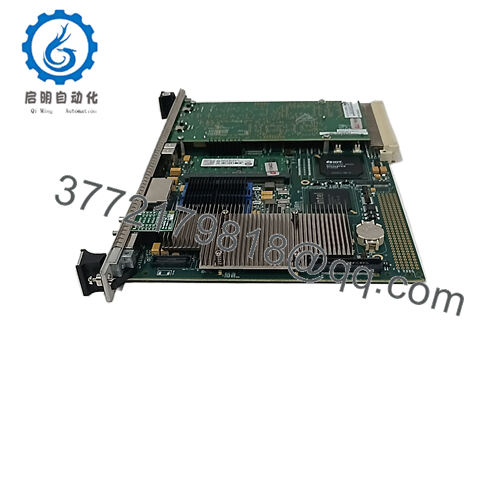
The functional performance of the GE VMIC-7487A is characterized by its exceptionally low latency and high interrupt-handling capabilities. This ensures that the controller can respond to external events—such as an emergency stop signal or a pressure spike—faster than commercial-grade hardware. The hardware design of the GE VMIC-7487A incorporates high-density surface-mount components and a dedicated thermal management system that pulls heat away from the CPU and into the surrounding airflow of the rack. This reliability is a key differentiator for the GE VMIC-7487A, as it allows the board to maintain a consistent clock speed without thermal throttling, even during peak processing loads.
Compatibility is another major strength, as the GE VMIC-7487A features a variety of front-panel I/O, including VGA for local display, USB for peripheral devices, and dual serial ports for communication with legacy PLCs or sensors. The integration of the GE VMIC-7487A into existing systems is simplified by its adherence to standard VME standards, ensuring it can operate in racks alongside older VMIC modules or newer third-party hardware. For long-term reliability, the GE VMIC-7487A includes a sophisticated watchdog timer and environmental monitoring sensors that can alert the host system to potential issues—such as over-temperature or voltage fluctuations—before they lead to a hardware failure. This level of self-diagnostic capability makes the GE VMIC-7487A an ideal choice for remote or unmanned installations where onsite maintenance is difficult.
| Parameter | Value |
| Model | GE VMIC-7487A |
| Brand | GE Automation / VMIC |
| Type | VME Single Board Computer (SBC) |
| Processor | Intel Pentium Class |
| Memory | Up to 512MB SDRAM (Configuration Dependent) |
| Bus Architecture | VME64 Compliant |
| Power Supply | +5V, +12V, -12V from VME Backplane |
| Operating Temperature | 0 to +55 Degrees Celsius |
| Mounting | Standard 6U Single-Slot VME |
| Dimensions | 160mm x 233.35mm |
| Interfaces | 2 x Ethernet, 2 x Serial, 1 x VGA, 1 x USB |
| Storage | Onboard CompactFlash / IDE Support |
| Environmental Rating | Standard Industrial Ruggedized |

- VMIC-7487A
VMIVME-7750 – A higher-performance SBC often used for data-heavy SCADA applications.
VMIVME-5565 – Ultra-fast reflective memory module frequently managed by the GE VMIC-7487A.
VMIVME-3122 – High-speed analog input card used to feed data to the GE VMIC-7487A.
VMIVME-4100 – Precision analog output board for driving actuators controlled by this SBC.
VMIACC-0562 – Transition cable assembly for the front-panel ports of the GE VMIC-7487A.
VMIVME-2536 – 32-bit digital I/O board often used in conjunction with this processor.
Commissioning the GE VMIC-7487A requires a thorough verification of the VMEbus backplane jumper settings. Depending on your system architecture, the GE VMIC-7487A may need to be configured as the “System Controller” if it is placed in the first slot of the chassis; failing to do so will prevent proper bus arbitration for other modules. When installing the GE VMIC-7487A, ensure that the injector/ejector handles are used to seat the board firmly into the P1 and P2 connectors. Since this board handles high-speed signals, any loose connection can result in intermittent system resets or data corruption. Ensure that the VME chassis has sufficient forced-air cooling, as the high-performance processor on the GE VMIC-7487A requires consistent airflow to maintain its operating temperature.
Maintenance for the GE VMIC-7487A is generally low-touch but should include a yearly check of the onboard CMOS battery. If the system clock begins to lose time or the BIOS settings revert to defaults, the battery on the GE VMIC-7487A should be replaced immediately to avoid boot-up delays. We also recommend periodic checks of the onboard storage (CompactFlash or IDE) for file system integrity, especially if the GE VMIC-7487A is used for heavy data logging. In high-dust environments, use a vacuum or compressed air to clean the board’s surface and heatsink every six months to ensure that dust buildup doesn’t lead to localized overheating or electrical tracking.