 WhatsApp: +86 16626708626
 Email:
  Phone: +86 16626708626
Description
The GE VMICVMIVME-4116 is typically selected for applications where precise, stable analog output is critical to the integrity of an entire control loop. Engineers use this module in distributed control systems, test stands, and supervisory control platforms where multiple analog actuators, drives, or field devices must be driven with tightly controlled voltage signals over a VMEbus backplane. It is often deployed in process plants, power generation facilities, research laboratories, and defense or aerospace test environments where deterministic analog output and repeatable behavior are more important than headline speed. In many of these systems, the GE VMICVMIVME-4116 sits in a centralized VME rack, feeding reference voltages to control valves, servo amplifiers, or simulation interfaces that represent real-world plant conditions.
Because it provides multi-channel, high‑resolution outputs, the module is well suited to scenarios such as hardware-in-the-loop simulation, closed-loop motion control, and high-accuracy setpoint generation in industrial automation. Engineers value being able to program all channels from a host CPU over the VMEbus and then rely on each output to remain rock solid, even when system load and ambient conditions fluctuate. This makes the GE VMICVMIVME-4116 applicable in control systems where downtime is costly and recalibration windows are limited. You will often find it in legacy modernization projects as well, where existing VME-based control architectures must be kept in service but upgraded for better resolution, tighter tolerances, and more robust signal conditioning.
In essence, the product is used wherever a VME-based system needs a reliable, multi-channel digital-to-analog interface between a supervisory controller and the analog world. Typical roles include driving 4–20 mA loop interfaces (through external converters), feeding programmable power supplies, or generating analog stimulus signals for sensors and instrumentation under automated test routines. These real-world use cases highlight why a board-level DAC like this remains relevant in long-lifecycle industrial and embedded systems.
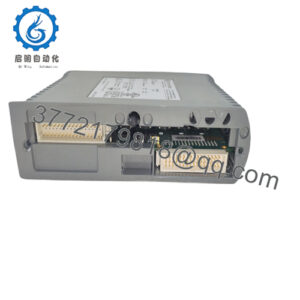
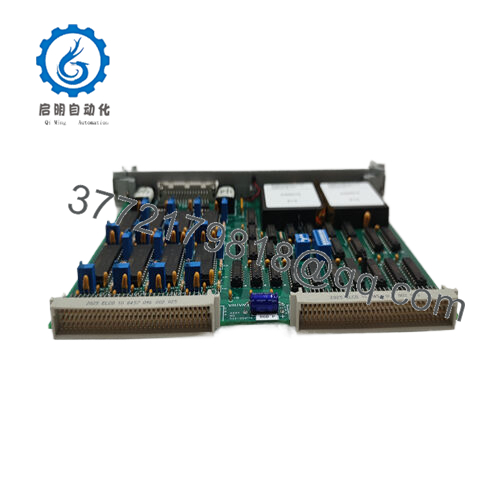
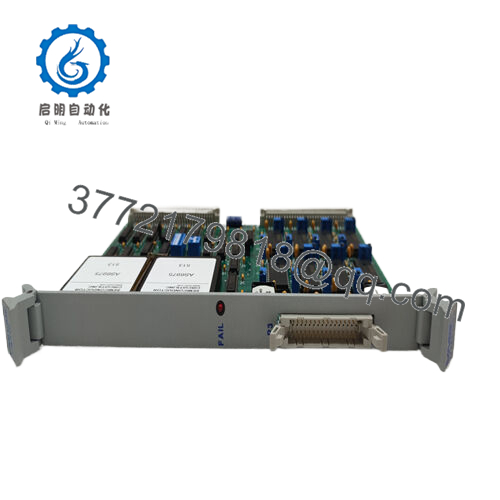
The GE VMICVMIVME-4116 is a VMEbus digital-to-analog converter (DAC) output board designed to generate multiple high‑resolution analog voltage channels from digital data supplied by a host controller. Positioned as an analog output subsystem within a VME-based control or test system, it provides the final conversion stage between software-defined setpoints and physical voltage levels at the field interface. The module is part of the GE/VMIC VME family, so it is commonly paired with VME CPU boards, digital I/O, and analog input cards to build complete control and measurement platforms.
Within a control architecture, the GE VMICVMIVME-4116 typically resides on the backplane alongside the main processor. The CPU writes 16‑bit digital values over the VMEbus into the board’s output registers, and the board’s DAC circuitry converts those values into stable, buffered analog voltages on each channel. This makes it a key element in control loops, where it acts as the analog output node feeding actuators, drivers, or downstream signal conditioners. For system integrators, its value lies in combining high resolution, predictable settling performance, and robust electrical design in a single 6U VME form factor.
The GE VMICVMIVME-4116 fits naturally into both legacy and contemporary VME installations, thanks to its standard VME electrical interface and straightforward register-level programming model. It is a good choice for engineers needing deterministic analog behavior without introducing unnecessary software complexity or proprietary toolchains. Because the board is built for industrial and embedded environments, it also addresses concerns such as long-term availability, stable operation over a wide temperature range, and maintainability for systems expected to remain in service for many years.
One of the main strengths of the GE VMICVMIVME-4116 is its combination of multi-channel capability and high-resolution digital-to-analog conversion. With eight analog output channels and 16‑bit DACs, it provides fine control over output levels, enabling precise setpoints in demanding applications such as servo tuning, reference generation, or sensor simulation. Each channel uses buffered voltage outputs, so the board can maintain signal integrity when driving moderate loads or downstream interface modules without degrading accuracy or linearity.
The hardware design of the GE VMICVMIVME-4116 emphasizes predictable behavior and fast settling. Typical implementations of this module support settling times on the order of tens of microseconds to within a small fraction of full-scale range, which is important when outputs must update quickly during step changes or when multiple channels are updated in rapid succession. Double-buffered data latches, commonly found in this class of board, help avoid output glitches when updating all channels, allowing the host to load new data and then update outputs synchronously. For engineers coordinating complex transient tests or multi-axis profiles, this can significantly improve the quality of results.
Compatibility is another practical advantage of the GE VMICVMIVME-4116. It is designed as a standard 6U VME module, operating from the system’s regulated 5 V supply and interfacing through the VME backplane for control and data transfer. This makes it straightforward to integrate into existing VME racks with established power, cooling, and wiring schemes. Standard analog output ranges, such as ±10 V, allow direct connection to many industrial drives, instrumentation inputs, and signal conditioning modules, minimizing the need for custom hardware.
From a long-term reliability perspective, the GE VMICVMIVME-4116 is built for continuous operation in demanding environments. Industrial-grade components, conservative thermal design, and proven VME mechanics support extended service life in enclosures that may experience elevated temperatures or vibration. When installed in properly cooled and filtered cabinets, the module can run for many years with only periodic verification of output calibration. This balance of performance, compatibility, and reliability makes it attractive for asset owners who want stable analog outputs without frequent board-level intervention.
Detailed Technical Specifications
| Parameter | Value |
|---|---|
| Model | GE VMICVMIVME-4116 |
| Brand | GE / VMIC |
| Product Type | 8‑Channel 16‑Bit Analog Output Board |
| Bus Interface | VMEbus, 6U Form Factor |
| Number of Channels | 8 Analog Voltage Outputs |
| Resolution | 16‑Bit Digital-to-Analog Conversion |
| Output Voltage Range | Typically ±10 Volts Buffered |
| Output Drive Capability | Approx. 5 mA per Channel (Buffered Output) |
| Power Supply | +5 Volts Direct Current via VME Backplane |
| Typical Power Consumption | Approx. 10–15 Watts |
| Settling Performance | On the order of 10 Microseconds to Full Scale |
| Operating Temperature | 0 to 55 Degrees Celsius (Typical Industrial Range) |
| Mounting | Plug‑In VMEbus Backplane, 6U Slot |
| Cooling | Forced-Air Cabinet Cooling Recommended |
| Environmental Rating | Intended for Industrial Cabinet Use |

- VMICVMIVME-4116
Related Modules or Compatible Units
VMIVME-3122 – Multi-channel analog input board commonly used alongside the GE VMICVMIVME-4116 to form complete analog I/O subsystems.
VMIVME-3113A – High‑performance analog-to-digital converter board that pairs well when closed-loop control or data acquisition is needed with the GE VMICVMIVME-4116 providing outputs.
VMIVME-3418 – Isolated signal conditioning module often used upstream of A/D boards in systems where the GE VMICVMIVME-4116 supplies precision stimulus signals.
VMIVME-1111 – Digital input board that complements the GE VMICVMIVME-4116 in mixed-signal VME control racks requiring discrete status monitoring.
VMIVME-2200 – General-purpose VME digital output module used when a system needs both high-resolution analog outputs from the GE VMICVMIVME-4116 and robust digital control lines.
VMIVME-7807 – VME CPU or single-board computer that typically serves as the host controller writing setpoints and configuration data to the GE VMICVMIVME-4116.
VMIVME-5565 – Reflective memory module often used in distributed VME systems where analog outputs from the GE VMICVMIVME-4116 must be synchronized across multiple chassis.
Installation of the GE VMICVMIVME-4116 begins with careful planning of the VME cabinet layout. Ensure that the chosen slot offers adequate airflow, with unobstructed intake and exhaust paths from the chassis fans, and verify that the backplane and power supply can deliver clean, stable 5 V power within specification under worst-case loading. Grounding and shielding should be addressed early: route analog output wiring separately from high-current or fast-switching conductors, use twisted and shielded cables where appropriate, and terminate shields at a defined cabinet ground to minimize noise coupling. It is also wise to leave physical clearance near the front panel for accessing test points, status indicators, and any labeling needed for channel identification.
From a maintenance perspective, the GE VMICVMIVME-4116 benefits from a structured inspection and verification routine rather than ad hoc checks. At planned intervals, technicians should visually inspect the board for dust buildup, discoloration, or loosened connectors, and confirm fan performance and cabinet filter cleanliness to protect against thermal stress. Periodic functional tests—such as measuring a subset of channels against a traceable reference at several output levels—help detect drift or emerging issues before they affect process quality. For systems that support it, logging configuration revisions and any calibration adjustments associated with the GE VMICVMIVME-4116 makes future troubleshooting more efficient and gives asset owners better visibility into long-term behavior.