 WhatsApp: +86 16626708626
 Email:
  Phone: +86 16626708626
Description
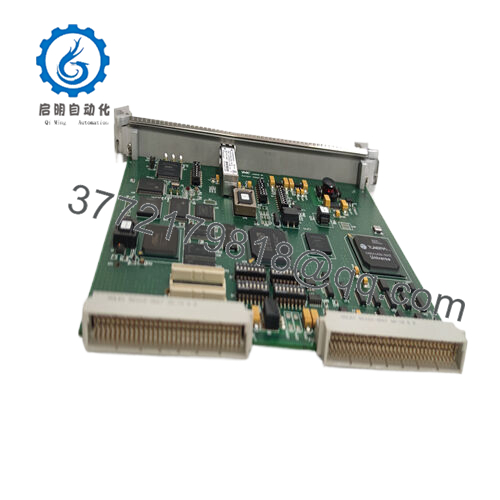
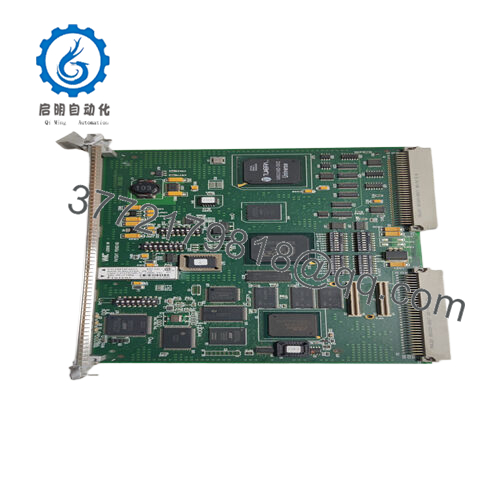
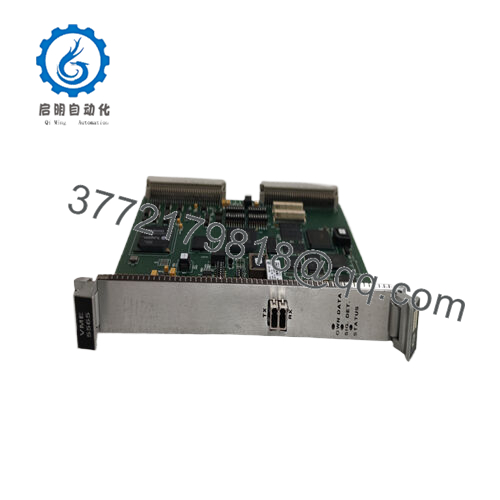
The GE VMIVME-5531M occupies a critical niche in high-speed data acquisition and real-time reflective memory networking. In complex industrial environments such as flight simulation, high-energy physics research, and large-scale power plant monitoring, the primary bottleneck is often the latency of data transfer between independent processing nodes. The GE VMIVME-5531M is engineered specifically to eliminate this bottleneck by allowing multiple VMEbus systems to share a common memory map across a fiber-optic link. In a typical aerospace testing rig, for instance, sensors capturing thousands of data points per second must distribute that information to various calculation engines and visualization workstations simultaneously. The GE VMIVME-5531M ensures that a write operation in the memory of one node is reflected in the memory of all other nodes on the ring in near real-time. This deterministic behavior is vital in industrial automation where “close enough” timing is not an option. Because it utilizes a dedicated fiber-optic path, the GE VMIVME-5531M is also applicable in control systems located in electrically noisy environments, such as near heavy motor drives or high-voltage switchgear, where traditional copper-based networking would suffer from significant signal degradation or data loss.
Technically defined as a Reflective Memory Interface, the GE VMIVME-5531M is a high-performance member of the VMEbus family, originally developed under the VMIC brand before its integration into GE’s automation portfolio. It acts as a transparent bridge, allowing up to 256 independent systems to operate as if they were sharing a single, massive pool of RAM. Within a distributed control architecture, the GE VMIVME-5531M sits directly on the backplane of a VME chassis, bypassing the overhead of standard network stacks like TCP/IP. This “hardware-only” approach to data sharing makes the GE VMIVME-5531M incredibly valuable for systems engineers who need to synchronize multi-axis motion controllers or perform hardware-in-the-loop (HIL) testing. The model is part of a legacy of ultra-reliable communication modules that prioritize deterministic data delivery over the raw, bursty throughput found in commercial IT equipment. By using the GE VMIVME-5531M, integrators can ensure that every node in a cluster has an identical view of the process variables at any given microsecond.
The standout feature of the GE VMIVME-5531M is its ability to support data transfer rates that remain consistent regardless of the number of nodes on the network. Unlike traditional Ethernet switches that may experience collisions or packet drops under heavy load, the GE VMIVME-5531M uses a redundant ring or star topology that guarantees delivery. The fiber-optic interface provides significant functional performance advantages, including total galvanic isolation between systems and a transmission range that can extend several kilometers without the need for repeaters. The hardware design of the GE VMIVME-5531M is ruggedized for the long-haul, featuring high-quality optical transceivers and onboard logic that automatically handles error detection and retransmission without taxing the host CPU.
Reliability is further enhanced by the GE VMIVME-5531M through its ability to bypass failed nodes. If one system in the ring loses power, the optical bypass circuitry ensures the rest of the network remains functional. This level of fault tolerance makes the GE VMIVME-5531M a preferred choice for mission-critical infrastructure where a single point of failure could result in catastrophic system downtime. Furthermore, the module supports various interrupt configurations, allowing for sophisticated handshaking between different operating systems—such as VxWorks, Windows, or Linux—running on different nodes in the same reflective memory network.
| Parameter | Value |
| Model | GE VMIVME-5531M |
| Brand | GE Automation / VMIC |
| Type | Reflective Memory Interface Module |
| Power Supply | +5 Volts DC from VME Backplane |
| Operating Temperature | 0 to +55 Degrees Celsius |
| Mounting | Standard VMEbus 6U Slot |
| Dimensions | Single-slot VME 6U Factor |
| Weight | Approximately 0.8 Kilograms |
| Interfaces | Multimode Fiber Optic (ST Connectors) |
| Certifications | CE, UL, RoHS Compliant |
| Cooling | Forced Air (Chassis Cooling) |
| Environmental Rating | Standard Industrial |

- VMIVME-5531M
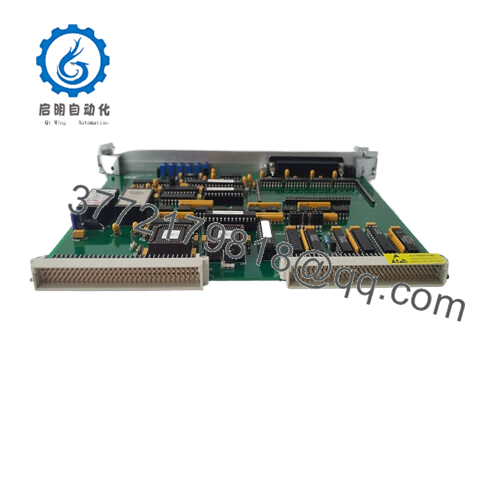
VMIVME-5588 – A higher bandwidth successor with increased memory capacity.
VMIVME-5530 – An earlier version utilizing older optical transceiver technology.
VMIVME-5550 – A compatible PCI-to-VME bridge for connecting desktop PCs to the ring.
VMIVME-7750 – A VME processor board often used as the host for the GE VMIVME-5531M.
VMIACC-5595 – A managed optical hub used to create star-topology networks.
VMIVME-5576 – A specialized reflective memory node with onboard DMA controllers.
Successful deployment of the GE VMIVME-5531M requires careful attention to optical fiber hygiene and VMEbus addressing. Before sliding the module into the rack, ensure that the address jumpers or DIP switches are configured to avoid conflicts with other memory-mapped I/O in your system. Because the GE VMIVME-5531M relies on precise optical alignment, the fiber connectors must be cleaned with specialized lint-free wipes and isopropyl alcohol prior to insertion. Even a microscopic speck of dust can cause intermittent data errors that are notoriously difficult to diagnose. Ensure that the bend radius of the fiber optic cables does not exceed the manufacturer’s specifications to prevent signal attenuation.
Once operational, maintenance of the GE VMIVME-5531M involves monitoring the onboard status LEDs, which provide immediate feedback on link integrity and data activity. We recommend a scheduled review of the system logs to check for “parity error” counts, which can be an early warning sign of a degrading optical cable or a loose connection. Since the GE VMIVME-5531M is a passive-cooled component that relies on the VME chassis fans, ensure that the air filters in your rack are cleaned regularly to maintain a consistent flow across the module’s circuitry. Firmware updates for this series are rare but should be verified when adding newer generations of reflective memory modules to an existing GE VMIVME-5531M network to ensure protocol parity.