 WhatsApp: +86 16626708626
 Email:
  Phone: +86 16626708626
Description
3. Key Technical Specifications
| Parameter | Value |
|---|---|
| Model Number | H4890P1537 |
| Manufacturer | Harland Simon (UK) |
| Product Category | Processor Board / CPU Module |
| Series | H4890P Series |
| Compatible Replacements | H4890P1424, H4890P1386 |
| Mounting Type | Rack-mounted / Chassis insertion |
| Application | Legacy industrial control systems, SCADA, process automation |
| Operating Temperature | 0°C to +55°C (industrial standard) |
| Storage Temperature | -20°C to +70°C |
| Humidity | 5% to 95% RH (non-condensing) |
| Power Requirements | Standard industrial 24 V DC or backplane powered |
| Communication | Proprietary bus architecture (Harland Simon Intella protocol) |
| Dimensions | Standard Eurocard format (approx. 233 mm x 160 mm) |
| Weight | Approx. 0.4 kg |
| Status | Obsolete / Legacy (End-of-Life) |
4. Product Introduction
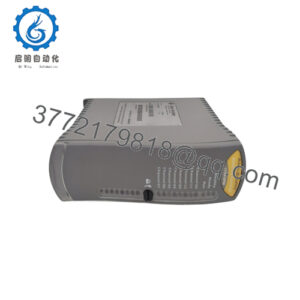
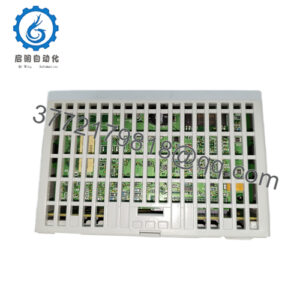
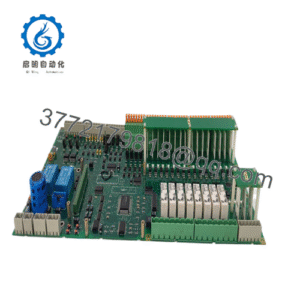
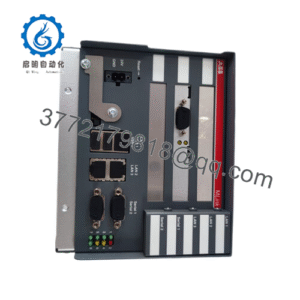
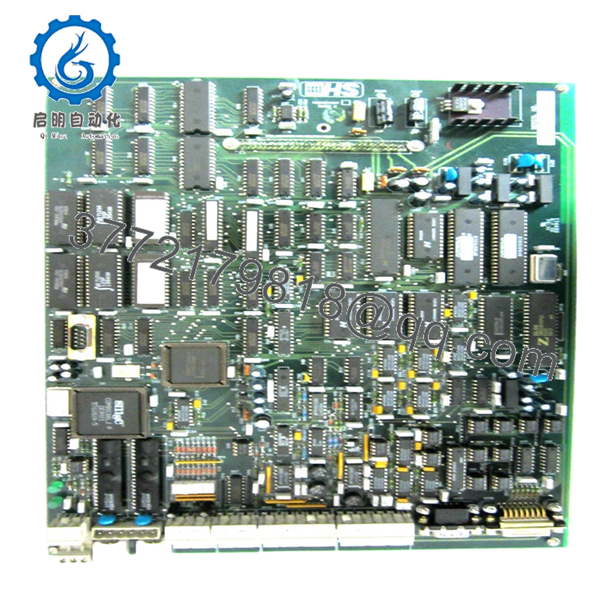
The Harland Simon H4890P1537 is a legacy processor board designed for industrial automation and process control applications. Manufactured by Harland Simon—a UK-based specialist in industrial control systems—this CPU module serves as the central processing unit within legacy distributed control systems (DCS) and programmable logic controller (PLC) architectures. It is commonly found in manufacturing plants, utilities, and process industries where Harland Simon’s Intella series and earlier control platforms were deployed.This processor board offers reliable computation and system management for legacy installations that require spare parts to maintain operational continuity. While Harland Simon has moved toward newer control platforms, the H4890P1537 remains critical for facilities running established automation infrastructure where full system replacement is not economically viable. Engineers select this module for its proven field reliability and direct compatibility with existing H4890P-series chassis and I/O configurations.

- H4890P1537
5. Installation & Configuration Guide
Stage 1: Pre-Installation Preparation (10 minutes)
⚠️ Safety First: Notify operations of planned downtime. Verify the control system is in a safe state. Lock out/tag out (LOTO) all power sources to the rack. Wait 5 minutes for capacitor discharge on the backplane before handling any modules.Tools Required:
- ESD wrist strap (grounded)
- PH1 Phillips screwdriver
- Digital multimeter (Fluke 115 or equivalent)
- Wire labeling tape or markers
- Smartphone/camera (for documentation)
Data Backup:
- Export all running control logic to removable media or network storage
- Document current IP addresses, node IDs, and network configurations
- Photograph all DIP switches, jumpers, and terminal wiring layouts before touching anything
Stage 2: Removing the Old Module (5 minutes)
- Remove the front bezel or protective cover if present.
- Label and disconnect all wiring from the front terminal block. Do not force connectors—they should release with gentle pressure.
- Release the rack locking tabs (typically top and bottom) and pull the module straight out to protect backplane pins.
- Inspect the backplane slot for bent pins, dust accumulation, or corrosion. Clean with compressed air if necessary.
- ⚠️ Note: Keep the old module for reference until the new unit is fully operational. Do not discard until commissioning is complete.
Stage 3: Installing the New Module (8 minutes)
- ESD prep: Verify your wrist strap is properly grounded to the rack chassis.
- Configuration Clone (Critical): Replicate all DIP switches and jumpers from your reference photo. Pay special attention to:
- Node address settings
- Bus termination resistors (if applicable)
- Communication baud rate selectors
- Insert the H4890P1537 into the rack slot. Push firmly until both locking tabs engage with an audible click. Ensure proper seating—no gaps between module and backplane.
- Reattach wiring using torque-appropriate screwdriver. Do not overtighten terminal screws.
Self-Checklist:
- [ ] DIP switch positions match reference photo exactly
- [ ] All wiring secured and labeled correctly
- [ ] Rack locking tabs fully engaged
- [ ] No loose hardware inside the chassis
Stage 4: Power-On & Testing (7 minutes)
Pre-Power Check: Use your multimeter to verify no shorts on the 24V backplane rail before applying power.Power-On Steps:
- Power up the rack only (keep field devices isolated initially).
- Observe LED indicators on the H4890P1537:
- Green RUN = Normal operation
- Red ERR = Fault condition
- Flashing LEDs = Boot sequence or communication handshake
- Connect via programming software (Harland Simon proprietary tools). Verify:
- Firmware version matches expected revision
- Node ID is correctly recognized on the network
- Communication handshake successful
- Download backup logic if required.
- Perform dry-run I/O testing before bringing field devices online.
⚠️ Troubleshooting Note: If the ERR LED remains solid red, suspect a firmware revision mismatch or incorrect DIP switch configuration. If no communication is established, verify network cabling, termination resistors, and switch port settings.
6. Frequently Asked Questions (FAQ)
Q: Can I hot-swap the H4890P1537 while the system is powered?
A: No. This is not a hot-swappable module. Attempting to remove or insert the processor board while power is applied can damage the backplane, corrupt the firmware, or destroy the CPU entirely. Always perform a controlled shutdown and wait for capacitor discharge before handling. I’ve seen technicians try to “quick swap” these legacy boards—resulting in blown backplane traces that took the whole rack down for days.
Q: Is the H4890P1537 obsolete, and is your stock genuinely new?
A: Yes, this model is officially obsolete from Harland Simon. Our inventory consists of new surplus stock—units that were manufactured during the original production run but never deployed in the field. These are factory-sealed or tested units stored in climate-controlled conditions. We also offer refurbished units that have undergone full functional testing. Each unit ships with a detailed test report and 1-year warranty.
Q: What is the direct replacement if the H4890P1537 is out of stock?
A: The H4890P1424 and H4890P1386 are functionally compatible alternatives within the same processor board series. However, verify firmware revision compatibility before ordering—some revisions have subtle timing differences that affect communication with specific I/O modules. If your system uses the Intella 400 platform, the H4893P4600 or H4893P4601 may be upgrade paths, though these require chassis evaluation.
Q: Will I lose my programming logic when I replace the processor board?
A: Yes—unless you have a backup. The H4890P1537 stores application logic in onboard memory that is lost when power is removed. You must download your program from the engineering workstation after installation. If you don’t have the original source code, extract it from the old processor before removal using Harland Simon’s programming tools. I’ve seen plants lose years of accumulated logic because someone pulled the CPU without backing up first.
Q: Why is your price lower than the OEM factory list price?
A: Harland Simon no longer manufactures this part, so “factory list price” is largely academic. Our pricing reflects the new surplus market reality—unused inventory acquired from plant closures, system upgrades, and distributor liquidations. We test every unit and pass the savings from bypassing traditional distribution channels directly to you. You’re buying proven hardware at market rates, not paying inflated prices for obsolete catalog listings.
Q: What firmware version should I request?
A: Document your current firmware revision before ordering. The H4890P series had several firmware iterations that affected communication timing. If your system runs firmware older than V2.x, a newer processor may require I/O module firmware updates as well. When in doubt, request the exact revision currently installed—or be prepared to update the entire rack’s firmware suite.
Q: Do you provide technical support for installation?
A: We provide pre-sales compatibility verification and general installation guidance as documented here. For deep system integration issues—especially involving legacy Harland Simon Intella platforms—we recommend engaging a system integrator familiar with 1990s-era UK automation architecture. We can supply test videos, photos of actual stock, and wiring diagrams upon request.