
 WhatsApp: +86 16626708626
 Email:
  Phone: +86 16626708626
Description
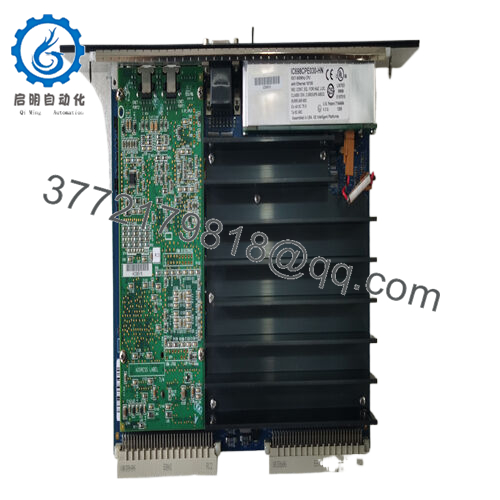
Product Model: IC698CPE010-JU
Product Brand: GE Fanuc (Emerson)
Product Series: PACSystems RX7i CPU
Product Features:
• High-performance 300 MHz Intel Celeron microprocessor for real-time control.
• Dual Ethernet and multi-serial communication interfaces (Modbus, SNP).
• Up to 10 MB battery-backed RAM and 10 MB non-volatile flash for programs and data.
• Supports web/FTP monitoring and industry standard programming languages.
Technical Specifications Table
| Specification | Detail |
|---|---|
| Model | IC698CPE010-JU |
| Brand | GE Fanuc (Emerson) |
| Series | PACSystems RX7i CPU |
| Processor | 300 MHz Intel Celeron microprocessor |
| RAM | 10 MB battery-backed RAM |
| Non-volatile Memory | 10 MB flash memory |
| Ethernet Ports | 2 ports (10/100 Mbps) |
| Serial Ports | 3 embedded RS-232/RS-485 |
| Protocols Supported | Modbus RTU, SNP, Serial I/O |
| Web/FTP Monitoring | Yes (up to 16 connections) |
| Programming Software | Proficy Machine Edition / Logic Developer PLC |
| Mounting | VME64 backplane rack slot 1 |
| Operating Temp | ~0–60 °C with appropriate cooling |
| Power Consumption | ~3.2 Amp from 5 V bus |

- IC698CPE010-JU
Product Role & System Fit
Within an RX7i automation system, the IC698CPE010-JU serves as the central processing unit, executing the user’s control logic, managing I/O, and coordinating communication across the network. Unlike smaller or application-specific controllers, this CPU is designed to handle rich program datasets, complex logical flows, and a mix of serial/Ethernet communications — making it a versatile choice for both greenfield projects and retrofits.
In a typical configuration, the CPU works alongside power supply modules, discrete and analog I/O cards, specialty communication modules, and human-machine interfaces. The CPU’s embedded Ethernet ports facilitate integration with supervisory systems, historian servers, or remote diagnostics clients. Serial ports, meanwhile, ensure compatibility with legacy devices or field instruments that have yet to adopt Ethernet.
The RX7i platform’s modular nature means you can scale out I/O density or add network modules without changing the CPU. This compatibility with existing racks and peripherals reduces upgrade costs and lets engineers focus on performance enhancements rather than wholesale infrastructure changes