 WhatsApp: +86 16626708626
 Email:
  Phone: +86 16626708626
Description
3. Key Technical Specifications
| Parameter | Value |
|---|---|
| Supply Voltage | 12–28 V DC |
| Output Voltage | ±12 V DC (analog output stage) |
| I/O Type | Multi-channel analog input/output |
| Communication | CANopen, Modbus, EtherCAT (system dependent) |
| Operating Temperature | −20 to +70°C |
| Storage Temperature | −40 to +85°C |
| Humidity | 5–95% non-condensing |
| Mounting | PCB / module integration (rack or enclosure dependent) |
| Dimensions | ~60 × 30 × 20 mm |
| Weight | ~50 g |
| Function Role | Sensor signal processing + actuator control |
4. Product Introduction
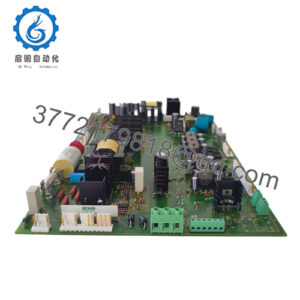
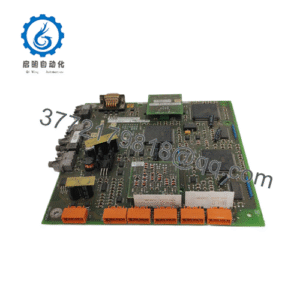
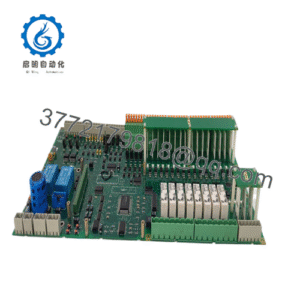
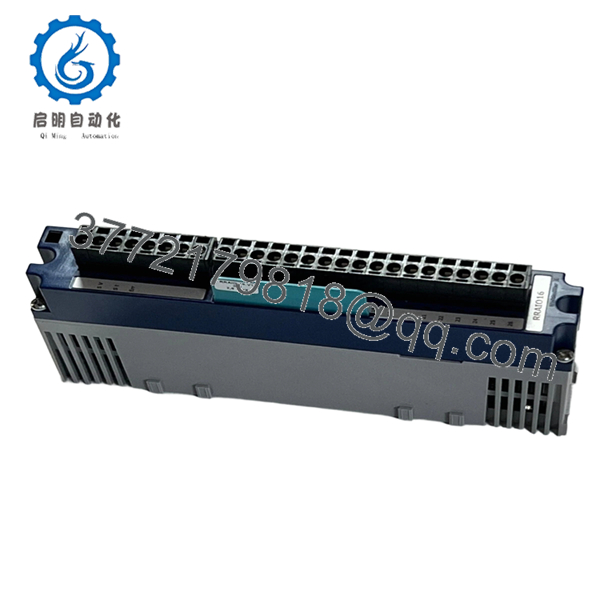
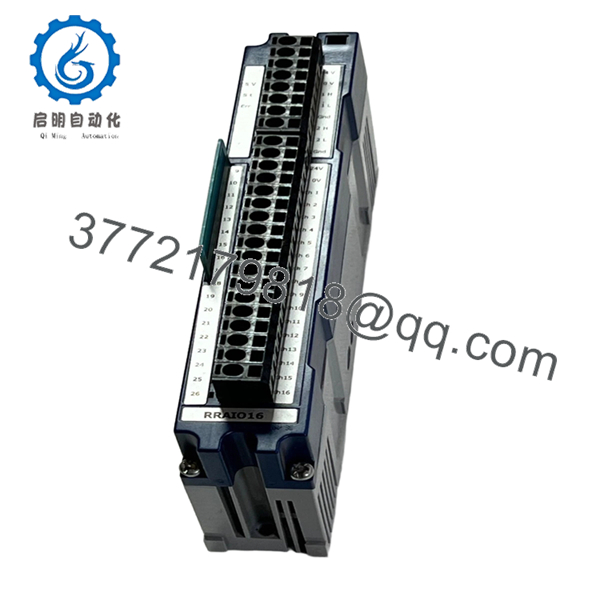
The Rolls-Royce RRAIO16 is an analog input/output module designed for signal acquisition and control within marine and industrial automation systems. It interfaces directly with field instruments—temperature, pressure, and level sensors—and provides corresponding control outputs to actuators or higher-level control systems.
In practice, this module is deployed inside Rolls-Royce propulsion or power control architectures where deterministic I/O handling is required. It typically communicates over fieldbus protocols such as CANopen or Modbus and is engineered for harsh environments including vibration and salt exposure.

- RRAIO16
- RRAIO16
5. Installation & Configuration Guide
Stage 1: Pre-Installation Preparation (Estimated Time: 10–15 minutes)
- ⚠️ Safety First:
Isolate control system, lock out power, verify zero energy state, wait 5 minutes. - Tools Required:
ESD wrist strap, multimeter (Fluke 115 or equivalent), small screwdriver set, labeling tags, smartphone. - Data Backup:
- Record I/O mapping from control system (channel scaling, ranges)
- Export PLC/DCS configuration if applicable
- Photograph terminal wiring and shielding
Stage 2: Removing the Old Module (Estimated Time: 5–10 minutes)
- Open control cabinet and identify module location.
- Label all field wiring (especially analog loops).
- Disconnect wiring—avoid stressing shield drains.
- Release mounting clips or rack guides.
- Pull module straight out to protect connectors.
- ⚠️ Note: Analog modules are sensitive—avoid bending pins or stressing PCB.
Stage 3: Installing the New Module (Estimated Time: 10 minutes)
- Wear ESD protection.
- Verify model: RRAIO16 (no suffix mismatch).
- Insert module into slot or mount securely.
- Reconnect wiring exactly as documented.
- Ensure proper grounding and shield termination.
Self-Checklist:
- Channel wiring matches original
- Shield grounded correctly (single-point)
- No loose terminals
- Module seated fully
Stage 4: Power-On & Testing (Estimated Time: 15–20 minutes)
- Pre-Power Check:
Measure supply voltage (should be stable within 12–28 V DC range).
Power-On Steps:
- Power up control system.
- Check module status indicators (if available).
- Verify communication with controller (CAN/Modbus scan).
- Inject test signals (4–20 mA or 0–10 V).
- Confirm scaling and output response.
- ⚠️ Troubleshooting Note:
- No comms → Check node ID / bus termination
- Incorrect readings → Likely scaling mismatch
- Noise in signal → Check shielding and grounding
6. Frequently Asked Questions (FAQ)
Q1: Is this a standard PLC I/O module like Siemens or Allen-Bradley?
No. This is OEM-specific hardware. It won’t drop into a generic PLC rack. It’s designed for Rolls-Royce control ecosystems.
Q2: Can I mix this with newer revisions or different I/O modules?
Be careful. Even if connectors match, firmware and protocol handling can differ. I’ve seen systems reject mixed revisions with intermittent faults.
Q3: What’s the biggest risk when replacing this module?
❗ Analog signal miswiring or scaling mismatch.
Swap two channels or misconfigure scaling, and you’ll get incorrect process values—sometimes dangerously wrong.
Q4: Does this module support hot swap?
No. Power down before replacement. Analog modules are especially vulnerable to transient damage during live insertion.
Q5: Why is grounding so critical for this module?
Because analog signals are low-level. Poor grounding introduces noise. In marine systems, I’ve seen 4–20 mA loops drift due to improper shield termination.
Q6: Is this model still actively produced?
Availability is limited. Most units in the market are surplus or refurbished. Lead times depend on secondary suppliers.
Q7: How do I verify it’s working correctly after installation?
Inject known signals (e.g., 12 mA mid-scale) and verify the controller reads expected values. That’s the quickest sanity check.