 WhatsApp: +86 16626708626
 Email:
  Phone: +86 16626708626
Description
Key Technical Specifications
| Parameter | Value |
| Input Channels | 2 Independent Channels |
| Sensor Type | Eddy current displacement sensors (VK/FK Series) |
| Measurement Range | 0 to 250 µm (or 0 to 500 µm, factory/jumper set) |
| Frequency Response | 0.1 Hz to 100 Hz (Optimized for low-speed monitoring) |
| Analog Output | Dual 4-20 mA DC (Proportional to peak-to-peak eccentricity) |
| Relay Outputs | Alert and Danger (Configurable logic) |
| Power Supply | 24 V DC (Supplied via VM-5 series backplane) |
| Operating Temp | 0 to +55 °C |
| Accuracy | ±1.0% of Full Scale |
Product Introduction
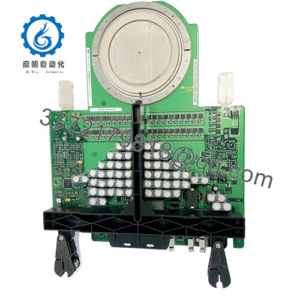
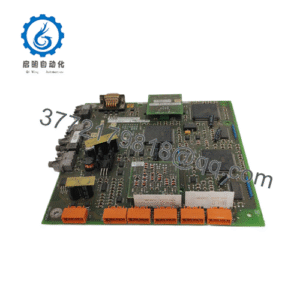
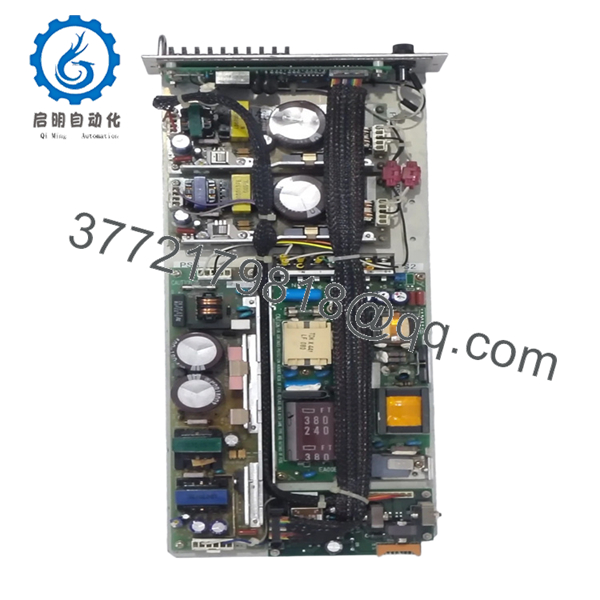
The Shinkawa VM-5Z1 is a specialized dual-channel eccentricity monitor designed for the VM-5 Series Turbine Supervisory Instrumentation (TSI) system. Its primary role is to detect shaft “bowing” or thermal distortion while a turbine is on turning gear or during the critical startup phase.
Unlike standard vibration modules, the VM-5Z1 is engineered to process very low-frequency signals (down to 0.1 Hz). This allows it to accurately measure the peak-to-peak displacement of the shaft surface relative to the sensor, ensuring that the rotor is sufficiently straight before the operator proceeds with high-speed acceleration.

- VM-5Z1
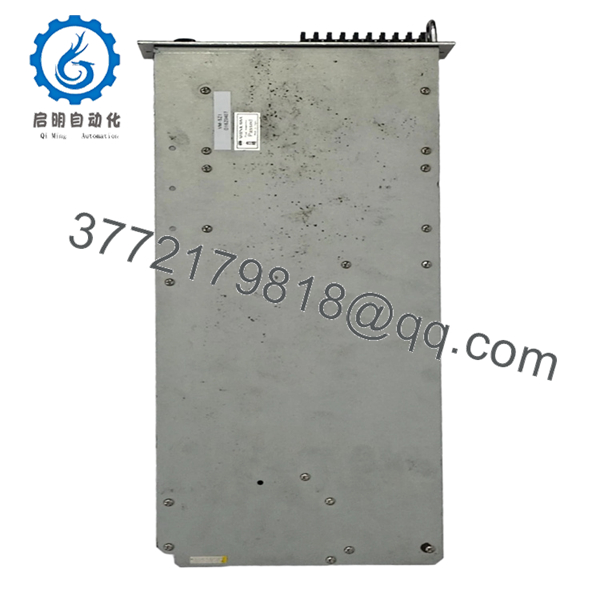
- VM-5Z1
Installation & Configuration Guide
Stage 1: Pre-Installation Preparation
- ⚠️ Safety First: Confirm the turbine is on turning gear or at a standstill. Notify the control room that eccentricity interlocks may be affected during the swap.
- Tools Required: ESD wrist strap, small flat-head screwdriver, and a low-frequency signal generator for loop verification.
- Data Backup: Record the current “Zero” offset and alarm setpoints (Alert/Danger) from the existing module’s calibration sheet.
Stage 2: Removing the Old Module
- Loosen the two captive screws on the front faceplate.
- Pull the module straight out using the handle.
- ⚠️ Note: Check the backplane connector pins for any signs of “fretting” or oxidation, which can cause signal drift in low-voltage eccentricity circuits.
Stage 3: Installing the New Module
- ESD Prep: Wear a grounded wrist strap. Static discharge can easily degrade the high-gain input amplifiers on this board.
- Configuration Clone: Mirror the DIP switch settings from the old unit. These switches define the full-scale range (µm) and the relay reset behavior (Latch vs. Auto).
- Slide the module into the designated rack slot and press firmly to seat the connector.
- Tighten the captive screws to ensure a solid mechanical and electrical ground.
Stage 4: Power-On & Testing
- Power up the rack. Verify the “OK” LED is solid green.
- Low-Speed Check: While the turbine is on turning gear, verify the eccentricity reading on the front panel display and compare it to the DCS value.
- Zero Adjustment: If the shaft is known to be straight, use the “ZERO” potentiometer on the front panel to null out any residual DC offset from the probe gap.
- Loop Test: Simulate a high eccentricity signal to confirm the 4-20 mA output scales correctly to the DCS.
Frequently Asked Questions (FAQ)
Q: Can I use the VM-5Z1 to monitor radial vibration at 3,600 RPM?
A: No. The VM-5Z1 is specifically filtered for low-frequency eccentricity measurement (up to 100 Hz). For high-speed radial vibration, you should use a VM-5V series module which has a much wider frequency response.
Q: Why does the “OK” LED go red when the turbine is at a standstill?
A: This is usually not a module fault, but a probe gap issue. If the shaft is positioned such that the probe is outside its linear range (too close or too far), the VM-5Z1 triggers an “OK” fault. Check your gap voltage at the buffered output; it should typically be around -10V DC.
Q: Is it safe to replace this module while the turbine is running?
A: Technically yes, but I advise against it unless the eccentricity trip logic is bypassed. Even a small spark during backplane insertion can cause a “Danger” spike, potentially tripping the unit. Always bypass the logic first.
Q: How often does the VM-5Z1 require calibration?
A: In most power plant environments, I recommend a loop check every 12 to 18 months. Because it handles very low frequencies, even slight component aging can affect accuracy more noticeably than on a standard vibration card.
Q: What is the difference between “Eccentricity” and “Vibration” on this rack?
A: Eccentricity (VM-5Z1) measures the physical “bend” of the shaft at low speeds. Vibration (VM-5V) measures the dynamic oscillation of the shaft at operating speeds. You need both for a complete turbine protection strategy.