 WhatsApp: +86 16626708626
 Email:
  Phone: +86 16626708626
Description
3. Key Technical Specifications
| Parameter | Value |
|---|---|
| Module Type | Local Communication & Phase Marker Module |
| System Compatibility | VM-7 Series racks (VM-761B / VM-762B) |
| Communication (Field) | RS-485 (Modbus/RTU) |
| Communication (Supervisory) | Ethernet 100Base-TX (TCP/IP) |
| Engineering Interface | USB 2.0 (Device Config) |
| Phase Marker Input | Up to 4 channels |
| Max Rotation Speed | 60,000 rpm |
| Input Voltage Range | ≤50 Vp-p |
| Output Signal | Buffered phase marker output (0–5 V pulse) |
| Alarm Output | Dry contact relay (250 VAC / 5 A) |
| Indicators | SYS-OK, ALERT, DANGER, COMM LEDs |
| Certification | Achilles Level 2 (cybersecurity) |
4. Product Introduction & Supply Chain Strategy
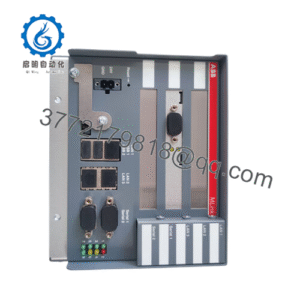
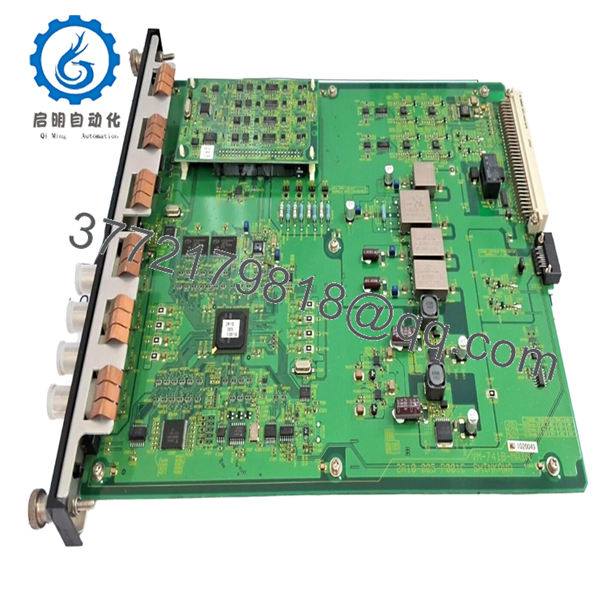
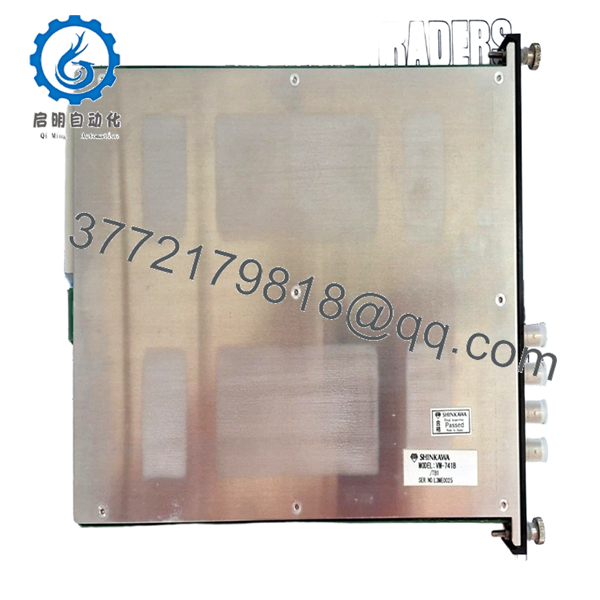
The SHINKAWA VM-741B-TB1 is a communication and phase marker module used in VM-7 machinery protection systems. It manages rack-level communication (Modbus, Ethernet) and processes phase reference signals required for speed, phase, and vibration correlation in turbines and compressors.
From a supply-chain perspective, this module is a system backbone component. Without it, data exchange between monitoring racks and DCS/PLC is lost. Given VM-7 platform maturity and limited OEM production, lead time variability is high. A structured buffer stock (1–2 units) combined with last-time-buy planning prevents costly communication loss events and avoids reliance on refurbished units with uncertain reliability.

- VM-741B-TB1
- VM-741B-TB1
5. Installation & Configuration Guide
Stage 1: Pre-Installation (Prep & Safety)
- Execute Lock-Out/Tag-Out (LOTO).
- Isolate rack power supply completely.
- Use ESD protection.
- Capture:
- Network configuration (IP, Modbus address)
- Wiring and terminal assignments
- Module slot position
Stage 2: Removal
- Power down rack.
- Release module latch.
- Pull module straight out—avoid connector stress on backplane.
Stage 3: Installation (Clone & Seat)
- Insert VM-741B-TB1 into identical slot (typically communication slot).
- Reconnect:
- Ethernet cable (RJ-45)
- RS-485 wiring
- Phase marker inputs (BNC/terminal)
- Verify grounding and shielding integrity.
Stage 4: Power-On & Testing
- Reapply power.
- Verify LEDs:
- SYS-OK (green steady)
- COMM (flashing = active data)
- Confirm:
- DCS communication established
- Phase signal detected (TRG LED behavior)
- Validate alarm relay output and reset logic.
6. Firmware/Software Versions & Upgrade Notes
- VM-741B firmware is embedded; no field firmware flashing typical.
- Compatibility considerations:
- Must match VM-7 rack configuration and communication modules (VM-742B).
- Ethernet/IP and Modbus mapping must align with DCS configuration.
- Critical warning:
- Replacing with a different revision without network validation can break communication mapping.
- Firmware mismatch may cause Modbus register offsets or alarm signal delays.
- Best practice:
- Maintain identical module revision across redundant systems.
- Avoid firmware changes during emergency replacement—prioritize system stability.
7. Frequently Asked Questions (FAQ)
Q1: Are these VM-741B-TB1 units truly new?
Yes. These are New Surplus units—unused OEM modules with verified serial traceability, no connector wear, and no prior field exposure.
Q2: Why is this module considered critical?
It acts as the communication gateway for the entire VM-7 rack. Failure results in total loss of monitoring data to the control system.
Q3: Why avoid refurbished units for this module?
Communication modules are sensitive to component aging. A refurbished unit may intermittently drop network packets—leading to false alarms or loss of protection visibility.
Q4: Is VM-741B-TB1 still in production?
It belongs to the VM-7 platform with limited ongoing production. Availability is inconsistent—this is a high-priority lifecycle tracking item.
Q5: Can this module be hot-swapped?
VM-7 architecture allows front access, but in practice, controlled shutdown is recommended to avoid communication faults and alarm misinterpretation.
Q6: What stocking strategy do you recommend?
- Critical plant: Minimum 1 unit (buffer stock)
- Multi-rack systems: Maximum 2 units with cross-site sharing
Q7: What QC and warranty are included?
Each unit includes:
- OEM serial verification
- Communication handshake testing (Modbus + Ethernet)
- Phase signal simulation validation
- Electrical integrity testing
Warranty: 12months.