 WhatsApp: +86 16626708626
 Email:
  Phone: +86 16626708626
Description
3. Key Technical Specifications
| Parameter | Value |
|---|---|
| Supply Voltage | 24 V DC (+30% / −25%) |
| Power Terminals | 1 = 24 V, 2 = 0 V, 3 = PE |
| System Platform | Vista Automation (SMU architecture) |
| Function | Substation control and monitoring |
| Revision | Rev. 0.6 |
| Weight | Approx. 1.68 kg |
| Communication | Integrated system bus (proprietary SMU network) |
| Application | Marine control systems / distributed substations |
| Mounting | Panel-mounted module |
| Operating Environment | Industrial / marine-grade conditions |
| Isolation | Electrical isolation between control and power circuits |
| Lifecycle Status | Legacy / limited availability in secondary markets |
4. Product Introduction & Supply Chain Strategy
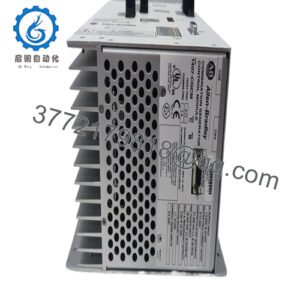
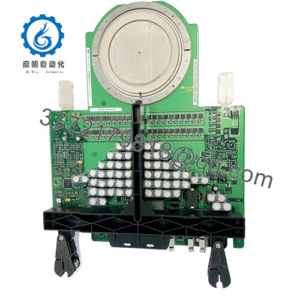
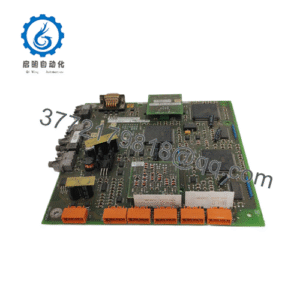
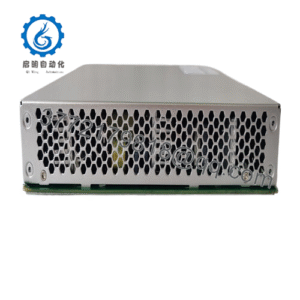
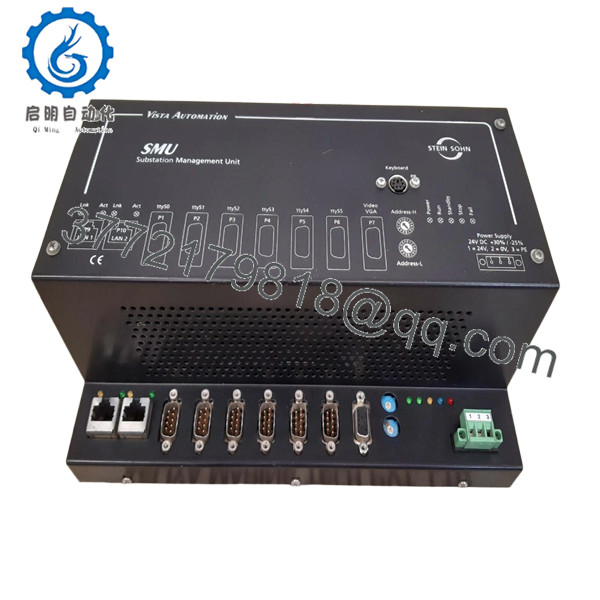
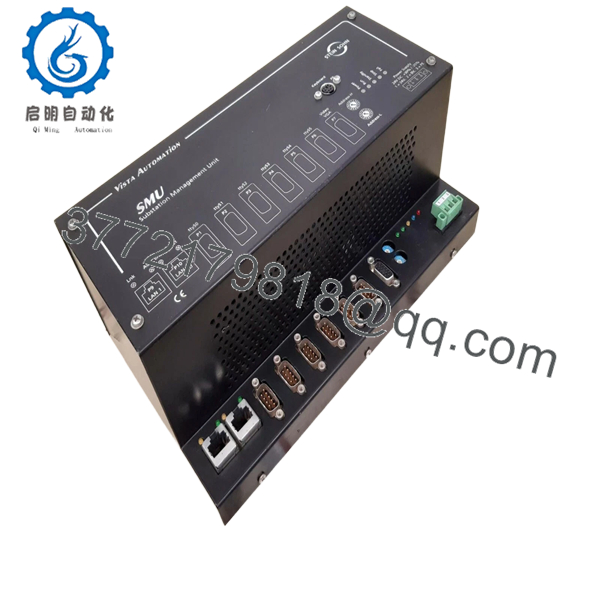
The Stein Sohn SMU1-1 is a substation management unit used within Vista Automation systems, primarily in marine and heavy industrial environments. It centralizes monitoring, alarm handling, and control coordination for distributed electrical subsystems, ensuring stable operation of propulsion, power distribution, and auxiliary systems.
From a supply-chain perspective, this is a clear EOL-risk component with high lead time variability and shrinking availability in the global surplus market. Securing New Surplus units protects against emergency shutdown scenarios. Compared to refurbished units commonly found in circulation, New Surplus inventory provides predictable lifecycle performance and reduces Total Cost of Ownership (TCO). A last-time-buy strategy combined with 1–2 units of buffer stock is operationally justified.
5. Installation & Configuration Guide
Stage 1: Pre-Installation (Prep & Safety)
- Execute lock-out/tag-out on the substation or control cabinet.
- Wear a grounded ESD wrist strap.
- Capture photos of terminal wiring and system connections.
- Document firmware version and configuration parameters.
- Confirm 24 V DC supply stability with ≥20% capacity margin.
Stage 2: Removal
- Disconnect power and verify zero voltage.
- Label all wiring clearly before removal.
- Remove mounting fasteners and extract the module evenly—avoid connector stress.
Stage 3: Installation (Clone & Seat)
- Install the replacement unit in the same mounting position.
- Reconnect wiring exactly as documented.
- Ensure grounding (PE) connection integrity.
- Verify terminal tightness to prevent intermittent faults.
Stage 4: Power-On & Testing
- Energize the system and monitor status indicators.
- Confirm communication handshake with the central control system.
- Run alarm simulation and verify signal propagation.
- Validate system stability under load conditions.

- SMU1-1
- SMU1-1
6. Firmware/Software Versions & Upgrade Notes
- Recommended Firmware: Match existing installed revision (commonly Rev. 0.6 systems).
- Compatibility Risk:
- Newer SMU variants (e.g., SMU2.x) are not backward-compatible with legacy Vista Automation networks.
- Firmware mismatches can cause communication timeouts or alarm handling failures.
- Upgrade Warning:
- Avoid firmware upgrades during replacement unless system-wide validation is planned.
- Downgrading to match the legacy environment is the safest path.
- Best Practice: Always extract configuration and firmware details before module swap.
7. Frequently Asked Questions (FAQ)
Q1: Are these units truly new if most listings online show used condition?
This product is a Brand New Surplus unit. It is not used, not pulled from a decommissioned plant, and not refurbished. Most online listings are used units , which increases failure risk significantly.
Q2: Why avoid refurbished SMU1-1 units?
Refurbished units often contain aged internal components. A failure in a substation controller can trigger full system shutdown. One real-world case in marine operations showed a refurbished control unit failing within months, leading to propulsion system alarms and costly downtime.
Q3: Is SMU1-1 discontinued?
Yes—this is a legacy module with no active OEM production. Availability depends on secondary markets, making last-time-buy planning critical.
Q4: How many units should we stock?
- Critical vessel/plant: minimum 1–2 units (insurance policy)
- Multi-site fleet: centralized buffer stock with cross-site sharing
- Consider vendor consolidation to reduce procurement fragmentation
Q5: Can this unit be hot-swapped?
No. Power must be isolated before removal. Hot-swapping risks system-wide faults and hardware damage.
Q6: What is the expected lifespan of a New Surplus unit?
Typically 10–15 years under proper operating conditions, compared to 3–5 years for refurbished alternatives.
Q7: What warranty is provided?
12months warranty with full QC traceability, including electrical verification and functional testing prior to shipment.