WhatsApp: +86 16626708626
 Email:
 Phone: +86 16626708626
Description
Core Product Summary
The Yokogawa SAI143-H33 is a 16-channel analog input module for the ProSafe-RS safety control system. It receives 4–20 mA field signals and provides HART communication capability for supported field instruments. Module-level isolation separates the input signals from the system, while individual channel settings accommodate supported two-wire and four-wire transmitter configurations.
For system integration, the key selection points are the ProSafe-RS I/O architecture, field wiring method, HART communication requirements, and module suffix configuration. The SAI143-H33 incorporates ISA Standard G3 environmental resistance and an operating temperature range of −20 to 70 °C. Terminal-block or cable-interface selection must match the installed hardware arrangement. Engineers replacing an existing module should also check the applicable hardware style and system software requirements, particularly where HART instrument management or redundant I/O configurations are involved.
Key Technical Specifications
| Parameter | Specification |
|---|---|
| Manufacturer | Yokogawa |
| Model | SAI143-H33 |
| Product type | Analog input module |
| System family | ProSafe-RS |
| Input channels | 16, with module isolation |
| Rated input range | 4–20 mA |
| Permissible input range | 0–25 mA |
| HART communication | Supported |
| Data update frequency | 40 ms |
| Input impedance, power off | 500 kΩ minimum |
| Maximum current consumption | 320 mA on the 5 V system; 550 mA on the 24 V system |
| Transmitter supply | 16.15 V minimum at 20 mA; 26.4 V maximum at 0 mA |
| Transmitter supply current limit | 25 mA |
| Input-to-system withstand voltage | 1.5 kV AC for 1 minute; 500 V AC when using a dedicated signal cable |
| Weight | Approximately 0.34 kg with pressure-clamp or MIL-cable connection |
Detailed Product Overview
Analog Signal Acquisition and Isolation
The SAI143-H33 is designed to acquire current signals from field instruments and make the resulting measurements available to the control system. Its 16 input channels support the standard 4–20 mA instrumentation range, which is commonly used to represent measured process variables such as pressure, flow, level, and temperature.
The module’s isolation separates the input signal circuitry from the system. This is relevant when integrating multiple field signals into a safety control architecture, where electrical isolation and the correct treatment of field wiring are important parts of the installation design.
HART Instrument Communication
The HART-capable SAI143 family supports digital communication with compatible field instruments over the analog current loop. This allows supported instrument-management functions to operate alongside the analog measurement channel.
The HART implementation uses serial half-duplex communication and HART Protocol Revision 5.7. Although HART devices using revisions 5, 6, and 7 can be connected, the module applies its Revision 5.7 protocol function. The module has one HART modem and can communicate with only one HART device at a time. This distinction matters when planning instrument diagnostics or asset-management access across multiple channels.
Plant Resource Manager (PRM) can be used for HART device management within the supported ProSafe-RS configuration. The module’s HART functionality is designed to operate without affecting the safety functions of the safety control station.
Transmitter Wiring and Power
The module supports two-wire and four-wire transmitter arrangements, with the setting selected individually for each channel. The transmitter power supply function is available for two-wire configurations and can be switched for all 16 channels together, subject to the applicable hardware style and software requirements.
Before wiring, determine whether the connected instrument requires loop power from the module or an external supply. Check the input protection voltage drop and the permitted current range when evaluating the loop’s voltage budget. A nominal 4–20 mA signal alone does not establish that the field transmitter and module will operate correctly together.
Environmental and Installation Considerations
The SAI143-H33 designation is associated with an industrial environmental configuration. The applicable suffix and hardware style must be considered when confirming operating limits and installation conditions. The selected connection arrangement also determines whether the installation uses a pressure-clamp terminal block, MIL cable, or a dedicated signal-cable interface.
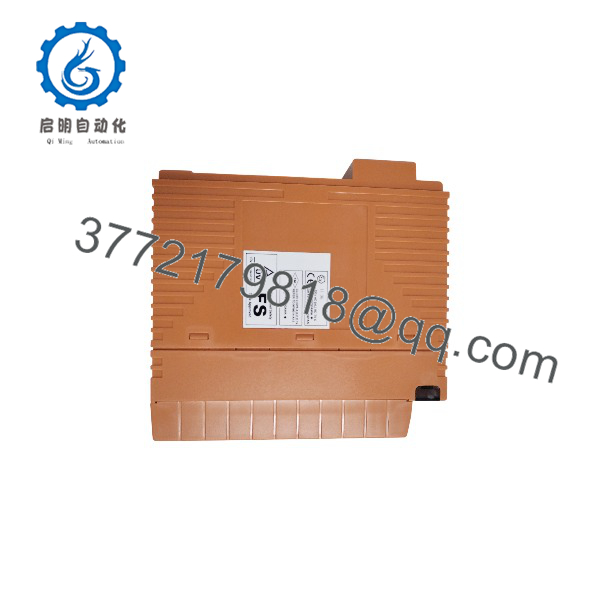
SAI143-H33
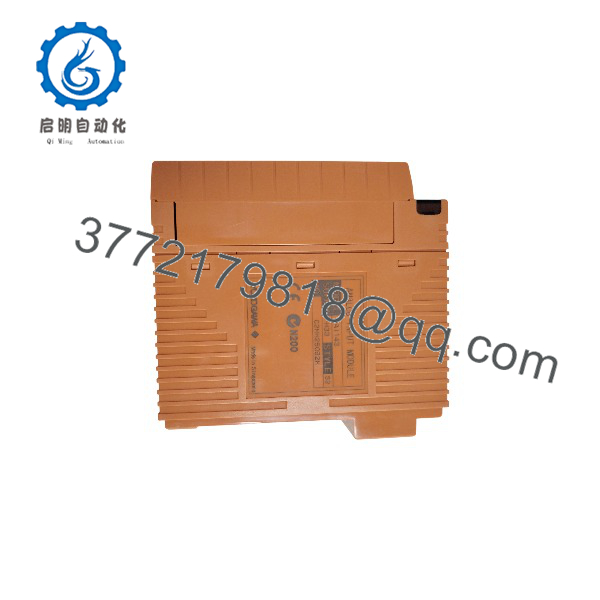
SAI143-H33
System Compatibility & Integration Requirements
| Item | Compatibility or requirement | Practical note |
|---|---|---|
| Control system | Yokogawa ProSafe-RS | Intended for the supported safety node unit or safety control unit architecture. |
| Field input | 4–20 mA current signals | Confirm the transmitter’s output and loop wiring before connection. |
| HART devices | Supported HART field instruments | One HART device per channel can be connected; only one device can communicate through the module’s single modem at a time. |
| Transmitter wiring | Two-wire or four-wire configuration | Channel settings must match the connected instrument. |
| HART management | Plant Resource Manager (PRM) | Requires a supported system and software configuration. |
| Terminal and cable arrangement | Pressure-clamp terminal, MIL cable, or supported dedicated signal-cable arrangement | Match the connection hardware to the installed module configuration. |
| Redundant configuration | Dual redundancy is supported by the SAI143 family | The complete redundant assembly and terminal arrangement must follow the system configuration requirements. |
Dimensions, Mounting & Connection Notes
The published module outline for the pressure-clamp and MIL-cable arrangement is approximately 130 × 32.8 × 107.5 mm (height × width × depth, subject to the drawing orientation). The signal-cable interface adapter uses a different physical outline.
During installation:
- Match the connection hardware and cable arrangement to the existing I/O configuration.
- Set each channel for the correct two-wire or four-wire transmitter arrangement.
- Check the field loop’s supply voltage and current requirements before energizing the circuit.
- Follow the system’s grounding, shielding, and signal-wiring instructions.
- For intrinsically safe instrument loops, use an appropriate isolation barrier; do not connect Zener barriers directly to the module.
FAQ
What is the Yokogawa SAI143-H33?
The Yokogawa SAI143-H33 is a 16-channel analog input module in the ProSafe-RS system, designed for 4–20 mA current signals with HART communication capability.
How many input channels does the SAI143-H33 provide?
It provides 16 analog input channels with module isolation.
Does the SAI143-H33 support HART communication?
Yes. The HART-capable module supports digital communication with compatible field instruments using its documented HART protocol implementation.
What input signal range does the module support?
Its rated input range is 4–20 mA, with a permissible input range of 0–25 mA.
Can the module support two-wire and four-wire transmitters?
Yes. The module supports both arrangements, with the wiring mode selected individually for each channel. The wiring must match the field instrument and the installed module configuration.
Can the SAI143-H33 be used in a redundant system?
The SAI143 module family supports dual-redundant configurations. The complete hardware arrangement, terminal board, and installation requirements must match the intended ProSafe-RS configuration.
What should be checked before replacing an installed SAI143-H33?
Confirm the full model designation, hardware style, terminal or cable interface, field wiring arrangement, system configuration, and HART requirements. These details are important for establishing that the replacement matches the installed application.