 WhatsApp: +86 16626708626
 Email:
  Phone: +86 16626708626
Description
Key Technical Specifications
| Parameter | Value |
| Manufacturer | ABB |
| Model Number (MPN) | 216VC62A |
| Ordering Code | HESG324442R13 |
| Core Architecture | 32-bit 80486DX-2 processing unit |
| System Bus Standard | Parallel bus B448C (IEEE P 896 futurebus baseline) |
| Data Transmission | Asynchronous with strict hardware parity handshaking |
| Serial Communication | Potential-free RS-423A / CCITT V.10 interface (up to 19,200 Baud) |
| Event Memory Buffer | Non-volatile storage for 256 events with 1 ms resolution |
| Backup Power Element | High-reliability maintenance-free gold capacitor |
| Space Allocation | Occupies two structural divisions in standard 19-inch 6U racks |
| Net Weight | 0.70 kg to 0.80 kg (1.54 lbs to 1.76 lbs) |
Product Introduction & Supply Chain Strategy
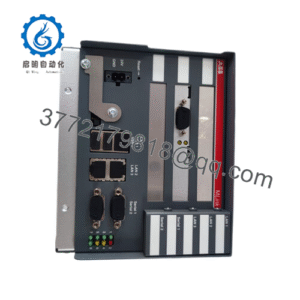
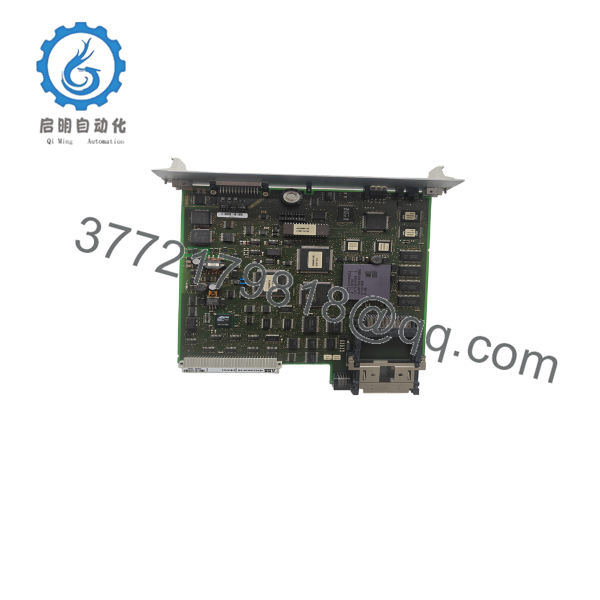
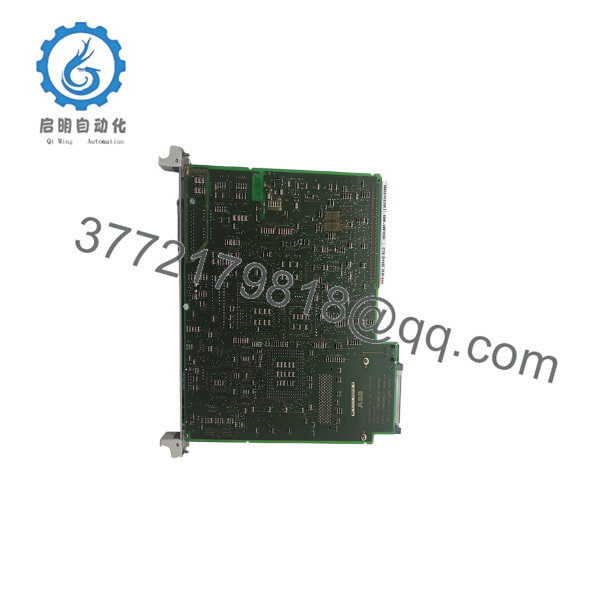
The ABB 216VC62A (HESG324442R13) is a high-performance static plug-in processing unit card designed as the central mathematical engine for the REG216 power system protection framework and select Procontrol/Symphony Plus control environments. Equipped with an onboard 32-bit architecture and a dedicated low-latency parallel bus interface, this module performs real-time data input parsing, logical fault evaluation, and interlocking coordination across up to 32 master nodes. Its integrated gold capacitor memory system ensures microsecond-accurate time-tagging for fault diagnostics without relying on volatile internal battery modules.
For procurement professionals managing industrial utility substations or heavy marine automation assets, the 216VC62A is classified as an high-criticality insurance spare. Because this legacy platform faces active manufacturer obsolescence cycles, sourcing a certified New Surplus module is the most effective way to eliminate lead time variability. Relying on unverified second-hand pulls introduces hidden risks—such as degraded communication ICs or dried out dielectric substrates—that can lead to sudden plant shutdowns. Secure this factory-sealed unit to protect your ongoing operational lifecycles and significantly optimize your long-term Total Cost of Ownership (TCO).
Condition Iron Law Declaration: This product is a Brand New Surplus unit. It is not used, not pulled from a decommissioned plant, and not refurbished. All modules undergo rigorous quality verification to ensure OEM-level reliability.

- 216VC62A HESG324442R13
- 216VC62A HESG324442R13
Installation & Configuration Guide
Stage 1: Pre-Installation (Prep & Safety)
- Complete a comprehensive lock-out/tag-out (LOTO) sequence on the primary and auxiliary power distribution loops feeding the 19-inch 6U processing rack.
- Confirm that all auxiliary 24 V DC supply rails are fully powered down.
- Put on a grounded ESD-safe wrist strap. Take clear, high-resolution photographs of the front panel RS-423 connections, internal wiring paths, and the rear jumper layouts of the card slated for replacement.
Stage 2: Removal
- Unplug the 25-pin D-sub serial communication connector from the faceplate, taking care not to crimp the serial data line.
- Loosen the upper and lower panel thumbscrews anchoring the card to the sub-rack guide system.
- Slide the board straight out along its track. Maintain an even, horizontal path to protect the parallel bus B448C pins on the rear backplane from bending or scoring.
Stage 3: Installation (Clone & Seat)
- Remove the new 216VC62A card from its factory-sealed anti-static shielding inside an ESD-safe workspace.
- Match all physical jumper pins and system configuration blocks on the new board to replicate the settings captured in your Stage 1 photographs.
- Insert the card into the structural guide channels, pushing evenly until the rear multi-pin interface aligns perfectly and locks into the rack backplane. Securely torque the front plate mounting screws.
Stage 4: Power-On & Testing
- Reattach the 25-pin serial communication data line to the front plate port.
- Remove LOTO and restore the 24 V DC auxiliary operating power supply.
- Monitor the front-panel indicator matrix to ensure the processor successfully executes its initialization sequence and moves directly into a standard operational RUN mode without displaying internal bus errors or timing synchronization faults.
Firmware/Software Versions & Upgrade Notes
The 216VC62A functions as an active digital signal processing node whose operational parameters are defined by the firmware block loaded into its onboard memory chips. When introducing a new surplus card into a running system, it is vital to check the exact compatibility suffix stamped onto the part label (e.g., matching a /C, /D, or /E revision branch).
Replacing a card with a mismatched firmware version can alter the software allocation paths for the corresponding 216AB61 output units or 216DB61 input boards, which can lead to communication timeouts or incorrect safety trip commands. Do not attempt an undocumented firmware upgrade during an emergency hardware swap. Always match the revision suffix exactly or use your system’s engineering terminal to verify that the master application controller recognizes the new card’s firmware baseline before running live operations.
Frequently Asked Questions (FAQ)
What defines “New Surplus” status for the 216VC62A, and why is it superior to third-party repairs?
Our New Surplus 216VC62A cards are genuine, unused OEM components that have never been put into active service or exposed to decades of cabinet thermal stress. Component repair services typically swap out only the visibly failed capacitors or relays on a board, leaving aged logic circuits, optocouplers, and communication drivers intact. Opting for a certified factory-sealed unit ensures all components are pristine, eliminating the risk of sudden, secondary failures and protecting your equipment’s original 10-15 year operating lifespan.
Does this processing unit maintain its event history if the main power is interrupted?
Yes. The 216VC62A features an integrated, non-volatile event memory buffer capable of holding up to 256 system events with precise 1 ms time markers. This buffer is powered by a high-capacity gold capacitor backup system, providing reliable data retention during power drops without the maintenance and leakage issues common to standard lithium batteries.
Can I hot-swap the 216VC62A processing module while the rack is energized?
No. The parallel bus architecture (B448C) used by this processing unit does not support live insertion or hot-swapping. Removing or inserting the board while the backplane is live can cause transient voltage spikes across the data pins, potentially damaging adjacent I/O modules or corrupting active data packets on the system bus.
What is the specific role of the 25-pin front port on the module?
The front plate features a 25-pin RS-423A / CCITT V.10 potential-free serial interface. This connection is used to link a local PC or engineering terminal directly to the board, allowing technicians to configure parameters, run diagnostic utilities, and retrieve event logs through your system’s engineering software.
What warranty protection is included with this New Surplus module?
Every New Surplus 216VC62A board we ship is backed by a full 1-year operational replacement warranty. In the rare event that a firmware version issue or hardware variance is discovered during your initial testing and commissioning phases, our team will provide a rapid exchange to ensure your facility experiences zero unnecessary downtime.