WhatsApp: +86 16626708626
 Email:
  Phone: +86 16626708626
Description
Key Technical Specifications
| Parameter | Specification |
|---|---|
| Model | CONTRANS T TEU 471 |
| Transmitter Type | Intelligent four-wire temperature transmitter |
| Measuring Circuits | MK 41/42, MK 44, MK 45 |
| RTD Input | Pt100, Ni100; expandable through parameterization |
| Thermocouple Input | B, E, J, K, L, N, R, S, T, U |
| Resistance Input | Up to 391 Ω with MK 41; up to 3,250 Ω with MK 42 |
| Voltage Input | -0.8 to +12 V, MK 44 |
| Current Input | -1.6 to +24 mA, MK 45 |
| Analog Output | 0/4–20 mA or 0–10 V |
| Current Output Load | ≤750 Ω; ≤700 Ω with test jack active |
| Voltage Output Load | >10 kΩ |
| Power Supply | 24 V UC, 115 V AC, or 230 V AC |
| 24 V Operating Range | 18–33 V DC |
| Communication | LKS; FSK with HART protocol |
| Relay Outputs | 1 or 2 changeover relays, configuration dependent |
| Relay Rating | Maximum 0.5 A, 50 V |
| Response Time | Typically 0.8 s; maximum 1 s with damping disabled |
| Damping | 0 to 100 s, configurable |
| Ambient Temperature | -10 to +70 °C |
| Storage Temperature | -25 to +85 °C |
| Protection Rating | IP20 |
| Terminal Capacity | Screw terminals up to 2.5 mm² |
| Dimensions | Approximately 149 × 35.5 × 122.5 mm |
| Weight | Approximately 1 kg |
The ABB data sheet identifies the TEU 471 as an intelligent four-wire transmitter supporting RTDs, thermocouples, resistance, mV, mA, and voltage measurement. Its output can be configured for 0/4–20 mA or 0–10 V.
Product Introduction
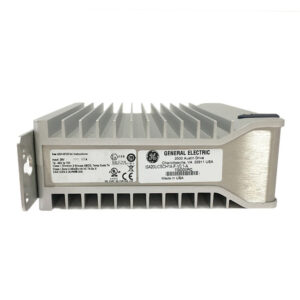
The ABB CONTRANS T TEU 471 is an intelligent four-wire temperature transmitter intended for industrial process measurement. It accepts multiple sensor types, including Pt100/Ni100 resistance thermometers and thermocouples, then converts the measured value into a standardized 0/4–20 mA or 0–10 V signal for PLC, DCS, or control-system inputs.
The transmitter provides configurable linearization, damping, scaling, sensor-fault handling, and optional relay alarm outputs. Communication is available through the LKS local interface or FSK using HART protocol. Because TEU 471 units were supplied with different measuring circuits, outputs, interfaces, and power supplies, the complete catalog number should be checked before replacement.
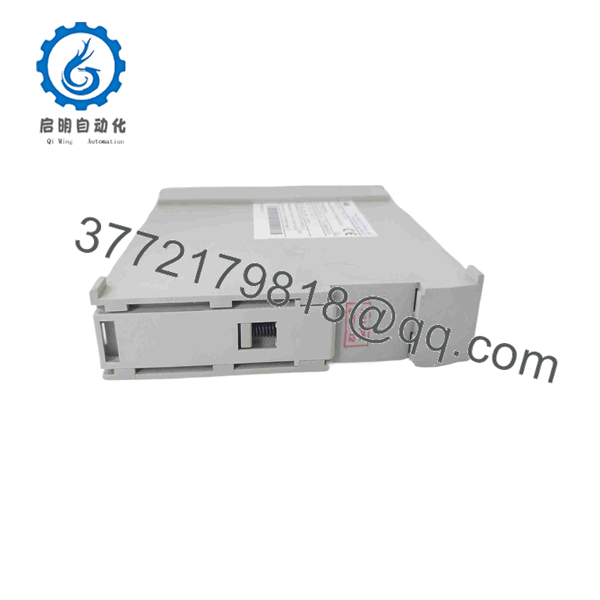
CONTRANS T TEU471
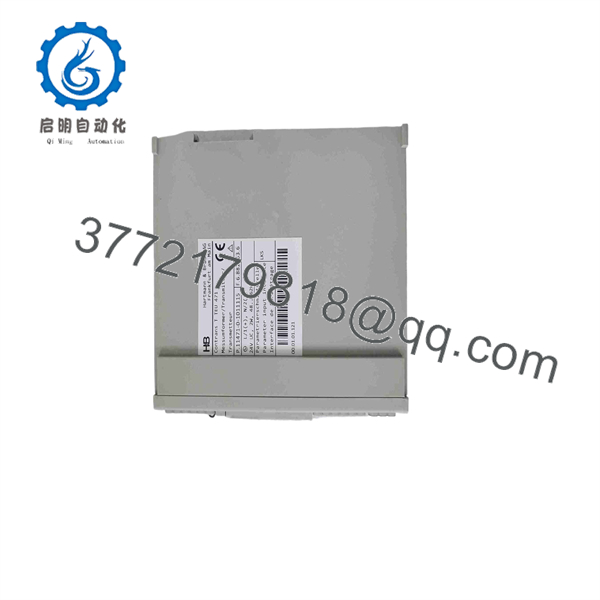
CONTRANS T TEU471
Installation & Configuration Guide
Stage 1: Pre-Installation Preparation — 5–10 Minutes
- ⚠️ Place the process in a safe operating state. Notify operations personnel before disconnecting the transmitter.
- Apply LOTO to the relevant electrical supply and isolate the connected field circuit.
- If the installation uses 115 V or 230 V AC, allow at least 5 minutes for capacitor discharge before handling conductors.
- Prepare:
- ESD wrist strap
- PH1 screwdriver
- Multimeter
- Wire labels
- Smartphone or camera
- Record the existing:
- Full catalog/order number
- Measuring circuit, such as MK 41/42, MK 44, or MK 45
- Sensor type
- Measuring range
- Output type
- Supply voltage
- Relay configuration
- LKS/FSK interface configuration
- Photograph all terminal wiring and any configuration markings before removal.
⚠️ Do not identify a replacement only by “TEU471.” ABB documentation shows multiple input, output, interface, relay, explosion-protection, and power-supply configurations.
Stage 2: Removing the Old Transmitter — Approximately 5 Minutes
- Remove the protective cover if fitted.
- Confirm the circuit is electrically isolated with a multimeter.
- Label every field and control-system conductor.
- Disconnect the sensor, analog output, relay, communication, and power terminals as applicable.
- Release the DIN-rail mounting mechanism.
- Remove the TEU 471 without pulling against the terminal wiring.
- Inspect the wiring for loose ferrules, oxidation, insulation damage, or overheated terminals.
- Keep the removed transmitter beside the replacement until configuration verification is complete.
Stage 3: Installing the New Transmitter — Approximately 5 Minutes
- Put on the ESD strap before handling the electronics.
- Verify the complete part number against the old unit.
- Confirm the power supply matches the installed version: 24 V UC, 115 V AC, or 230 V AC.
- Confirm the measuring circuit and sensor type.
- Reproduce the original measuring range, linearization, damping, and output behavior.
- Reconnect the sensor wiring according to the applicable terminal diagram.
- Reconnect the analog output and relay wiring.
- If FSK/HART communication is used, verify the communication wiring before energizing.
- Mount the transmitter securely on the DIN rail.
- Tighten terminals correctly without damaging the conductor or terminal block.
⚠️ Do not assume two TEU 471 units are configuration-equivalent. The manufacturer specifies separate ordering codes for different input circuits, outputs, relay options, interfaces, and supply voltages.
Stage 4: Power-On & Testing — Approximately 10–15 Minutes
- With power isolated, measure the supply circuit and check for unintended shorts.
- Energize the transmitter.
- Check the LEDs and confirm there is no sensor or apparatus fault indication.
- Verify the measured value against a calibrated process simulator or known reference.
- Check the analog output at several points across the configured range.
- Confirm the PLC/DCS analog input receives the expected signal.
- If applicable, connect the LKS/FSK interface and verify configured parameters through the appropriate ABB/Hartmann & Braun software environment.
- Check sensor-fault behavior, including underrange, overrange, hold-last-value, or configured default value.
- Test relay alarm outputs if fitted.
- Return the loop to service only after the process value and control-system indication agree.
Field troubleshooting notes:
- Incorrect temperature → check sensor type and linearization.
- Output fixed at an abnormal value → check sensor-fault configuration.
- Unstable reading → inspect sensor wiring, shielding, grounding, and damping.
- Incorrect output scaling → verify lower-range and upper-range values.
- Communication unavailable → confirm whether the unit uses LKS or FSK/HART.
- Replacement powers up but behaves differently → compare the complete ordering code and stored parameters.
ABB documents EEPROM storage for user-specific parameters such as measuring range, linearization, and tag information, so configuration should be documented before removing the original unit.
FAQ
Q1. What is the ABB CONTRANS T TEU 471 used for?
It is an intelligent four-wire temperature transmitter used to process signals from RTDs, thermocouples, resistance sensors, and other analog measurement sources and provide standardized control-system outputs.
Q2. Does the TEU 471 support both 4–20 mA and 0–10 V?
Yes. The TEU 471 can be ordered/configured with either 0/4–20 mA or 0–10 V output. The exact output must be confirmed from the unit’s ordering code.
Q3. Can TEU 471 directly replace another temperature transmitter?
Not automatically. Check the measuring circuit, sensor type, measuring range, output, supply voltage, interface, relay configuration, and explosion-protection designation first. Two units marked TEU 471 can have different electrical configurations.
Q4. Does the TEU 471 support HART communication?
The transmitter supports FSK communication using the HART protocol. It also provides an LKS local communication interface for parameter setting.
Q5. Can the original programming or calibration settings be retained?
The transmitter stores user-specific parameter data in EEPROM, including measuring range and linearization. For a replacement, record the existing configuration before removal rather than assuming the replacement will contain the same settings.
Q6. Is the TEU 471 obsolete?
The available ABB documentation dates from the late 1990s, so this should be treated as a legacy Contrans T transmitter rather than a current-generation temperature transmitter. Availability and replacement compatibility depend on the exact catalog number.
Q7. Is a used or surplus TEU 471 acceptable for plant maintenance?
It can be considered when the exact electrical configuration matches the installed unit, but condition should be verified separately. For a used or surplus unit, inspect the enclosure and terminals, verify the nameplate, check power-up behavior, confirm sensor simulation, and test the analog output before plant installation.
These checks eliminate many of the avoidable rework issues when replacing legacy transmitters.