WhatsApp: +86 16626708626
 Email:
  Phone: +86 16626708626
Description
Key Technical Specifications
| Parameter | Specification / Value |
| Manufacturer | ABB |
| Model Number | ETP90H-4G50 |
| Measurement Principle | Piezo-resistive pressure sensor with capillary fill |
| Output Signal | 4–20 mA DC loop-powered + HART digital communication |
| Configuration Options | On-device push buttons, HART handheld terminal, or DOX9 PC software |
| Sensor Fill Fluid | FDA-approved silicone oil |
| Housing Construction | IP67 grade stainless steel (hygienic design) |
| Process Media Temp | Up to 150 °C (302 °F) continuous |
| Overload Protection | Up to 3x nominal range limit (transient surge protected) |
| Certifications | EExia (Intrinsically Safe), 3A Hygienic, CE (EMC/PED) |
| Operating Weight | Approx. 2.2 kg (4.85 lbs) |
Product Introduction & Supply Chain Strategy
This product is a Brand New Surplus unit. It is not used, not pulled from a decommissioned plant, and not refurbished. All modules undergo rigorous quality verification to ensure OEM-level reliability.
The ABB ETP90H-4G50 is a microprocessor-based electronic transmitter engineered for high-accuracy pressure and level monitoring in demanding industrial and hygienic process environments. Featuring a direct-connect piezo-resistive sensor filled with FDA-approved silicone oil, it eliminates intermediate fluid chambers to minimize temperature drift while withstanding continuous process temperatures up to 150 °C. The integrated HART protocol allows seamless integration into distributed control systems (DCS) for continuous diagnostics, remote zero/span calibration, and dynamic transfer function adjustments.
Maintaining factory-sealed New Surplus ETP90H-4G50 units in your inventory is a vital strategic buffer against severe supply chain delays. As legacy field instrumentation reaches end-of-life status, sourcing verified genuine components prevents extended downtime on critical process lines. Choosing New Surplus over cheap refurbished units protects your plant from degraded capacitive elements and micro-cracks in diaphragm seals. The small premium paid for genuine original stock eliminates the massive financial risk of off-spec batches, safety trips, or emergency plant shutdowns caused by unverified field failures.
Installation & Configuration Guide
Stage 1: Pre-Installation (Prep & Safety)
- Perform Lock-Out/Tag-Out (LOTO) procedures on the target process piping and electrical supply. Ensure line pressure is completely vented and isolated.
- Put on an ESD-grounded wrist strap before handling the internal wiring terminals or connection chamber of the transmitter.
- Record all current field parameters from the old instrument using a HART handheld communicator (or document local switch settings and DIP node addresses).
- Inspect the process mating flange or threaded port for debris, corrosion, or damaged thread sealant.
Stage 2: Physical & Electrical Removal
- Disconnect the 24V DC loop power conductors from the transmitter’s terminal block.
- Carefully unthread or unclamp the instrument from the process connection. Avoid applying torque directly to the IP67 housing to prevent twisting internal capillary tubes.
- Inspect the diaphragm of the removed module for process buildup or mechanical distortion. Store the unit in an antistatic bag if retained for diagnosis.
Stage 3: Installation & Hardware Clone
- Verify that the sealing gasket or O-ring on the new ETP90H-4G50 is clean and chemically compatible with your process media.
- Thread or clamp the ETP90H-4G50 into the process connection using recommended OEM torque specs. Ensure the reference atmospheric vent tube points downward to allow natural condensation discharge.
- Connect the 2-wire loop cable (4–20 mA + HART) to the field terminals, maintaining correct polarity (+ and −).
- Ground the cable shield properly at the control panel end to prevent ground loops and EMI interference.
Stage 4: Power-On & Commissioning
- Measure the supply voltage across the field terminals; confirm a steady 24V DC supply with adequate overhead under load.
- Apply line pressure gradually to avoid excessive pressure shocks.
- Connect a HART communicator across the loop resistor. Verify device ID, engineering units, lower range value (LRV), and upper range value (URV).
- Perform a zero-point trim at ambient or hydrostatic baseline conditions to ensure accurate process tracking.
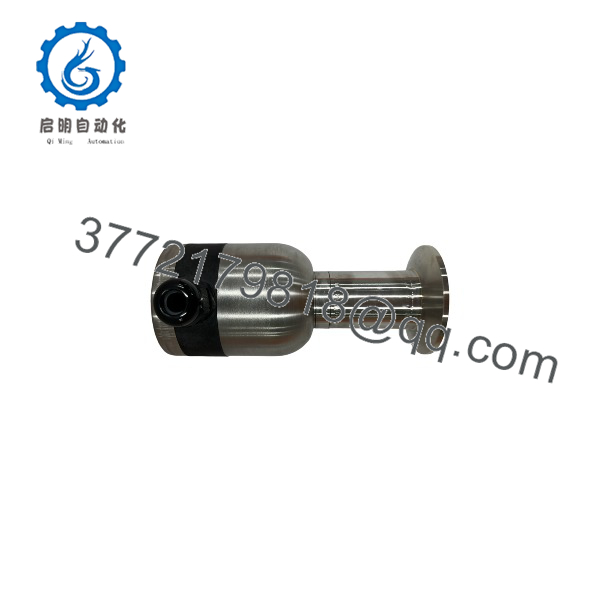
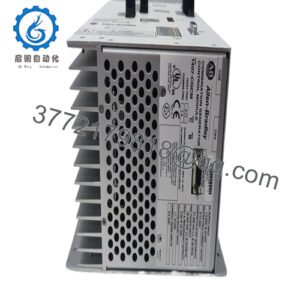
ETP90H-4G50
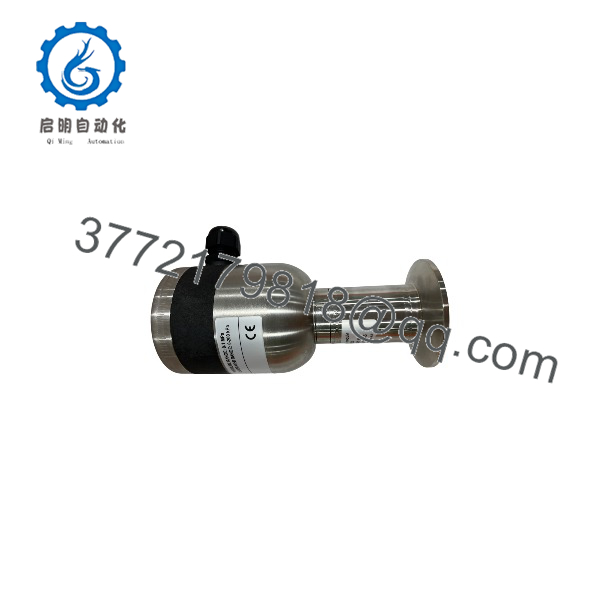
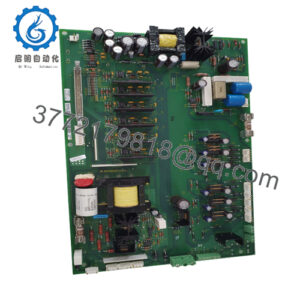
ETP90H-4G50
Firmware/Software Versions & Upgrade Notes
- Configuration Compatibility: The ETP90H-4G50 communicates via standard HART protocol command sets and supports ABB DOX9 configuration software.
- Firmware Lineage: Devices running legacy firmware revisions may require updated Device Descriptions (DD) or Device Type Managers (DTM) when imported into modern control software platforms (such as ABB System 800xA or 3rd-party HART hosts).
- Upgrade/Downgrade Warnings: Do not flash firmware in active, pressurized control loops. Changing firmware revisions on field instruments can modify HART command mapping or reset custom transfer functions (e.g., square-root extraction for flow/level calculations). Always capture and export a complete device configuration backup via DOX9 or HART handheld before performing any software/firmware maintenance.
Frequently Asked Questions (FAQ)
Q: How can you guarantee this ABB is New Surplus and not refurbished?
A: Every unit in our stock originates from audited OEM surplus, canceled project inventory, or factory overstock. We maintain a zero-tolerance policy for second-hand or repaired parts. Each transmitter undergoes a rigorous inbound quality control procedure that checks for pristine backplane/terminal connections, untouched factory packaging, original serial numbers, and zero physical wear on the diaphragm seal.
Q: Why does a New Surplus transmitter cost more than a refurbished unit online?
A: Refurbished instruments are often rebuilt using harvested or aged components, which leaves critical internal parts—like silicon oil fills or piezo-resistive elements—susceptible to early thermal drift or breakdown. Saving a few hundred dollars on a used module introduces an unpredictable failure point that can cause catastrophic unplanned plant downtime. Our New Surplus pricing delivers full OEM-level operational lifespan and reliability at a price significantly below current OEM list prices.
Q: Is the ABB ETP90H series considered obsolete or hard to source?
A: The ETP90 series is a mature field instrument platform. While many plants still rely heavily on these units across legacy lines, active factory production is limited, leading to extended factory lead times. Sourcing New Surplus stock allows facility managers to replace damaged instruments immediately without undertaking costly piping modifications or redesigning loop logic for newer model lines.
Q: Can I hot-swap the transmitter while the loop is powered?
A: No. You must de-energize the 24V DC loop power and fully isolate/depressurize the process line before removing or installing field instruments. Inserting terminal leads into a powered loop can cause electrical arcing, damage internal microprocessor components, or trigger inadvertent safety trips on connected I/O channels.
Q: What warranty coverage comes with this New Surplus instrument?
A: We back this ABB with a full 1-year warranty from the date of dispatch. This provides identical coverage to standard factory warranties, giving your engineering team complete confidence during installation and startup.