WhatsApp: +86 16626708626
 Email:
 Phone: +86 16626708626
Description
Key Technical Specifications
| Parameter | Value |
|---|---|
| Arrester type | Gapless metal-oxide (MO) surge arrester |
| Applicable MVR class | MVR K10 |
| Continuous operating voltage, Uc | 0.44–0.8 kV rms |
| Maximum system voltage, Us | 1 kV |
| Nominal discharge current, In | 10 kA peak, 8/20 µs waveform |
| Applicable current | AC and DC |
| Rated voltage, Ur | 0.56–0.8 kV rms |
| Energy absorption class | DM or DH; line discharge class 1, 3.4 kJ/kV Uc |
| Design standard | IEC 60099-4 |
| Construction | Metal-oxide resistors without spark gaps; direct-molded PUR housing |
| Installation environment | Indoor and outdoor applications |
| Typical applications | Rotating machines, transformers, cable sheaths, and low/medium-voltage systems |
The MVR 0.44-10KA corresponds to the MVR K10 arrester class: it is rated for 0.44–0.8 kV rms continuous voltage and a 10 kA nominal discharge current, and it is suitable for both AC and DC systems. ABB describes the MVR family as a spark-gap-free metal-oxide arrester designed and tested to IEC 60099-4.
Product Introduction
The ABB MVR 0.44-10KA is a gapless metal-oxide surge arrester used to protect low- and medium-voltage equipment from lightning-induced and switching overvoltages. It is intended for AC and DC systems, including rotating machines, transformers, cable sheaths, and industrial power-distribution circuits.
The arrester uses non-linear metal-oxide resistors without spark gaps, so it responds directly to transient overvoltage conditions and does not require gap maintenance. Its 10 kA nominal discharge rating and line-discharge-class energy capability make the MVR K10 configuration appropriate where higher surge-current exposure is expected than with the 5 kA MVR K5 version.
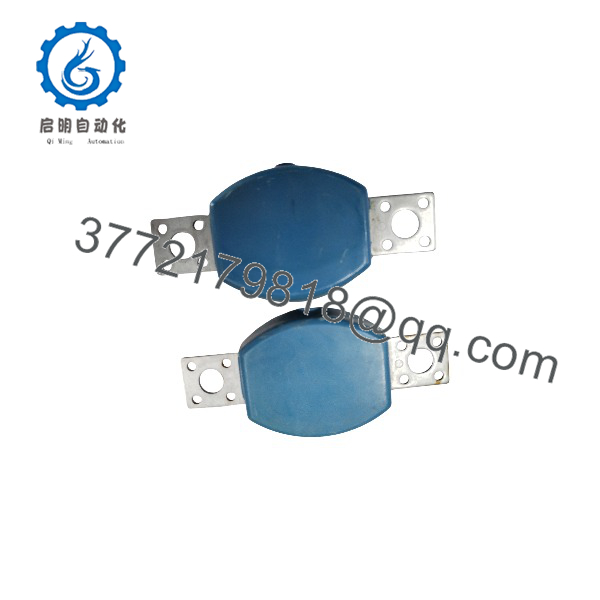
MVR 0.44-10KA
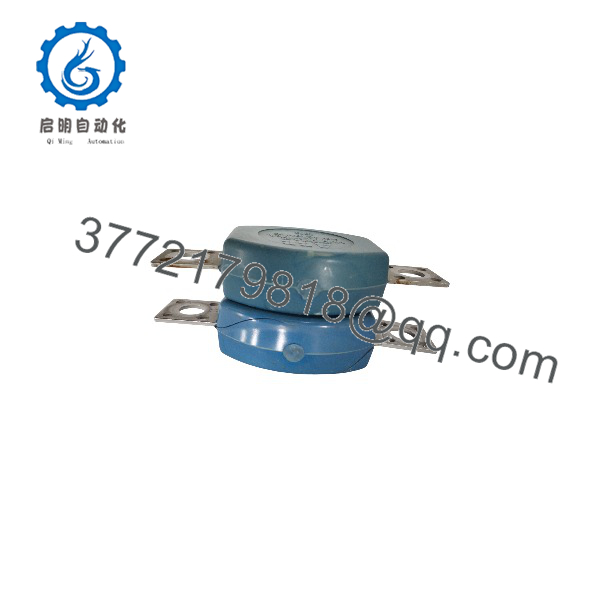
MVR 0.44-10KA
Troubleshooting Quick Reference
| Symptom | Possible Cause | Relevance to this Part | Quick Check Method | Recommendation |
|---|---|---|---|---|
| Arrester shows visible cracking, burning, or tracking | Severe surge event, moisture ingress, or end-of-life thermal stress | ✅ High | De-energize, isolate, and visually inspect the housing, terminals, and ground connection | Replace immediately; do not reinstall a physically damaged arrester |
| Ground-fault or leakage-current alarm | Deteriorated MO blocks, contamination, or internal partial discharge | ✅ High | Use an insulation-resistance test only after full isolation and grounding procedures | Replace the arrester if leakage or insulation results are abnormal |
| Protected equipment still fails during storms | Inadequate grounding, excessive lead length, or arrester located too far from protected equipment | ❌ Low | Inspect earth resistance, bonding conductors, and arrester lead routing | Improve grounding and minimize lead length before replacing the arrester |
| No visible damage but system trips repeatedly | Upstream fault, cable insulation issue, or incorrect arrester rating | ❌ Low | Check system voltage, cable insulation, protection-relay events, and arrester nameplate data | Verify system voltage and Uc rating before replacing |
| Arrester disconnected or loose | Vibration, thermal cycling, or poor terminal torque | ✅ Medium | Power down, inspect terminals, and torque connections to the manufacturer’s specification | Retorque or replace damaged terminals and reconnect securely |
| Discoloration or surface contamination | Pollution, salt, dust, or moisture accumulation | ✅ Medium | Inspect housing surface and clean only when de-energized and safe to access | Clean or replace based on severity; review pollution level and creepage distance |
If an arrester has operated during a major surge, inspect it even when it appears normal. Send photos of the nameplate, housing, terminals, grounding arrangement, and relay/event records before ordering a replacement.
Frequently Asked Questions
What does “0.44-10KA” mean on this arrester?
It identifies the MVR K10 configuration: 0.44 kV is the lower end of the continuous operating voltage range, and 10 kA is the nominal discharge current. The complete Uc range is 0.44–0.8 kV rms for AC and DC applications.
Is this a varistor or a complete surge arrester?
It is a complete metal-oxide surge arrester, not a bare radial-leaded MOV component. The MVR uses metal-oxide resistors in a molded housing and is designed and tested to IEC 60099-4.
Can I use the MVR 0.44-10KA on a DC system?
Yes. The MVR K5 and K10 versions are rated for both AC and DC systems. Confirm the actual DC operating voltage against ABB/Hitachi Energy’s DC voltage limits and the specific arrester datasheet before installation.
Is this arrester suitable for outdoor installation?
The MVR family is available for indoor and outdoor applications, but the exact housing, creepage distance, pollution level, and mounting arrangement must match the site conditions. Verify the order code and environmental rating before installation.
Can I replace an MVR K5 with an MVR 0.44-10KA?
Usually yes if the continuous voltage range, system voltage, mounting arrangement, and protection coordination are compatible. The K10 version has a 10 kA nominal discharge current instead of 5 kA, so it provides a higher surge-current rating but may have a different protective characteristic.
Why does this arrester cost less than a new factory unit?
If listed as New Surplus, it is unused original stock rather than current factory production. Pricing reflects available surplus inventory and may involve older date codes; it should still be functionally inspected and supplied with traceable documentation.
What should I verify before ordering?
Confirm the system voltage, AC or DC application, required Uc range, nominal discharge current, energy class, housing style, mounting hardware, and grounding arrangement. The MVR 0.44-10KA is a 10 kA arrester, not a 5 kA K5 unit, so do not substitute it without checking the protection coordination.