 WhatsApp: +86 16626708626
 Email:
  Phone: +86 16626708626
Description
3. Key Technical Specifications
| Parameter | Value |
|---|---|
| Manufacturer | ABB |
| Model | PFTL101A |
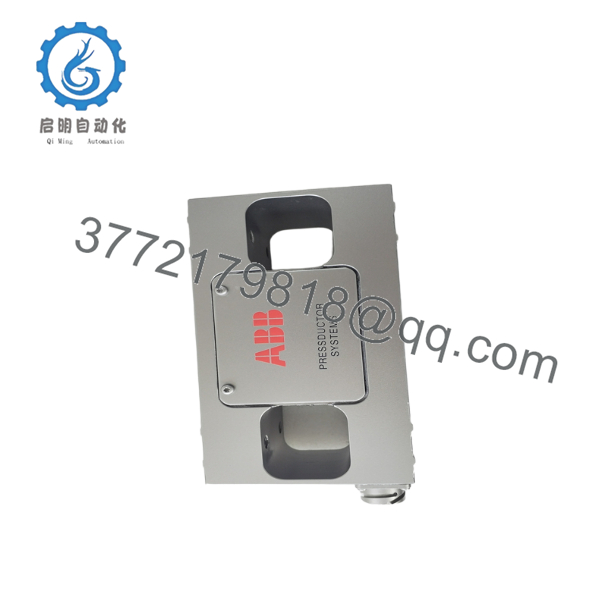
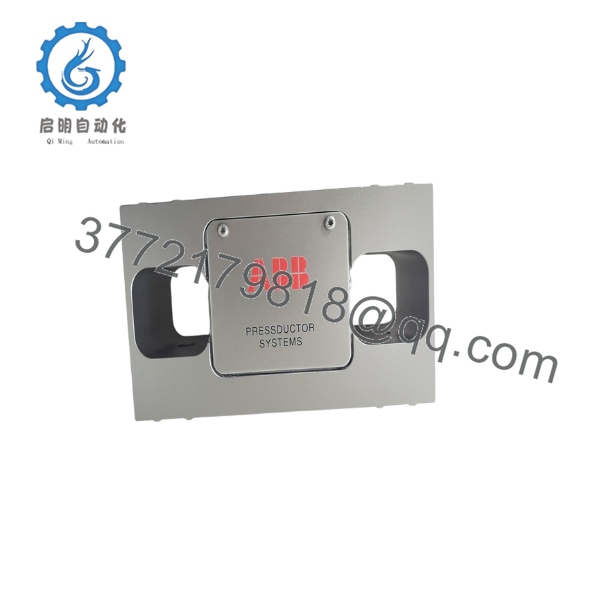
| Product Type | Pressductor Pillow Block Load Cell |
| Measuring Direction | Horizontal |
| Nominal Load | 0.5, 1.0, or 2.0 kN (model variant) |
| Overload Capacity | 500% of rated load |
| Accuracy Class | ±0.5% |
| Repeatability Error | < ±0.05% |
| Deflection | 0.015 mm |
| Protection Rating | IP65 (Standard A version) |
| Measuring Principle | Magnetoelastic (Pressductor®) |
| Mounting Style | Pillow Block |
| Operating Temperature | -10°C to +105°C (standard version) |
The PFTL101A is part of ABB’s Pressductor® Pillow Block load cell family for horizontal web tension measurement. It is available in 0.5 kN, 1.0 kN, and 2.0 kN nominal load ratings and provides high overload tolerance with minimal mechanical deflection.
4. Product Introduction
The ABB PFTL101A is a high-precision industrial load cell developed for continuous web tension measurement in paper, film, foil, textile, printing, and converting machinery. Unlike conventional strain-gauge load cells, it uses ABB’s patented Pressductor® magnetoelastic technology, which measures force through changes in magnetic properties rather than mechanical deformation. This design provides excellent long-term stability, high resistance to shock loads, and reliable operation in harsh industrial environments.
The PFTL101A is commonly installed beneath bearing housings supporting guide rolls or measuring rolls. As web tension changes, the horizontal force applied to the bearing is transmitted directly to the load cell, allowing the associated tension electronics (such as the ABB PFEA111, PFEA112, or PFEA113) to calculate and regulate web tension in real time.

- PFTL101A
- PFTL101A
5. Installation & Configuration Guide
Stage 1 – Pre-Installation Preparation
⚠️ Safety First
- Shut down the machine completely.
- Apply Lock-Out/Tag-Out procedures.
- Relieve web tension before removing bearing blocks.
- Verify all rotating equipment has stopped.
- Wear appropriate PPE.
Required Tools
- Torque wrench
- Precision straightedge
- Dial indicator
- Digital multimeter
- Alignment tools
- ABB tension calibration equipment
Before Installation
- Record the existing load cell orientation.
- Verify the correct load rating.
- Inspect mounting surfaces for flatness.
- Check bearing condition.
Stage 2 – Removing the Existing Load Cell
- Support the roll before removing the bearing housing.
- Disconnect the load cell cable.
- Remove mounting bolts evenly.
- Lift the bearing assembly carefully.
- Inspect adapter plates and mounting surfaces.
Never strike the load cell with a hammer. Although the Pressductor design tolerates high overloads, mechanical impact during installation can damage surrounding mechanical components.
Stage 3 – Installing the New PFTL101A
- Confirm the correct PFTL101A model and load rating.
- Clean all mounting surfaces.
- Install the load cell using ABB-approved adapter plates.
- Tighten mounting bolts to the specified torque.
- Route the sensor cable away from high-voltage wiring.
- Connect the load cell to the tension electronics.
Installation Checklist
- ✔ Correct model verified
- ✔ Proper measuring direction
- ✔ Adapter plates installed
- ✔ Cable protected
- ✔ Grounding confirmed
Stage 4 – Calibration & Commissioning
- Power up the tension controller.
- Verify zero-load output.
- Perform zero calibration.
- Apply a known reference load.
- Verify span calibration.
- Run the machine at low speed before returning to production.
⚠️ Troubleshooting
Unstable tension readings
- Check cable shielding.
- Inspect grounding.
- Verify bearing movement is unrestricted.
Incorrect measurement
- Confirm measuring direction.
- Verify calibration.
- Inspect mechanical alignment.
No output signal
- Verify excitation voltage.
- Inspect connector integrity.
- Check the tension electronics.
6. Frequently Asked Questions (FAQ)
Q1. What is the difference between the PFTL101A and PFTL101AE?
The PFTL101A is the standard version with IP65 protection. The PFTL101AE is the mill-duty version featuring a permanently attached cable and IP66 protection, making it better suited for paper machine dryer sections and other demanding industrial environments.
Q2. Why does ABB use Pressductor® technology instead of strain gauges?
Pressductor® technology measures force through the magnetoelastic effect rather than mechanical strain. Because the sensing principle does not rely on measurable deformation, the load cell offers exceptional overload capability, long service life, and strong resistance to electrical interference.
Q3. What industries commonly use the PFTL101A?
Typical applications include:
- Paper and pulp mills
- Printing presses
- Film production
- Plastic converting
- Foil processing
- Textile manufacturing
- Coating and laminating lines
These industries require continuous web tension measurement to maintain product quality.
Q4. Can the PFTL101A operate under heavy overload conditions?
Yes. The load cell is designed with an overload capacity of 500% of its nominal rating, allowing it to withstand temporary overload events without compromising measurement performance when operated within ABB’s specified limits.
Q5. What is the most common installation mistake?
The most frequent issue is incorrect mechanical alignment. Even when the electrical wiring is correct, misaligned bearing housings or uneven mounting surfaces can introduce side loads that affect measurement accuracy. Before calibration, verify roll alignment, adapter plate installation, and bolt torque.
Q6. Which electronics are compatible with the PFTL101A?
The PFTL101A is commonly used with ABB PFEA111, PFEA112, and PFEA113 web tension controllers. These units supply excitation power, process the Pressductor® signal, and provide analog or fieldbus outputs for integration with PLCs and DCS platforms.