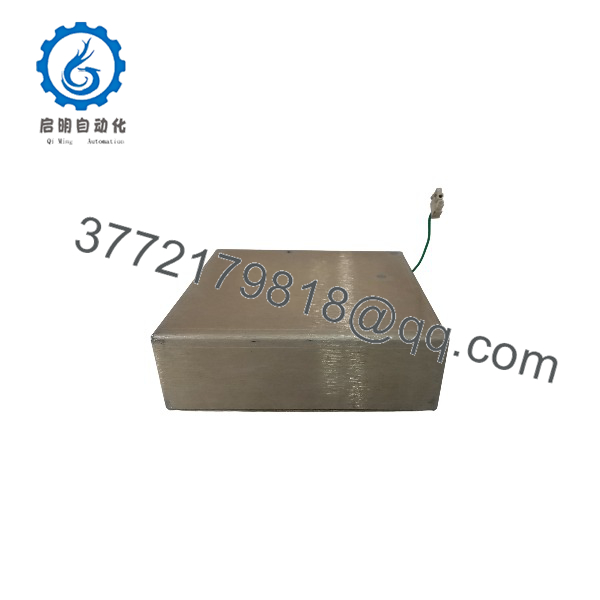
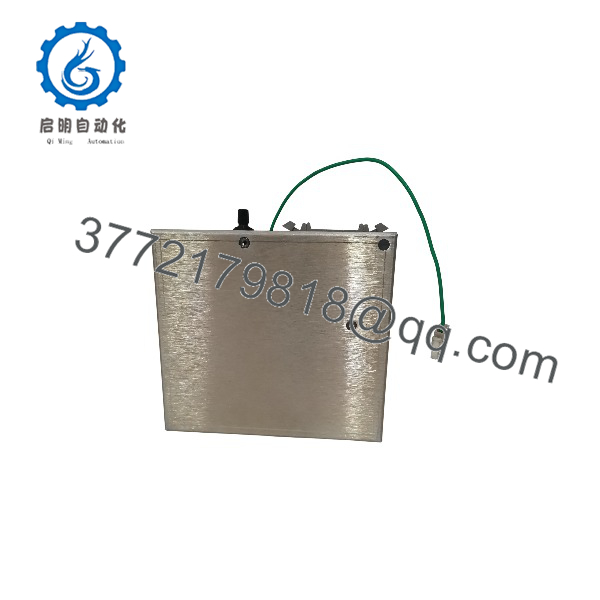
 WhatsApp: +86 16626708626
 Email:
  Phone: +86 16626708626
Description
Key Technical Specifications
- Model: G1946-80060
- Manufacturer: Agilent Technologies
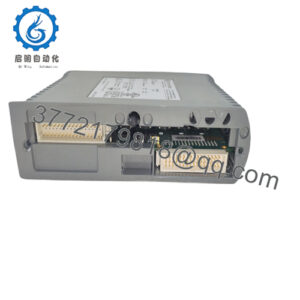
- Product Type: Fast-switching high-energy dynode (HED) power supply
- Instrument Compatibility: Agilent 6100 Series Single Quadrupole LC/MS, Agilent 6400 Series Triple Quadrupole LC/MS
- Technology: LC/MS mass spectrometer electrical assembly
- Primary Function: Supplies high voltage to the high-energy dynode detector assembly
- Polarity Switching: Fast polarity switching capability
- Output Type: Bipolar high-voltage output
- Output Voltage: Approximately ±6 kV (application dependent)
- Output Current: Approximately 10 mA maximum (application dependent)
- Input Power: Instrument internal power supply source
- Installation Location: LC/MSD analyzer electronics assembly
- Operating Environment: Laboratory instrument environment
- Typical Applications: Mass spectrometry detector maintenance and repair
- Compatible Platforms: Agilent G1946-series LC/MS instruments, including G1946B/D and G1956B configurations according to replacement-part documentation
- Part Classification: Electrical repair component
Agilent identifies G1946-80060 as a “Fast-switching high-energy dynode power supply” for 6100 Series Single Quad and 6400 Series Triple Quad LC/MS systems. Related LC/MS replacement documentation lists G1946-80060 as the HED power supply used for Agilent G1946B/D and G1956B platforms.
Product Introduction
The Agilent G1946-80060 is a high-energy dynode (HED) power supply module used in Agilent LC/MS systems. It provides the high-voltage supply required by the detector assembly and supports fast polarity switching functions in compatible mass spectrometer platforms.
This component is commonly replaced during LC/MS maintenance when detector voltage faults, unstable ion detection, or HED power supply failures occur. Before installation, engineers should verify instrument model, hardware revision, and replacement compatibility using the original Agilent service documentation.
Installation & Configuration Guide
Stage 1: Pre-Installation Preparation (Approx. 20 minutes)
⚠️ Safety First:
LC/MS instruments contain multiple high-voltage circuits and vacuum-related systems.
Before replacing the G1946-80060:
- Shut down the LC/MS system through the approved instrument procedure.
- Allow the instrument to complete vacuum shutdown.
- Disconnect mains power.
- Wait for internal high-voltage circuits to discharge.
- Follow Agilent service procedures before accessing electronics assemblies.
Tools Required:
- ESD wrist strap
- Insulated screwdriver set
- Digital multimeter
- Service documentation
- Smartphone/camera for cable routing photos
Data Backup:
Before removal:
- Record instrument model and serial number.
- Save current LC/MS configuration.
- Record fault logs.
- Photograph cable connections.
- Document connector positions.
Stage 2: Removing the Old Module (Approx. 20 minutes)
Steps:
- Confirm the LC/MS system is fully powered down.
- Remove required instrument covers according to service procedures.
- Locate the HED power supply assembly.
- Photograph all cable connections.
- Disconnect high-voltage and control connectors carefully.
- Remove mounting hardware.
- Remove the defective -80060 module.
⚠️ Note:
Do not handle high-voltage connectors immediately after shutdown. Verify discharge conditions before touching internal assemblies.
Stage 3: Installing the New Module (Approx. 30 minutes)
Steps:
- Confirm the replacement part number is Agilent -80060.
- Inspect connectors for contamination or damage.
- Install the module into the original mounting position.
- Secure mounting screws.
- Reconnect all cables according to the original routing.
- Verify connector locking mechanisms.
Configuration Verification (Critical):
Check:
- Correct instrument model compatibility.
- Correct cable connections.
- Proper seating of high-voltage connectors.
- No contamination on electrical contacts.
- Correct firmware/software recognition after startup.
Self-Checklist:
- Correct part number verified
- High-voltage connections secured
- Cable routing matched
- Mounting hardware tightened
- Covers reinstalled
Stage 4: Power-On & Testing (Approx. 45 minutes)
Pre-Power Check:
- Verify all covers are installed.
- Confirm vacuum system connections.
- Check electrical connectors.
- Confirm no loose hardware remains.
Power-On Steps:
- Restore mains power.
- Start the LC/MS system.
- Allow vacuum stabilization.
- Run instrument diagnostics.
- Verify HED voltage operation.
- Perform detector response verification.
- Review system fault messages.
⚠️ Troubleshooting Note:
- No detector response may indicate incorrect HED voltage generation or another detector-side issue.
- Repeated HED failures may indicate problems with the detector assembly, contamination, or related high-voltage circuits.
- Always check the complete high-voltage system before replacing another power module.
Frequently Asked Questions (FAQ)
Q1: What does the Agi do?
is a high-energy dynode power supply module for Agilent LC/MS instruments. It generates the high-voltage supply required by the detector system and supports fast polarity switching operation.
Q2: Which Agilent instruments?
The part is associated with Agilent 6100 Series Single Quadrupole LC/MS and 6400 Series Triple Quadrupole LC/MS platforms.
Q3 a plug-and-play replacement?
Mechanically, it is designed as a replacement module, but installation requires proper instrument service procedures. Verify instrument model, revision, connectors, and diagnostic results after replacement.
Q4: What symptoms indicate a failed HED power supply?
Common symptoms may include:
- Detector signal instability.
- Mass calibration failures.
- High-voltage-related diagnostic alarms.
- Reduced or abnormal ion detection response.
However, these symptoms can also originate from detector contamination, electronics faults, or vacuum-related issues.
Q5: Is Agi obsolete?
The part remains listed by Agilent as a product item, but availability depends on instrument generation and regional supply channels. For older LC/MS systems, replacement inventory may come from OEM stock, laboratory surplus, or tested service inventory.
Q6: What should I verify before orde?
Confirm:
- LC/MS instrument model.
- Existing HED power supply part number.
- Hardware revision.
- Connector configuration.
- Required condition (New Original, New Surplus, or Tested Used).
Q7: Why is this module expensive compared with general power supplies?
is a specialized high-voltage laboratory instrument component. It is designed for mass spectrometer detector operation, where voltage stability and compatibility with Agilent LC/MS electronics are critical. Agilent lists this part as an LC/MS electrical component with a dedicated instrument application.