 WhatsApp: +86 16626708626
 Email:
  Phone: +86 16626708626
Description
Key Technical Specifications
| Parameter | Value |
| Model Number | 11075L-128 |
| OEM Part Number | 810-00206-28 |
| Data Rate | 100 Gbps |
| Modulation Format | Polarization Multiplexed QPSK (PM-QPSK) |
| Technology | Coherent Detection with Integrated DSP |
| Application | 1830 PSS-32 / PSS-16 Line Cards |
| Optical Interface | DWDM Tunable (C-Band) |
| Error Correction | Support for SD-FEC (Soft-Decision Forward Error Correction) |
| Power Consumption | Approximately 80 W |
Product Introduction & Supply Chain Strategy
The Alcatel-Lucent 11075L-128 (810-00206-28) is a sophisticated coherent optical engine used within the 1830 PSS family’s high-capacity transponder cards. This module handles the complex digital signal processing (DSP) and electro-optical conversion required to transmit 100G signals over thousands of kilometers without electronic regeneration. By utilizing PM-QPSK modulation, it maximizes fiber capacity and provides superior tolerance to chromatic and polarization mode dispersion.
In an era of vendor consolidation and shifting hardware lifecycles, maintaining a stock of 810-00206-28 modules is a calculated risk-mitigation strategy. These components are often the first to fail on a line card due to thermal stress or laser aging. Procuring them as New Surplus ensures you have access to genuine OEM-quality silicon and optics at a price point that makes component-level replacement or sparing economically viable. This prevents the “Total Cost of Ownership (TCO)” from skyrocketing due to the forced purchase of entire new-generation shelves when only a single 100G interface has faulted.
Installation & Configuration Guide
Stage 1: Pre-Installation (Prep & Safety)
- ESD Warning: This module contains extremely sensitive CMOS and Indium Phosphide components. A grounded ESD workstation and wrist strap are non-negotiable.
- Verification: Confirm that the 11075L-128 revision matches the host line card’s requirements.
- Tools: Use a calibrated torque driver if the module requires specific mounting pressure to its heat sink.
Stage 2: Removal
- Power Down: Ensure the host line card is fully unpowered and removed from the 1830 PSS chassis.
- Thermal Interface: Carefully remove the heat sink assembly. Be prepared to clean off old thermal paste or replace thermal pads.
- Connector Integrity: Disengage the high-speed electrical connectors vertically to prevent pin deformation.
Stage 3: Installation (Clone & Seat)
- Thermal Prep: Apply a fresh, thin layer of high-conductivity thermal paste or a new OEM-spec thermal pad to the DSP chip.
- Alignment: Carefully align the 810-00206-28 with the host card’s guide pins.
- Seating: Press firmly and evenly to ensure all electrical contacts are fully engaged before securing mounting screws.
Stage 4: Power-On & Testing
- Cold Start: Re-insert the line card into the PSS chassis.
- Initialization: Monitor the CLI (Command Line Interface) for the “Module Initializing” status.
- Performance Audit: Check the Pre-FEC Bit Error Rate (BER) and Q-factor to ensure the optical engine is performing within OEM specifications.
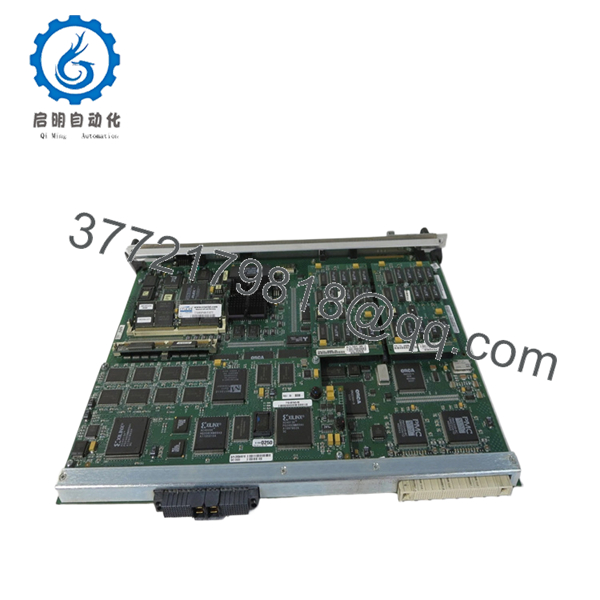
- 11075L-128 810-00206-28

- 11075L-128 810-00206-28
Firmware/Software Versions & Upgrade Notes
The 11075L-128 contains internal firmware that must be synchronized with the host line card’s FPGA and the shelf’s SR-OS/TiMOS version.
Critical Compatibility Note: A mismatch between the 810-00206-28 firmware and the host card can result in a “Communication Failure” or “Module Mismatch” alarm. When replacing this module, the system may automatically attempt a firmware download to the module. Do not interrupt power during the first 10 minutes after installation, as an interrupted firmware flash can permanently disable the optical engine.
Frequently Asked Questions (FAQ)
- Is the 11075L-128 the same as a standard SFP+ or QSFP28?
No. This is a much larger, specialized coherent module used internally on transponder line cards. It is not a hot-pluggable transceiver for a faceplate; it is a core component of the card’s optical engine.
- Why buy New Surplus instead of just replacing the whole line card?
Replacing a 100G line card can cost tens of thousands of dollars. If the failure is isolated to the optical engine, replacing the 11075L-128 allows you to restore service at a fraction of the cost, extending the ROI of your existing 1830 PSS hardware.
- Are these modules tested?
Yes. Every 810-00206-28 undergoes a power-on test and a digital handshake verification to ensure the DSP and optical sub-assemblies are fully functional before they leave our facility.
- Does it support L-Band or C-Band?
This specific model is designed for the C-Band tunable 50GHz grid, which is the standard for most 1830 PSS 100G deployments.
- What is the typical lifespan of these New Surplus units?
Since these are New Surplus (unused), they offer the full original design life—typically 100,000+ hours of operation—compared to refurbished units that may already have years of “laser-on” time.