WhatsApp: +86 16626708626
 Email:
  Phone: +86 16626708626
Description
Key Technical Specifications
| Parameter | Specification |
| Module Type | Thermocouple / Millivolt Input Module |
| Number of Channels | 4 individually isolated channels |
| Supported Thermocouple Types | J, K, T, E, R, S, B, N |
| Supported Millivolt Ranges | \pm 50 mV, \pm 100 mV |
| A/D Conversion Resolution | 16-bit |
| Backplane Current (5 V DC) | 110 mA |
| Backplane Current (24 V DC) | 85 mA |
| Cold Junction Compensation (CJC) | 2 cold-junction sensors on removable terminal block |
| Channel-to-Channel Isolation | 500 V DC continuous |
| Isolation Rating | 500 V DC field-to-backplane isolation |
Product Introduction & Supply Chain Strategy
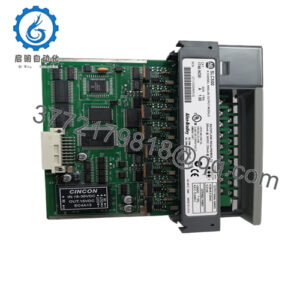
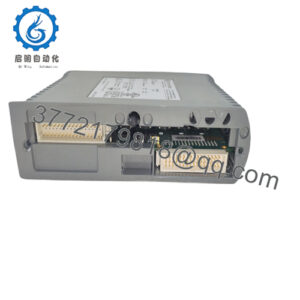
The Allen-Bradley 1746-INT4 is a high-resolution 4-channel thermocouple input module engineered for the SLC 500 PLC architecture. It converts microvolt-level sensor signals from thermocouples or millivolt transducers into digital values for precise temperature monitoring in heat treating, plastics extrusion, and chemical processing operations.
With the SLC 500 platform officially discontinued by Rockwell Automation, maintaining uncommissioned New Surplus 1746-INT4 units protects your critical thermal loops against unscheduled shutdowns. Sourcing genuine New Surplus ensures precise cold-junction calibration and drift-free operational longevity, avoiding the severe thermal degradation and calibration shifts common in second-hand pull-outs.
Installation & Configuration Guide
Stage 1: Pre-Installation (Prep & Safety)
- Execute Lock-Out/Tag-Out (LOTO) on the main 1746 chassis power supply and field sensor loops.
- Put on an ESD-grounded wrist strap connected to cabinet earth ground.
- Record existing DIP switch and jumper settings on the module board, and document thermocouple lead wiring (positive/negative polarities) using clear reference photos.
Stage 2: Removal
- Unfasten the retaining screws on the removable terminal block (RTB) and gently remove it from the module front.
- Depress the top and bottom module release levers on the SLC 500 chassis simultaneously.
- Slide the module straight out of the slot along its guide rails to avoid damaging backplane pins.
Stage 3: Installation (Clone & Seat)
- Match the DIP switches and hardware jumpers on the new 1746-INT4 module to mirror the removed unit precisely.
- Align the module card edges with the top and bottom chassis slot tracks.
- Push the module firmly into the chassis slot until both release levers click securely into position.
- Align the pre-wired RTB onto the terminal header and tighten the retaining screws to 0.5 N·m (4.4 lb·in). Ensure cold-junction compensation sensors remain securely mounted to the terminal block.
Stage 4: Power-On & Testing
- Verify field signal polarities and confirm shielding grounds are terminated at a single ground point.
- Apply power to the 1746 rack power supply and check the front LED indicators:
- MODULE STATUS: Solid green indicates normal internal diagnostics.
- CHANNEL STATUS (0–3): Green indicates valid channel conversion; flashing red signifies an open thermocouple or out-of-range sensor condition.
- Connect via RSLogix 500, verify the module’s configuration block (filter frequency, sensor type, temperature units), and monitor the integer input table (
I:e.0throughI:e.3) to confirm accurate temperature scaling.
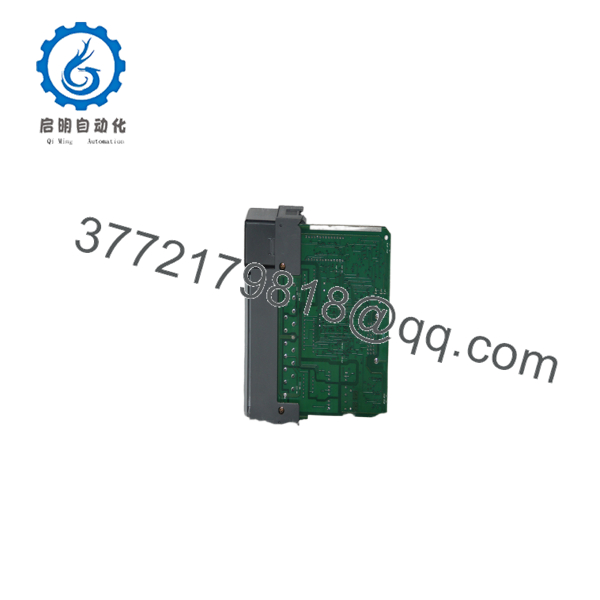
1746-INT4
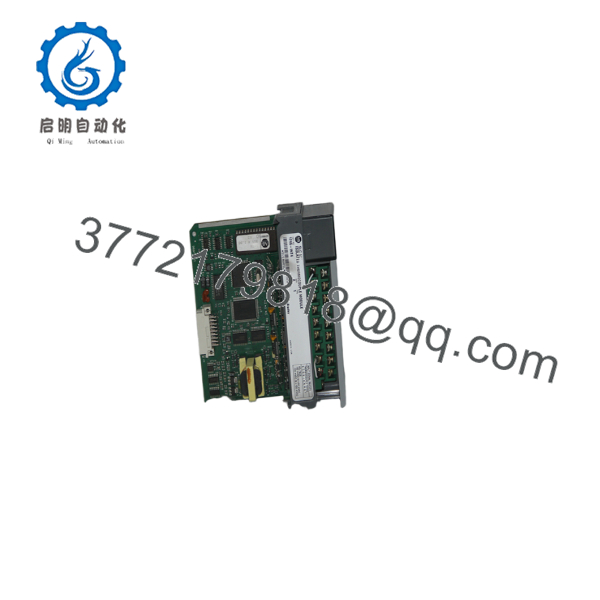
1746-INT4
Firmware/Software Versions & Upgrade Notes
- Module Class & Addressing: The 1746-INT4 operates as a Class 1 or Class 3 module depending on DIP switch configuration and slot placement. Class 3 mode allows full software configuration and advanced diagnostic filtering via RSLogix 500.
- RSLogix 500 Configuration: Ensure the correct series (Series A or Series B) is selected in the I/O Configuration tree to match the physical hardware catalog details.
- Firmware Notes: Analog and specialty temperature modules do not feature field-flashable firmware. Always verify hardware series compatibility prior to replacing a module on production racks to ensure identical DIP switch behavior and bit mapping.
Frequently Asked Questions (FAQ)
Q: Is this 1746-INT4 module genuine new or refurbished?
A: This product is a Brand New Surplus unit. It is not used, not pulled from a decommissioned plant, and not refurbished. All modules undergo rigorous quality verification to ensure OEM-level reliability.
Q: Why should I choose New Surplus over a lower-cost refurbished 1746-INT4?
A: Analog and temperature modules rely on precision onboard reference voltage circuits and cold-junction sensors. Refurbished boards often suffer from component aging, drift, or worn terminal pins that create signal noise and reading errors. Investing in New Surplus provides factory-level accuracy, a 10 to 15-year operational lifecycle, and complete peace of mind.
Q: How do you verify the quality of legacy 1746- units?
A: Every unit passes through our inbound SOP quality checks: verifying original factory packaging, inspecting backplane connectors for zero insertion wear, testing CJC thermistor integrity, and performing functional signal input tests on a live SLC 500 test rack.
Q: Can I replace the removable terminal block without losing calibration?
A: The 1746- RTB contains built-in cold-junction compensation (CJC) thermistors calibrated for ambient terminal compensation. When replacing the module, keep the original RTB with its matching board whenever possible, or ensure the replacement RTB contains functional CJC sensors.
Q: Is it safe to hot-swap the 1746- module under power?
A: No. Allen-Bradley SLC 500 chassis backplanes do not support Hot-Swapping (RIUP). Removing or inserting any module while backplane power is active can cause electrical arcing, damaging the module, adjacent cards, or the CPU. Always disconnect rack power first.
Q: What warranty coverage is included with this New Surplus card?
A: Every 1746- New Surplus unit comes backed by our comprehensive 1-year functional replacement warranty. If any channel or hardware failure occurs under standard operating parameters, we will immediately supply a replacement or issue a full refund.