WhatsApp: +86 16626708626
 Email:
  Phone: +86 16626708626
Description
Key Technical Specifications
- Part Number: 1756-OB16E
- Manufacturer: Allen-Bradley / Rockwell Automation
- Product Family: ControlLogix I/O
- Module Type: DC electronically fused output
- Output Points: 16
- Output Type: Current sourcing
- Operating Voltage Range: 10-31.2 V DC
- Nominal Voltage: 12/24 V DC
- Current per Point: 1 A at 60 °C
- Current per Module: 8 A at 60 °C
- Backplane Power: 1.32 W
- Isolation: 250 V continuous, between groups of 8 outputs
- Output Delay: 70 µs nominal off-to-on, 360 µs nominal on-to-off
Product Introduction
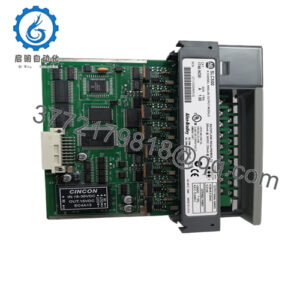
The Allen-Bradley 1756-OB16E is a ControlLogix 16-point DC output module used to switch 12/24 VDC field devices in industrial automation systems. It fits applications such as solenoids, pilot lights, relays, and other discrete DC loads.
Its appeal is straightforward: 16 sourcing outputs, electronic fusing, and 8 A total module capacity. In the field, that combination makes it a common replacement choice when you need clear point-level protection and predictable wiring in a ControlLogix rack.
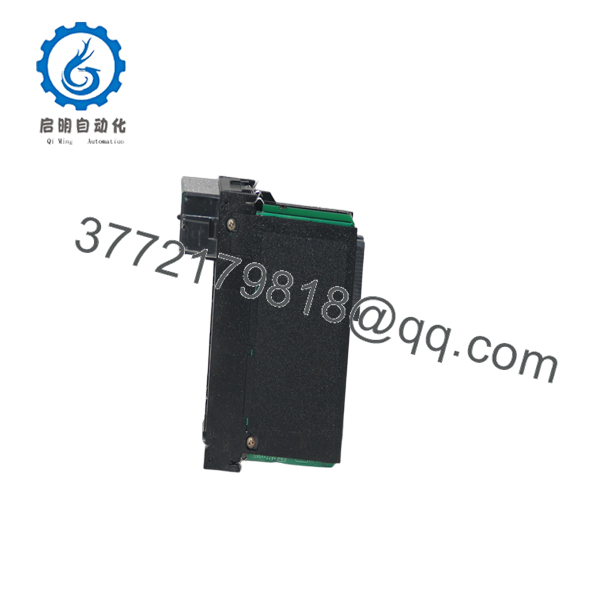
1756-OB16E
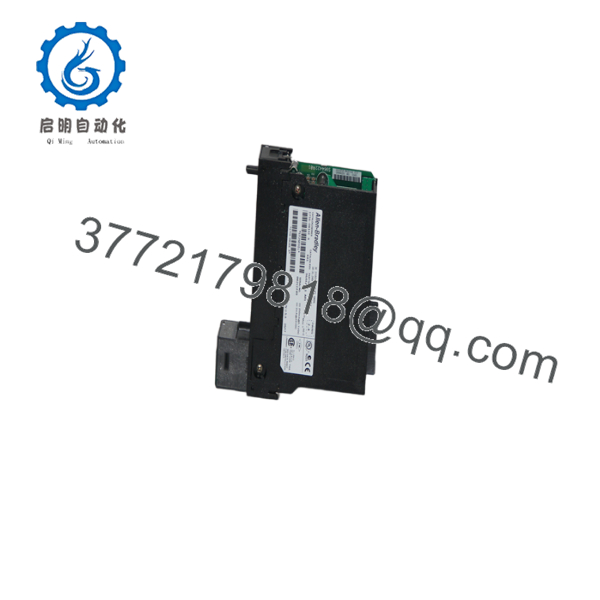
1756-OB16E
Troubleshooting Quick Reference
| Symptom | Possible Cause | Relevance to this Part | Quick Check Method | Recommendation |
|---|---|---|---|---|
| No output on one point | Blown output fuse logic condition, open field wire, or failed load | ✅ High | Measure 24 V DC at the terminal and check the load side with a meter | Verify field wiring and load before replacing the module |
| Several outputs dead in one group | Group supply missing or group protection tripped | ✅ High | Check the 24 V feed to that output group and inspect the load current | Restore field supply and clear overload first |
| Output LED on, but device does not actuate | Field device failure, wiring issue, or insufficient load current | ⚠️ Medium | Measure voltage at the device under command and confirm current draw | Test the load directly before pulling the module |
| Output stuck on | External short, program logic, or welded load device | ⚠️ Medium | Remove the field wire and verify whether the point still energizes | Isolate the field circuit before declaring the card bad |
| Module not recognized by controller | Poor seating, wrong slot, chassis issue, or backplane fault | ⚠️ Medium | Reseat the module and check controller diagnostics | Inspect the chassis and backplane before swapping parts |
| Random output dropout | Loose terminal, ground noise, or unstable field supply | ⚠️ Medium | Tug-check terminals and measure supply stability during operation | Correct wiring and supply quality first |
| Electronic fuse trips repeatedly | Load inrush or shorted field device | ✅ High | Measure surge current and compare it to the 2 A surge spec | Fix the load side problem; repeated fuse trips are usually not a card defect |
If you get stuck, contact technical support with photos of the wiring, slot layout, and controller diagnostics.
Frequently Asked Questions
Q: Is the 1756-OB16E a sinking or sourcing output module?
A: It is a sourcing DC output module. That matters because the load and field wiring have to match the sourcing topology, or the point will not behave correctly.
Q: Can I use this for 24 VDC solenoids and pilot lights?
A: Yes, that is one of the normal use cases. Just check inrush current and steady-state current so you do not exceed 1 A per point or 8 A per module.
Q: Is it hot-swappable?
A: In many ControlLogix installations, module handling follows the chassis and project procedure, but I would not treat that as a free pass. If the field loads are live, kill the circuit first unless you have a verified maintenance procedure.
Q: Why does one group of eight outputs matter?
A: Because the module uses grouped protection, and the field power is not always shared the same way across the entire card. If one group loses supply, only that section fails, which helps narrow down troubleshooting fast.
Q: What is the difference between new surplus and refurbished?
A: New surplus means unused inventory, usually older stock or project overrun. Refurbished means someone already used it and it was repaired or tested, which is a different condition and should be labeled clearly.
Q: Will this keep my program after replacement?
A: No, the controller program stays in the PLC or engineering software, not in the output module itself. After replacement, verify the slot, tag mapping, and any safety logic tied to those outputs.
Q: What should I check before ordering a replacement?
A: Confirm the exact catalog number, output type, voltage range, and terminal block style. I also recommend checking whether the load side uses group power that could trip if the current profile changed.