WhatsApp: +86 16626708626
 Email:
  Phone: +86 16626708626
Description
Key Technical Specifications
- Part Number: 1769-HSC
- Manufacturer: Allen-Bradley / Rockwell Automation
- Product Family: Compact I/O
- Module Type: High-speed counter / encoder module
- Counter Channels: 2 quadrature (ABZ) differential inputs
- Counter Mode: 2 to 4 high-speed counters
- Input Voltage Range: 2.6-30 V DC
- Maximum Input Frequency: 1 MHz
- Output Channels: 4 physical, 12 virtual
- Output Voltage Range: 5-30 V DC
- Output Current: 1 A per point, 4 A per module
- Bus Current Draw: 425 mA @ 5 V DC
- Heat Dissipation: 6.21 W
- Isolation Voltage: 75 V continuous, reinforced insulation
- Operating Temperature: 0-60 °C
- Mounting: DIN rail or panel
- Dimensions: 118 x 35 x 87 mm
- Weight: About 0.3 kg
Product Introduction
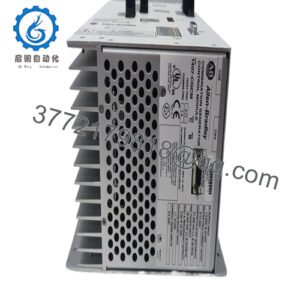
The Allen-Bradley 1769-HSC is a Compact I/O high-speed counter module used for encoder feedback, position tracking, speed measurement, and pulse counting in CompactLogix systems. It accepts differential inputs and supports up to 1 MHz counting.
It is used when standard discrete inputs are too slow for the job. The module’s 4 physical outputs, 12 virtual outputs, and compact footprint make it a solid fit for motion-adjacent and high-speed machine applications.
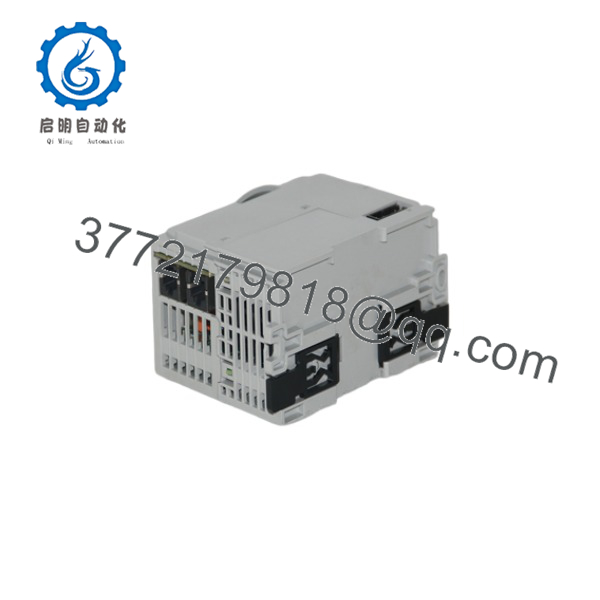
1769-HSC
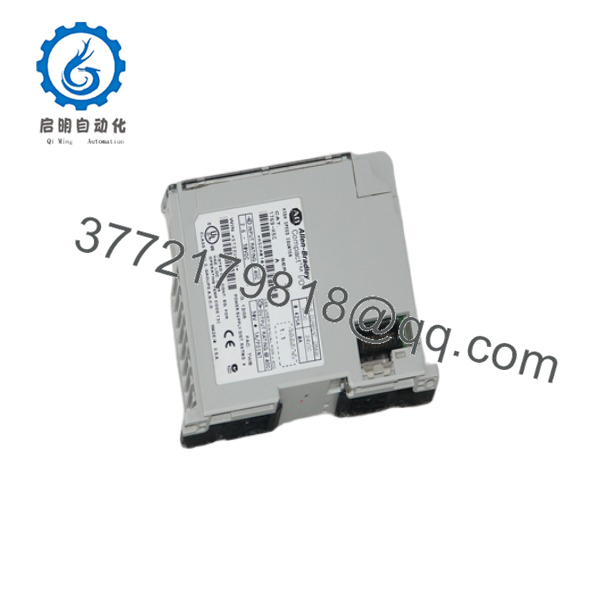
1769-HSC
Troubleshooting Quick Reference
| Symptom | Possible Cause | Relevance to this Part | Quick Check Method | Recommendation |
|---|
| Symptom | Possible Cause | Relevance to this Part | Quick Check Method | Recommendation |
|---|---|---|---|---|
| Counter count stays at zero | No encoder signal, bad wiring, or wrong input mode | ✅ High | Measure input voltage and verify ABZ wiring at the terminals | Check the encoder and signal wiring first |
| Counts are erratic or jump | Noise, poor shielding, or grounding problem | ✅ High | Inspect shield termination and look at the signal with a meter or scope | Fix cable shielding before replacing the module |
| Module does not recognize encoder direction | A/B phase swapped or configuration error | ✅ High | Verify phase order and compare to the encoder manual | Correct the wiring and parameters |
| Output does not turn on | Logic condition not met or output configuration issue | ⚠️ Medium | Check the output status bits in the controller software | Verify logic before blaming hardware |
| Input works at low speed only | Sensor frequency limit exceeded or wrong pulse shaping | ✅ High | Compare signal frequency to the 1 MHz rating | Use a proper high-speed sensor or encoder |
| One channel fails while others work | Local wiring fault or damaged input pair | ✅ High | Swap the signal to a known-good channel if allowed | Isolate the channel and retest |
| Module gets hot or resets | Overloaded backplane or cabinet heat | ⚠️ Medium | Measure cabinet temperature and bus draw | Check power and ventilation |
If the issue remains, send support photos of the encoder wiring, LEDs, and controller diagnostics.
Frequently Asked Questions
Q: What is the 1769-HSC used for?
A: It is a high-speed counter and encoder module for CompactLogix and Compact I/O systems. People use it for position, speed, flow, and pulse-counting applications.
Q: How fast can it count?
A: Up to 1 MHz input frequency, which is why it works in applications where regular discrete inputs are too slow.
Q: Does it support 2 or 4 counters?
A: Both. The module uses two quadrature differential inputs and can be configured as two to four counters depending on the application.
Q: Can I use it with a standard prox sensor?
A: Sometimes, yes, but it depends on the sensor speed and signal quality. If the pulse train is slow and clean, it may work; if not, use proper high-speed encoder hardware.
Q: Why is this usually sold as New Surplus?
A: Because it is common legacy inventory from old projects or spare stock. That is normal for CompactLogix modules that are no longer the newest platform.
Q: What should I verify before replacing one?
A: Check the encoder type, signal voltage, wiring polarity, and controller configuration. A lot of “bad module” calls turn out to be wiring or scaling issues.
Q: Is the module hard to miswire?
A: Yes, if you rush it. Take a clear photo of the old wiring, especially the shield and phase order, because a swapped A/B pair can make the counter look broken when it is not.