WhatsApp: +86 16626708626
 Email:
  Phone: +86 16626708626
Description
Key Technical Specifications
- Part Number: 1769-L27ERM-QBFC1
- Manufacturer: Allen-Bradley / Rockwell Automation
- Product Family: CompactLogix 5370 L2
- Module Type: Controller / CPU
- Memory: 1 MB user memory
- Embedded Inputs: 16 x 24 V DC, sinking/sourcing
- Embedded Outputs: 16 x 24 V DC sourcing
- Analog Inputs: 4 universal, differential or single-ended
- Analog Outputs: 2 single-ended
- High-Speed Counters: 4 channels
- EtherNet/IP Ports: 2
- Network Features: Device Level Ring, linear and ring topologies
- USB Port: 1
- Expansion Modules Supported: Up to 4 local 1769 modules
- EtherNet/IP Connections: Up to 16 nodes / 120 TCP connections
- Motion Support: 4-axis CIP motion with kinematics
- Power Supply: 24 V DC embedded supply
- Storage: 1 GB SD card standard, supports up to 2 GB
- Operating Temperature: 0-60 °C
Product Introduction
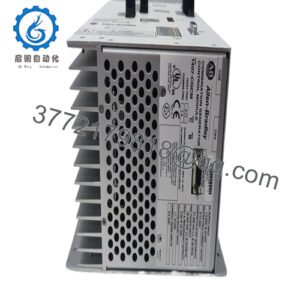
The Allen-Bradley 1769-L27ERM-QBFC1 is a CompactLogix 5370 L2 controller with built-in I/O, dual EtherNet/IP ports, and DLR support. It is used for compact machine control where integrated discrete I/O, analog I/O, and motion all sit in one controller package.
It fits smaller systems that still need network redundancy options and CIP motion capability. The built-in 16 DI, 16 DO, 4 AI, and 2 AO points reduce the need for extra modules, which keeps cabinet wiring simpler.
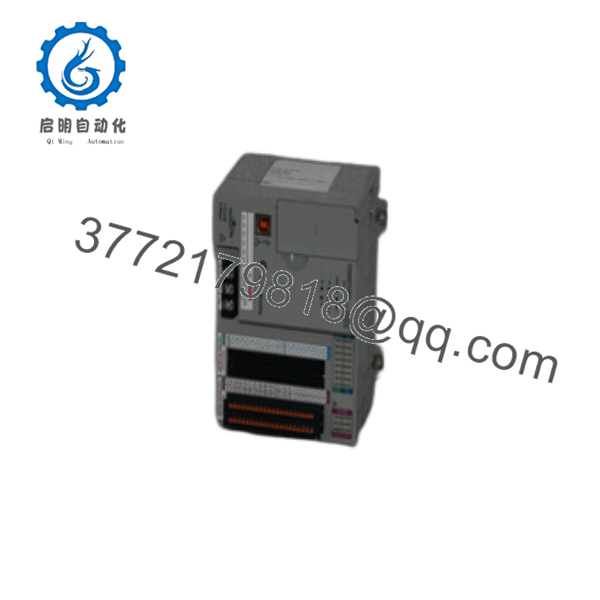
1769-L27ERM-QBFC1
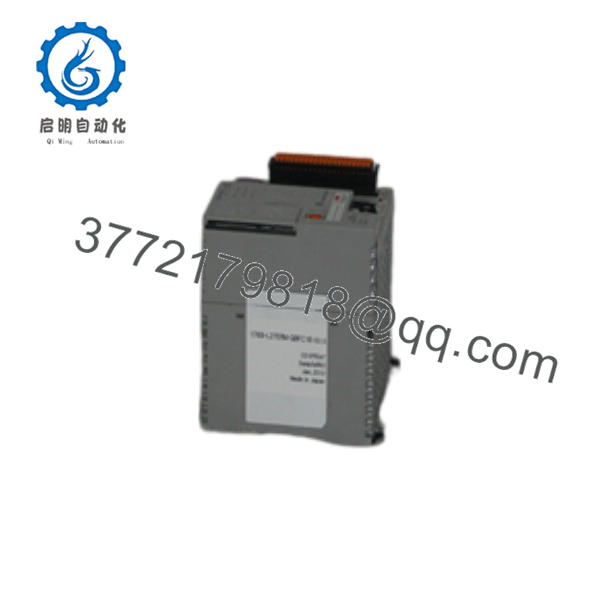
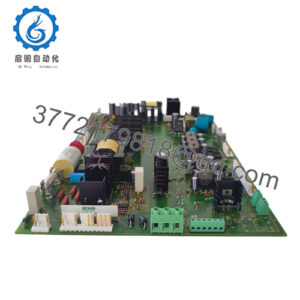
1769-L27ERM-QBFC1
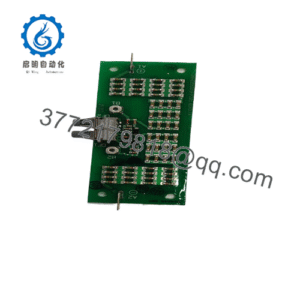
1769-L27ERM-QBFC1
Troubleshooting Quick Reference
| Symptom | Possible Cause | Relevance to this Part | Quick Check Method | Recommendation |
|---|---|---|---|---|
| Controller will not boot | Missing 24 V DC supply, bad wiring, or failed CPU | ✅ High | Measure the controller supply terminals with a meter | Verify input power before replacing the unit |
| EtherNet/IP links will not come up | Wrong IP address, bad cable, or switch/DLR issue | ✅ High | Check link LEDs and ping the controller | Fix network addressing and cabling first |
| Embedded I/O does not respond | Program issue, safety interlock, or terminal wiring fault | ✅ High | Monitor the input and output tags in software | Confirm logic and field wiring before blaming the CPU |
| Motion axis faults on startup | Axis configuration error or drive mismatch | ✅ High | Read the motion fault buffer in the controller | Verify drive setup and axis mapping |
| Analog channels read wrong values | Scaling, sensor type, or wiring issue | ✅ High | Check the input type and raw counts in the project | Match the channel configuration to the sensor |
| Module does not accept USB connection | Cable issue or incompatible software | ⚠️ Medium | Test a known-good USB cable and software version | Confirm the engineering tool and port settings |
| Controller runs hot | High cabinet temperature or excessive load | ⚠️ Medium | Measure ambient temperature and ventilation | Improve cabinet cooling and check power budget |
If the problem continues, send support photos of the controller LEDs, wiring, and diagnostics screens.
Frequently Asked Questions
Q: Is the 1769-L27ERM-QBFC1 a full controller or just a base with I/O?
A: It is a full CompactLogix 5370 L2 controller with embedded I/O. You get the CPU, network ports, and onboard I/O in one package.
Q: Does it support dual Ethernet and DLR?
A: Yes. That is one of the main reasons people choose this model for distributed machine control.
Q: How much I/O is built in?
A: It includes 16 digital inputs, 16 digital outputs, 4 universal analog inputs, 2 analog outputs, and 4 high-speed counters.
Q: Can I add expansion modules?
A: Yes, but only up to the supported local expansion count. Always check the exact module list and slot limit before designing the panel.
Q: Does it support motion?
A: Yes, it supports CIP motion with kinematics. That makes it suitable for smaller coordinated motion applications, not just simple discrete logic.
Q: Why is this often sold as New Surplus?
A: Because it is commonly sourced from leftover project inventory or unused stock. That is normal for industrial controllers, especially when buyers want a cost break versus factory-new stock.
Q: What should I check before replacement?
A: Check the controller firmware, network addressing, power supply health, and exact I/O configuration. For this class of controller, compatibility details matter more than people expect.