WhatsApp: +86 16626708626
 Email:
  Phone: +86 16626708626
Description
Key Technical Specifications
| Parameter | Value |
|---|---|
| Product Type | DC Digital Output Module |
| Series | 1769 Compact I/O |
| Number of Outputs | 32 |
| Output Type | 24 VDC Sourcing (PNP) |
| Output Groups | 2 groups (16 outputs per group) |
| Operating Voltage Range | 20.4…26.4 VDC |
| Output Delay | 0.1 ms ON / 1.0 ms OFF |
| Maximum Current per Point | 0.5 A @ 60°C (1.0 A @ 30°C) |
| Maximum Current per Module | 4.0 A @ 60°C (8.0 A @ 30°C) |
| Bus Current Draw | 300 mA @ 5.1 VDC |
| Isolation Voltage | 1200 VAC (1 s) or 1697 VDC |
| Heat Dissipation | 4.5 W |
| Mounting | DIN Rail or Panel Mount |
| Operating Temperature | 0°C to 60°C |
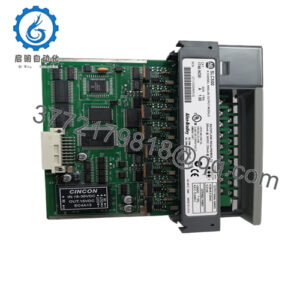
The 1769-OB32 is a 32-point 24 VDC sourcing (PNP) digital output module for the Compact I/O platform. It features 32 outputs arranged in two groups of 16 channels, operates from 20.4 to 26.4 VDC, and is currently classified by Rockwell Automation as an Active Mature product.
Product Introduction
The Allen-Bradley 1769-OB32 is a high-density discrete output module designed for CompactLogix and distributed Compact I/O systems. It provides reliable switching of 24 VDC field devices, including solenoid valves, interposing relays, contactors, indicator lights, alarms, and other industrial actuators.
With 32 sourcing outputs in a compact package, the module reduces cabinet space and wiring complexity while increasing output density. Its fast switching response makes it suitable for high-speed machine control applications, while reinforced isolation between the field side and the Compact I/O backplane improves electrical reliability in industrial environments.
The 1769-OB32 is widely deployed in packaging machinery, automotive assembly, material handling systems, food and beverage production, water treatment plants, and OEM automation equipment. It can be installed as local CompactLogix I/O or as remote EtherNet/IP I/O when used with adapters such as the 1769-AENTR.
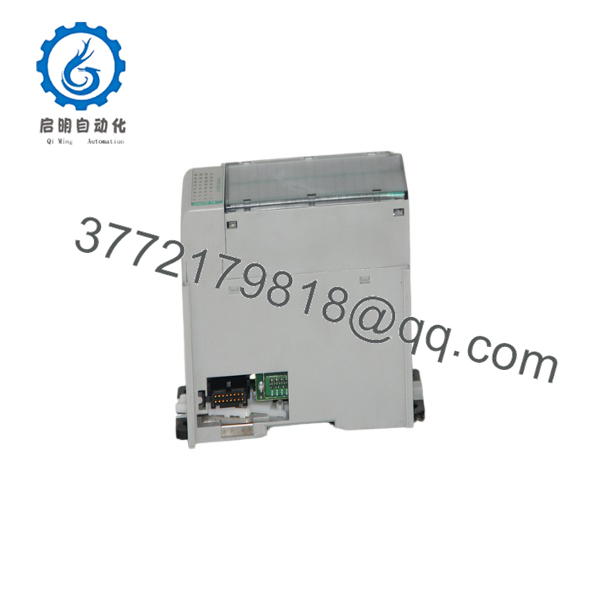
1769-OB32
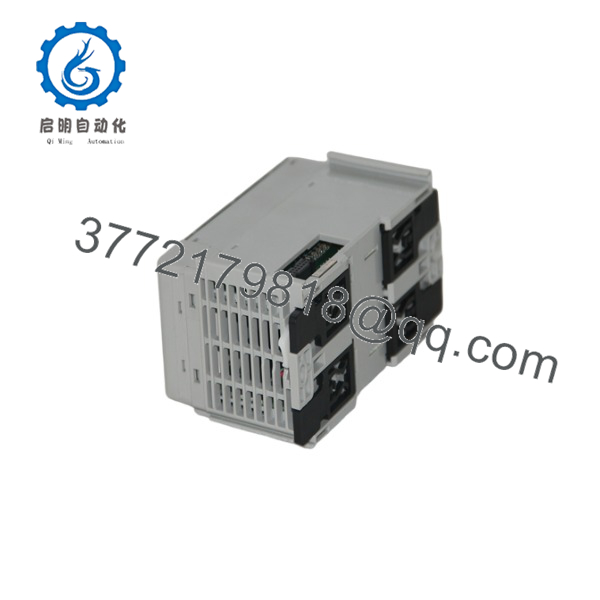
1769-OB32
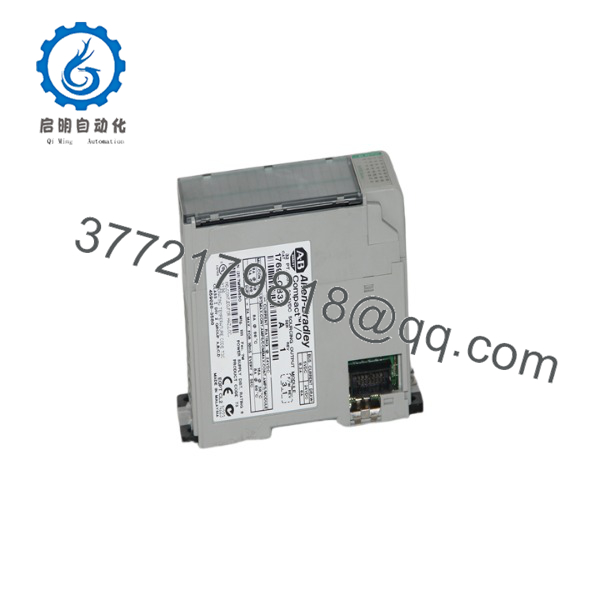
1769-OB32
Installation & Configuration Guide
Stage 1 – Pre-Installation Preparation (5–10 Minutes)
⚠️ Safety First
- Notify production personnel before maintenance.
- Apply Lock-Out/Tag-Out procedures.
- Disconnect system power.
- Verify all field output circuits are de-energized.
Required Tools
- ESD wrist strap
- Digital multimeter
- Insulated screwdriver
- Wire labels
- Laptop with Studio 5000 Logix Designer
Before Removal
- Upload and back up the PLC project.
- Record the module slot assignment.
- Label all output wiring.
- Photograph terminal connections.
Stage 2 – Remove Existing Module (5 Minutes)
- Verify system power is OFF.
- Disconnect field wiring.
- Remove the terminal block.
- Release the locking mechanism.
- Carefully remove the module from the Compact I/O assembly.
⚠️ Inspect the CompactBus connector before installing the replacement module.
Stage 3 – Install the New Module (10 Minutes)
- Confirm the replacement catalog number is 1769-OB32.
- Install the module onto the Compact I/O bus.
- Secure the locking tabs.
- Reconnect all output wiring.
- Verify field power polarity and common wiring.
- Tighten terminal screws to specification.
Installation Checklist
- ✔ Correct catalog number
- ✔ 24 VDC field supply verified
- ✔ Output groups correctly wired
- ✔ Module fully seated
- ✔ Terminal block secured
Stage 4 – Commissioning & Functional Testing (10–15 Minutes)
- Restore system power.
- Verify the Module Status LED.
- Confirm the controller recognizes the module.
- Test each output channel individually.
- Verify proper operation of connected field devices.
- Monitor module temperature during initial operation.
⚠️ Troubleshooting
- Outputs remain OFF: verify 24 VDC field power and common wiring.
- Individual channel failure: inspect field wiring and output load.
- Multiple outputs inactive: check group power connections.
- Module fault: verify Compact I/O bus connections and power budget.
Frequently Asked Questions
Q1. Is the 1769-OB32 a sourcing or sinking output module?
The 1769-OB32 provides 24 VDC sourcing (PNP) outputs, meaning it supplies positive voltage to compatible sinking field devices.
Q2. How many outputs are available?
The module provides 32 discrete outputs, divided into two groups of 16 channels, allowing efficient wiring and high output density.
Q3. What types of loads can be controlled?
Typical applications include:
- Solenoid valves
- Interposing relays
- Motor starter contactors
- Indicator lamps
- Audible alarms
- Industrial DC actuators
Q4. What is the maximum output current?
Each output supports up to 0.5 A at 60°C or 1.0 A at 30°C, while the entire module supports 4.0 A at 60°C or 8.0 A at 30°C. Proper load distribution should be considered during system design.
Q5. Which controllers are compatible?
The is compatible with CompactLogix controllers, 1769 Compact I/O systems, and distributed EtherNet/IP architectures using communication adapters such as the 1769-AENTR.
Q6. What should I verify before ordering?
Confirm the following:
- Catalog number ()
- Controller compatibility
- Required number of digital output channels
- 24 VDC field power availability
- Sourcing (PNP) output requirements
- Available Compact I/O expansion position
- Studio 5000 firmware compatibility
- Total output current and power budget
A common installation issue is exceeding the allowable group or module current limit by connecting too many high-current loads to one output group. Before commissioning, verify both the per-channel and total module current to ensure reliable long-term operation and prevent nuisance shutdowns.