WhatsApp: +86 16626708626
 Email:
  Phone: +86 16626708626
Description
Key Technical Specifications
| Parameter | Value / Specification |
| Catalog Number | 1771-OFE1 |
| Module Type | Analog Voltage Output Module |
| Outputs per Module | 4 single-ended channels |
| Voltage Output Ranges | \pm10V DC, 0–10V DC (configurable via jumpers) |
| Digital Resolution | 12 bits (1 part in 4096) |
| Conversion Rate | 5.0 ms max across all 4 channels |
| Backplane Current Load | 1.5 A @ 5V DC max |
| External Power Requirement | Requires external loop voltage supply (or internal supply depending on configuration) |
| Wiring Arm | 1771-WA (10-point field wiring arm) |
| Isolation Voltage | 1500V AC optocoupler isolation (backplane to field) |
| Operating Temperature | 0 to 60°C (32 to 140°F) |
Product Introduction & Supply Chain Strategy
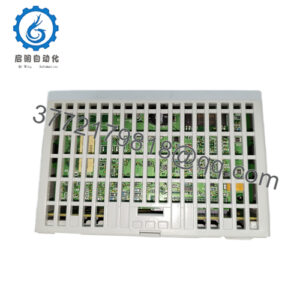
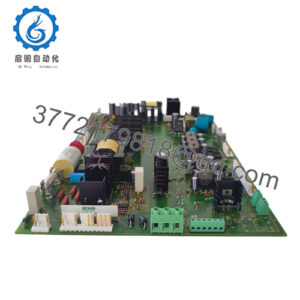
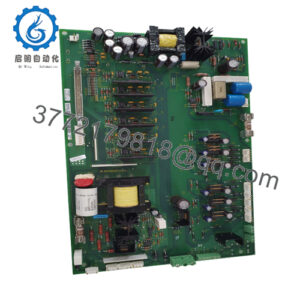
This product is a Brand New Surplus unit. It is not used, not pulled from a decommissioned plant, and not refurbished. All modules undergo rigorous quality verification to ensure OEM-level reliability. The Allen-Bradley 1771-OFE1 is a core analog output card for classic PLC-5 architecture, generating precision voltage references to drive variable speed drives, proportional valves, and analog recorders via Block Transfer Write (BTW) instructions.
Because Rockwell Automation has transitioned the 1771 Universal I/O platform to End-of-Life (EOL) status, obtaining factory-fresh New Surplus hardware is critical to avoiding unbudgeted system retrofits. Refurbished 1771-OFE1 modules frequently exhibit capacitor drying and analog drift in their output amplifiers, causing voltage drift and unstable control loops under thermal stress. Procuring genuine New Surplus 1771-OFE1 modules guarantees zero operating hours, pristine edge-connector plating, factory DAC calibration, and maximum operational stability.
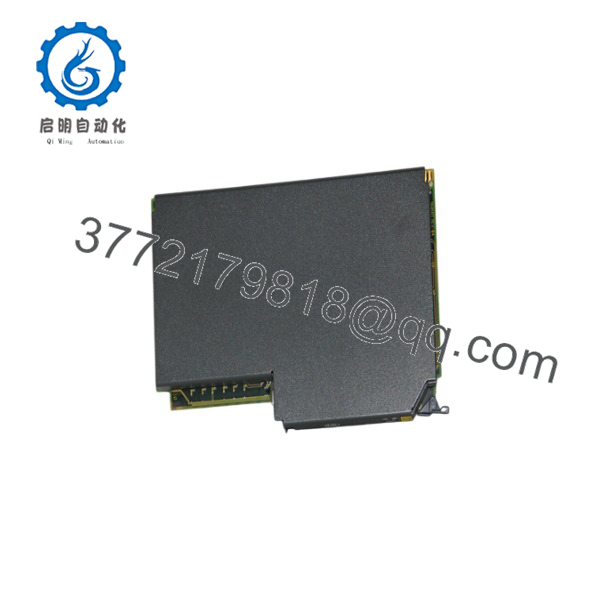
1771-OFE1
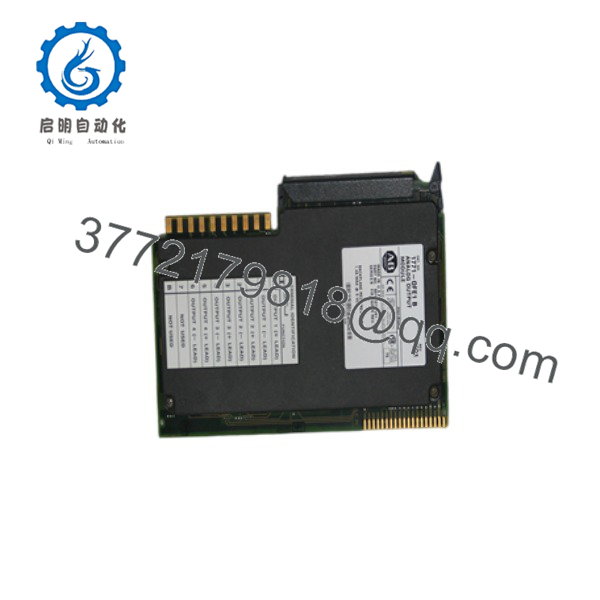
1771-OFE1
Installation & Configuration Guide
1.Pre-Installation (Prep & Safety):Safety warning: Isolate chassis power and loop power before installing or removing modules.
Disconnect main AC power to the 1771 rack power supply (e.g., 1771-P4S or 1771-P7) and follow Lock-Out/Tag-Out (LOTO) protocols. Put on an ESD anti-static wrist strap. Inspect configuration jumpers on the 1771-OFE1 circuit board to set each channel for \pm10V DC or 0–10V DC operation.
2.Removal:
Swing open the 1771-WA wiring arm to disconnect field wiring without disturbing individual terminal screws. Unlatch the upper and lower module retaining clips on the 1771 chassis. Slide the old 1771-OFE1 module straight out along the chassis plastic guides.
3.Installation (Clone & Seat):
Unpack the New Surplus 1771- module in an ESD-safe workspace. Confirm PCB jumper settings match the original card’s signal ranges. Slide the module firmly into the designated chassis slot until seated in the backplane connector, then snap the module locking levers closed. Pivot the 1771-WA wiring arm back into position until it latches securely.
4.Power-On & Testing:
Restore backplane and field loop power. Check that the front panel RUN LED illuminates solid green and the FLT LED remains off. Execute a Block Transfer Write (BTW) instruction in the PLC-5 program and verify expected voltage output across the terminal block pins using a calibrated digital multimeter.
Firmware/Software Versions & Upgrade Notes
- Block Transfer Programming: Channel data is transferred between the PLC-5 processor and the 1771- via Block Transfer Read (BTR) and Block Transfer Write (BTW) instructions. Configure file lengths according to the module manual (typically 5 words for BTW).
- Current Variant Comparison: If your application requires 4–20 mA or 0–20 mA current loop outputs rather than voltage outputs, use the 1771-OFE2 or 1771-OFE3 module variants instead.
- Modernization Path: For long-term lifecycle strategy, 1771- modules in 1771 RIO racks can be interfaced to ControlLogix processors using a 1756-RIO bridge, allowing a phased control software upgrade before rewiring field devices.
Frequently Asked Questions (FAQ)
What is the difference between the 1771- and 1771-OFE2 modules?
The is designed for voltage outputs (\pm10V DC or 0–10V DC), whereas the 1771-OFE2 is designed for current outputs (4–20 mA). Ensure field devices require a voltage signal before selecting the 1771-.
Why choose New Surplus over refurbished 1771- modules?
1771 analog modules rely on high-precision internal operational amplifiers and voltage references. Refurbished units often suffer from aged components that cause signal drift, thermal drift across channels, or complete DAC failure. New Surplus guarantees factory calibration, pristine PCB traces, and zero operational degradation.
Are these 1771- modules genuine Allen-Bradley products?
Yes. We strictly guarantee that every 1771- module supplied is 100% Original OEM New Surplus. Sourced from audited distributor overstock and system builder reserves, every card undergoes thorough physical inspection and live backplane bench testing prior to dispatch.
What wiring arm is used with the 1771-?
The 1771- utilizes the standard Allen-Bradley 1771-WA 10-point field wiring arm, allowing easy module swaps without disconnecting field wires.
What warranty is included with this New Surplus card?
All New Surplus 1771- modules are covered by our full 1-year replacement warranty. If any channel or function fails under normal operating conditions within 12 months, we will replace the module immediately from our ready stock.