 WhatsApp: +86 16626708626
 Email:
  Phone: +86 16626708626
Description
Key Technical Specifications
| Parameter | Value |
|---|---|
| Product family | Alstom ALSPA WNTC drive line |
| Model reference | 4105E |
| Drive type | Fully microprocessor-controlled DC variable speed industrial drive |
| Power class | 37.5 kW |
| Output current | 105 A |
| Application | Industrial motor speed control |
| Control architecture | Drive power section / controller assembly |
| Typical use case | Legacy process lines, heavy equipment, and industrial retrofit support |
| Lifecycle profile | Older platform; verify exact configuration before replacement |
| Stocking strategy | Keep buffer stock for critical assets; evaluate last-time-buy if installed base is shrinking |
Product Introduction & Supply Chain Strategy
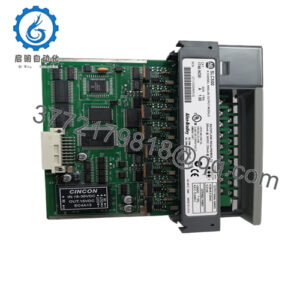
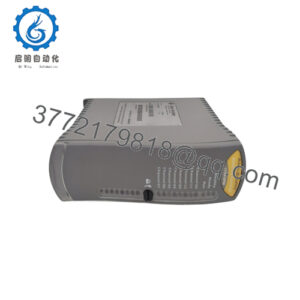
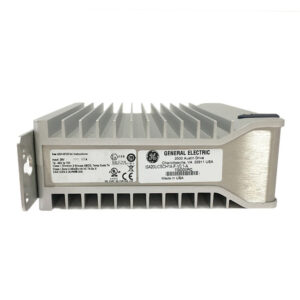
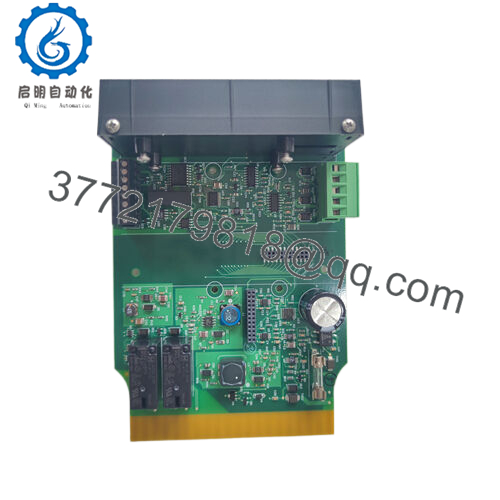
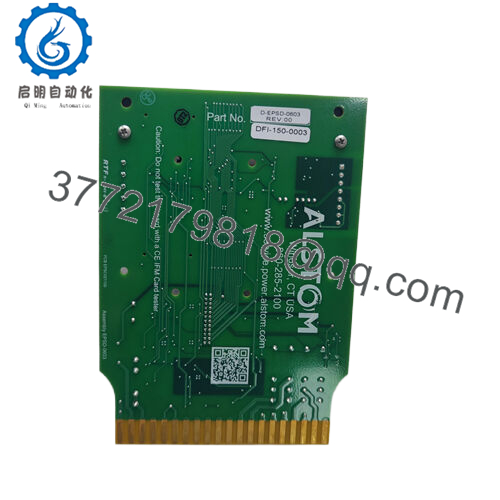
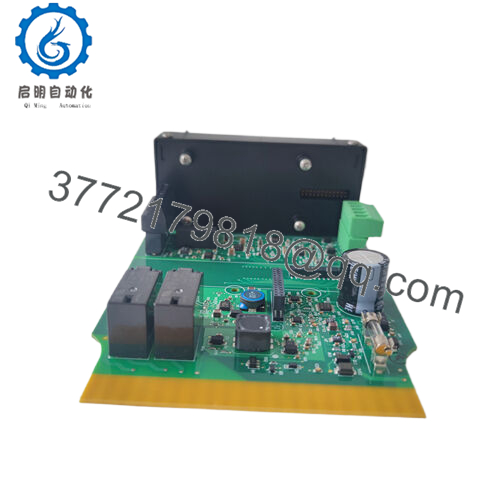
Alstom 4105E is a DC variable speed drive section used to control industrial motor speed in legacy automation and heavy-duty process environments. It serves installed equipment that often cannot absorb long outages, especially where the drive platform is older and exact replacements are no longer easy to source.
Buying this as New Surplus makes sense when uptime risk outweighs unit price alone. It protects against stock-outs, reduces Total Cost of Ownership through faster recovery, and avoids the uncertainty of prior-use inventory. For a drive with lead time variability, the right answer is usually a controlled buffer stock rather than reactive purchasing.

- 4105E
Installation & Configuration Guide
Stage 1: Pre-Installation
- Apply lock-out/tag-out and confirm the drive cabinet is fully de-energized.
- Use an ESD strap, insulated tools, and the original wiring photos for reference.
- Record all terminal labels, jumper positions, and any DIP or parameter settings before removal.
- Verify the replacement matches the exact 4105E variant and power class.
Stage 2: Removal
- Check that control and power circuits are at zero energy.
- Remove wiring carefully and label any conductors that are not clearly documented.
- Extract the module straight out to avoid stressing connectors or guide rails.
- Inspect terminals, backplane surfaces, and cooling paths for heat damage or contamination.
Stage 3: Installation
- Mirror all recorded settings, jumpers, and configuration data exactly.
- Seat the replacement evenly and fully to ensure proper electrical engagement.
- Torque terminals to the documented specification, not by feel.
- Confirm cooling clearance and airflow paths before closing the panel.
Stage 4: Power-On & Testing
- Verify the 24 V control rail and main power path for shorts before energizing.
- Check startup status, alarms, and any run-ready indications.
- Validate motor direction, current draw, and speed response at low load first.
- Run a functional test under supervised conditions before placing the asset back in service.
Firmware/Software Versions & Upgrade Notes
This drive belongs to a legacy Alstom platform, so firmware and parameter compatibility should be treated as a replacement risk item, not an afterthought. The safest practice is to preserve the existing parameter set and match the original software baseline whenever possible.
Upgrading firmware during a swap can introduce communication mismatches, unexpected parameter changes, or control instability. Downgrading can be just as risky if the hardware revision expects a newer code set. Document the old parameter file, control version, and terminal map before replacement to avoid commissioning delays.
Frequently Asked Questions
Is this really new, or is it refurbished?
It should be handled as New Original / New Surplus inventory, not refurbished. For a legacy drive, that matters because hidden wear in power electronics can become an expensive downtime event.
Why is it cheaper than OEM new but not as cheap as refurb?
New Surplus typically comes from secured excess inventory or dormant stock, so it avoids current OEM factory pricing. It still carries more assurance than prior-use market parts, which is why the price sits in the middle.
Is the 4105E obsolete?
It is best treated as a legacy spare with obsolescence risk. If the installed base is still running, the procurement plan should include lifecycle tracking and possible last-time-buy planning.
Can I swap it live?
Do not assume live replacement is safe. Isolation and verification are the correct approach unless the site has a written maintenance procedure that explicitly allows controlled hot work.
Will my settings transfer automatically?
No. Drive parameters, jumpers, and wiring references should be documented and restored manually or from a saved backup.
What stocking level makes sense?
For a critical drive on a production line, keep 1 unit on-site as buffer stock and consider 2 units if lead time variability is high. For less critical applications, vendor-managed stock or cross-site sharing is usually better than excess inventory.