 WhatsApp: +86 16626708626
 Email:
  Phone: +86 16626708626
Description
Key Technical Specifications
| Parameter | Value |
| Manufacturer | Alstom / Siemens |
| Part Number | 64-09001191-7 / 64/09001191/7 |
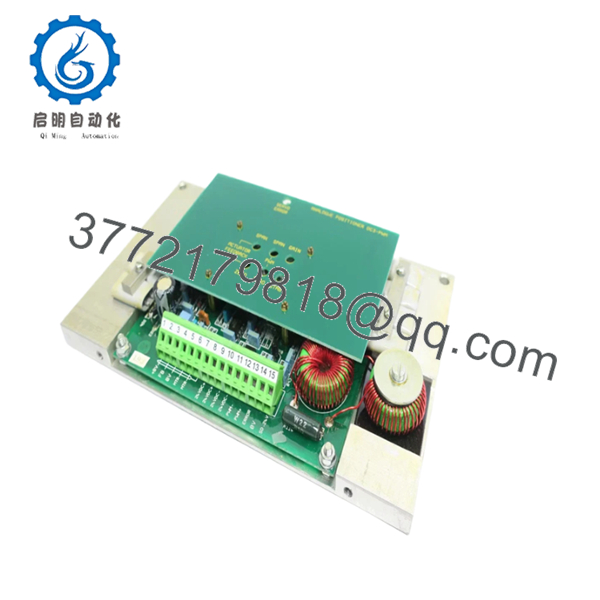
| Module Type | Analogue Positioner Unit / Valve Controller |
| Input Supply Voltage | 24 V DC nominal (20.4 to 28.8 V DC acceptable range) |
| Power Consumption | Maximum 15 W backplane draw |
| Application Fit | Industrial Gas Turbines (e.g., Alstom TA1750 series) |
| Control Interface | Analogue closed-loop actuator positioning |
| I/O Configuration | High-precision dedicated analogue inputs and servo driver outputs |
| Weight | 0.91 kg (2.0 lbs) net weight |
| Cooling Method | Natural convection cooling inside a sealed enclosure |
| Operating Temperature | 0 to +60 °C inside the control cabinet |
| Storage Temperature | −40 to +70 °C |
Product Introduction & Supply Chain Strategy
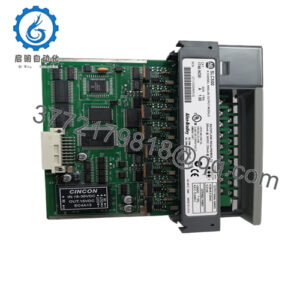
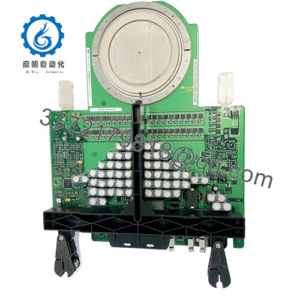
The Alstom 64-09001191-7 is a specialized Analogue Positioner Unit deployed primarily within heavy-duty gas turbine control architectures. It manages continuous, closed-loop position signaling for critical fuel control valves and variable guide vanes, guaranteeing strict thermal balance and safe governor limits. Because it handles high-accuracy industrial actuation, precise calibration and immediate response speeds are mandatory to prevent catastrophic governor trips or overspeed faults.
From a procurement and inventory lifecycle perspective, this module has been officially discontinued by the original manufacturer, driving up the Total Cost of Ownership (TCO) for aging power assets. Sourcing this hardware as a New Surplus unit is a critical risk mitigation strategy; it provides an insurance policy against lead time variability that can extend to months for obsolete components. Relying on refurbished alternatives introduces unacceptable hazards, such as latent component degradation, which can quickly trigger an expensive emergency shutdown.
Installation & Configuration Guide
Stage 1: Pre-Installation (Prep & Safety)
- Isolate all electrical supply lines to the controller rack using standard lock-out/tag-out (LOTO) procedures.
- Confirm that the 24 V DC main bus bar is completely discharged before removing cabinet panels.
- Secure a grounded ESD wrist strap to your wrist and attach the alligator clip to an unpainted section of the system chassis.
- Document the existing module configuration. Take high-resolution photographs of all side-mounted DIP switches, jumper positions, and terminal wiring layouts to preserve your hardware address and baud rate settings.
Stage 2: Removal
- Unfasten the upper and lower retaining screws on the front faceplate of the 64-09001191-7 card.
- Disconnect any front-facing terminal blocks by backing out the integrated captive screws uniformly.
- Grip the module handles firmly and pull the card straight outward along the chassis guide rails. Apply even horizontal pressure to protect the backplane pins from twisting or bending.
- Immediately transfer the removed module into an ESD-shielded storage bag.
Stage 3: Installation (Clone & Seat)
- Retrieve the new surplus 64-09001191-7 module from its protective packaging.
- Configure the hardware DIP switches and configuration jumpers on the new module to mirror the exact settings of the old unit.
- Align the circuit board edges with the designated chassis guide rails.
- Push the module smoothly into the slot until the backplane connectors seat completely. Tighten the front retaining screws to ensure continuous ground contact.
- Re-terminate the wiring bundles or plug the front connector block into place, securing all captive hardware.
Stage 4: Power-On & Testing
- Use a digital multimeter to verify that the 24 V DC power rail has a minimum 20% overhead buffer and is completely free of short circuits.
- Re-energize the turbine control cabinet master breaker.
- Monitor the front-panel status indicators. The green RUN LED should light up steadily, while any red ERR or FAULT lights must remain completely dark.
- Initiate a communication loopback test through your turbine diagnostic workspace to verify stable data handshakes and confirm that active analogue output loops match your field valve position commands.

- 64-09001191-7
Firmware/Software Versions & Upgrade Notes
The Alstom 64-09001191-7 positioner requires precise firmware alignment to operate reliably alongside host turbine controllers. The standard recommended firmware for stable deployment is Revision 6 (or later, depending on your system package). It is critical to note that running mismatched firmware revisions between redundant positioner pairs can cause sudden protocol timeouts and unexpected governor drops.
When replacing this card, always extract and check the firmware version of your legacy unit before installation. Upgrading or downgrading firmware during an emergency hardware swap should be avoided unless absolutely necessary; a mismatch can disrupt communication handshakes with older control networks. Ensure your current turbine system configuration maps correctly to the revision labeled on the incoming module to maintain full backward compatibility without changing system logic.
Frequently Asked Questions (FAQ)
Q: Why does this product cost more than refurbished units found online, but less than OEM list price? A: This module is an original, unused piece of New Surplus inventory. It has never spent time in an active machine environment or been exposed to thermal stress, meaning its internal capacitors and relays retain their full OEM lifespan. Refurbished components are used parts that have had cosmetic defects hidden or minor components replaced after failure. Our pricing balances the premium reliability of factory-level components with the substantial cost reductions realized by bypassing current inflation-adjusted OEM list pricing.
Q: Are these modules genuinely new, and how do you verify their operational integrity? A: Yes, these are guaranteed Brand New Surplus units. They come from overstock projects or facility strategic reserves and feature zero wear on the backplane pins and no component rework. Every unit undergoes strict inbound traceability tracking, including physical examination and part-number matching against original OEM shipping profiles, ensuring you receive authentic hardware ready for full-term field service.
Q: Can this 64-09001191-7 module be hot-swapped while the turbine control system is powered? A: No, hot-swapping this positioner card is highly discouraged. Pulling an analogue positioner while the control bus is energized can spark low-voltage arcs across backplane pins, risking data corruption on neighboring modules or causing a sudden drop in valve drive current. Always isolate the local chassis power before removing or inserting any card.
Q: Does the positioner retain its parameter tuning values when powered down or stored? A: The card retains its hardware identity via physical DIP switch and jumper positions. However, fine-tuned calibration offsets, loop gains, and valve positioning curves are typically managed and downloaded directly by the primary controller rack upon boot. You should verify your application software parameters inside your engineering station before putting the turbine back online.
Q: What type of warranty protection do you provide for an obsolete component like this? A: Because this item is obsolete and sourced via verified surplus channels, the original manufacturer’s factory warranty may no longer apply. To protect your investment, we back this New Surplus module with our own comprehensive 2-year warranty that covers all functional electrical failures and firmware defects, giving your plant identical peace of mind to an OEM replacement.