 WhatsApp: +86 16626708626
 Email:
  Phone: +86 16626708626
Description
Key Technical Specifications
| Parameter | Value |
| Manufacturer | Alstom |
| Part Number / MPN | AB121 (063043119 / 80801353) |
| Module Classification | Industrial Control Board / DCS I/O Core |
| Nominal Operating Voltage | 220 V AC/DC network compatible |
| Analog Inputs | 4 Channels (0 to 10 V DC configuration) |
| Resolution | 16-bit analog-to-digital processing precision |
| High-Speed Counter Channels | 2 Independent high-speed tracking inputs |
| Maximum Output Frequency | 50 kHz switching rate capability |
| Communication Protocol | Modbus RTU / Proprietary Alstom Net interfaces |
| Programming Options | Ladder Diagram (LD) and Sequential Function Chart (SFC) |
| Dimensions | 55 mm x 105 mm x 120 mm |
| Operating Temperature | 0 to +55 °C cabinet temperature |
Product Introduction & Supply Chain Strategy
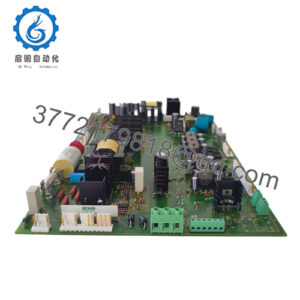
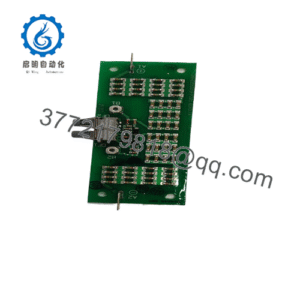
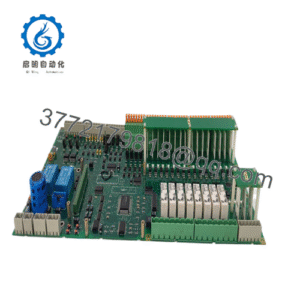
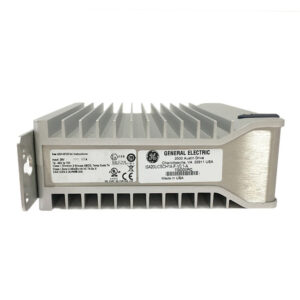
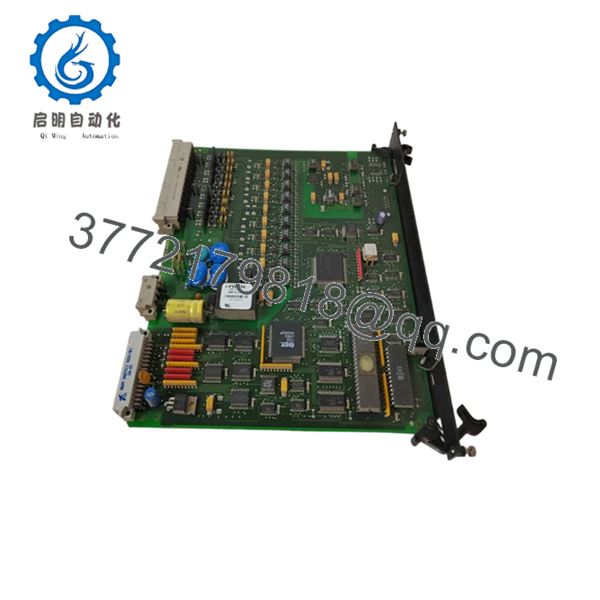
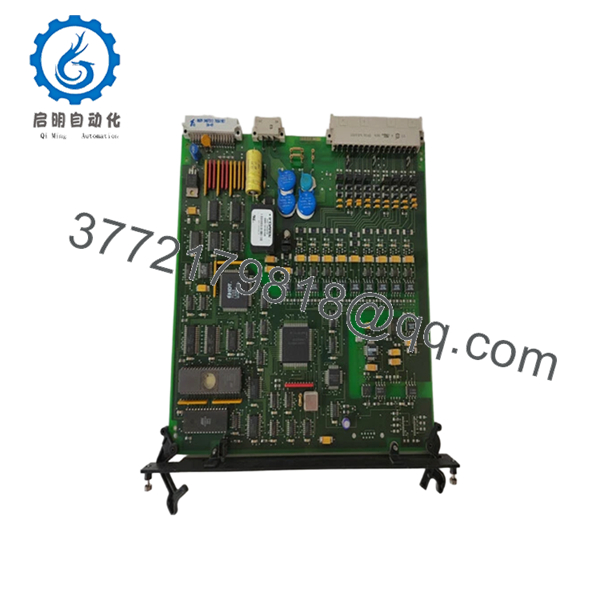
The Alstom AB121 is an industrial control board module optimized for power generation, petrochemical processing, and heavy automation sectors. Operating as a core distributed processing and data acquisition card, this module executes localized logic, interfaces directly with high-resolution field sensors, and routes critical runtime parameters back to central host systems. Its specialized high-speed counters and 16-bit analog resolution make it an essential asset for managing high-accuracy closed-loop dynamics inside steam or gas turbine auxiliary loops.
Because the AB121 has achieved legacy EOL status, procurement managers must shift from an unmanaged, just-in-time replenishment mindset to strict strategic warehousing. Sourcing this module as a New Surplus unit addresses the challenges of prolonged vendor lead time variability while maintaining an optimal Total Cost of Ownership (TCO). Relying on cheap, second-hand alternatives risks immediate system drops due to component fatigue, converting a small savings choice into an expensive plant asset failure.

- AB121
- AB121
Installation & Configuration Guide
Stage 1: Pre-Installation (Prep & Safety)
- Complete all site-mandated lock-out/tag-out (LOTO) isolation protocols on the active rack and power feeds.
- Confirm that the incoming supply line is fully de-energized to prevent arcing across backplane terminal traces.
- Fasten a grounded ESD wrist strap to your arm and wire it to a valid metal frame ground points.
- Document the module layouts. Take clear photos of all base plate jumper arrangements, firmware labels, and target wire terminations to eliminate reassembly errors.
Stage 2: Removal
- Loosen the front-panel fixing brackets and separate any terminal sub-assemblies by backing out their captive retaining fasteners.
- Carefully pull the AB121 card directly forward out of its chassis cradle, applying steady, parallel alignment pressure to ensure the delicate connector pins remain straight.
- Seal the extracted assembly inside an antistatic ESD storage bag immediately.
Stage 3: Installation (Clone & Seat)
- Unbox the new surplus AB121 board within an ESD-safe workspace environment.
- Inspect the board layout and map all on-board jumpers and physical parameters to copy the settings of the original module exactly.
- Slide the card into the open slot track, applying firm horizontal force to anchor the backplane plug cleanly into the main receiver.
- Tighten the front panel faceplate screws to establish permanent ground connectivity, and lock down all input wiring pins.
Stage 4: Power-On & Testing
- Verify the supply lines fall within safe OEM parameters using a calibrated digital multimeter.
- Apply line power to the main control chassis.
- Monitor the front-panel status cluster to verify normal initialization sequences, checking that all primary health lights show solid operational colors and no system error indicator triggers.
- Run standard engineering tool checks to verify system communication handshakes and confirm that field sensor values show active, non-zero loop inputs.
Firmware/Software Versions & Upgrade Notes
The Alstom AB121 requires strict firmware code parity to execute ladder logic programs reliably and manage remote telemetry loops. When swapping hardware in a redundant architecture, mismatched logic firmware builds can cause processing halts or sudden communication interface drops across your network backplane.
Before inserting the replacement board, cross-reference the revision block text with your old module profile. Avoid fields upgrades or firmware updates during active system maintenance periods; downloading fresh configuration structures to a blank legacy card can alter processing timings or break communication blocks with legacy controller interfaces. Always extract and verify your field software balance requirements before resetting terminal nodes.
Frequently Asked Questions (FAQ)
Q: What makes this AB121 unit superior to used or refurbished options on the market? A: This module is an original, unused New Surplus component sourced directly from asset protection stocks. It features full manufacturing lifetime margins with zero degradation on critical elements like capacitors or processing chips. Refurbished boards are typically extracted from salvaged plants and repaired after failure, carrying a higher hidden risk of component fatigue that can cause unexpected system faults.
Q: Is the AB121 card in stock, and what is the typical delivery schedule? A: Yes, this product is fully verified and held in stock inside our secured warehouse space. Standard order shipments leave our facility within 3 to 5 business days after payment validation, minimizing lead time variability during critical facility turnarounds.
Q: Can I use standard Ladder Diagram logic to program and adjust this module? A: Yes, the AB121 hardware fully supports standard Sequential Function Chart (SFC) and Ladder Diagram (LD) structures. Configuration settings can be loaded directly through your existing engineering workstation tools.
Q: What exact supply voltage does the AB121 board require for stable control room operation? A: The module card operates on a nominal 220 V system architecture, which is a standard configuration for heavy industrial and power station automation systems.
Q: What type of warranty backing do you provide on this obsolete Alstom board? A: Because the original vendor has ended factory service lifecycles, OEM support is no longer accessible. To secure your plant reliability, we back this New Surplus module with a complete 2-year warranty that covers all processing errors and physical electronics issues.