 WhatsApp: +86 16626708626
 Email:
  Phone: +86 16626708626
Description
Key Technical Specifications
| Parameter | Value |
|---|---|
| Product family | ALSTOM PS series |
| Application | High-voltage network protection |
| Protection function | Directional time-overcurrent protection |
| Current inputs | Four current inputs |
| Timing characteristics | Definite-time or inverse-time operation |
| Functions | Short-circuit direction determination, teleprotection, circuit breaker failure protection |
| Monitoring | Measuring circuit supervision and fault data output |
| Control logic | Tripping matrix |
| Use case | Selective short-circuit protection in power networks |
| Lifecycle note | Legacy relay platform; verify exact variant and supported settings before replacement |
| Stocking strategy | Keep buffer stock for critical substations; coordinate cross-site sharing where possible |
Product Introduction & Supply Chain Strategy
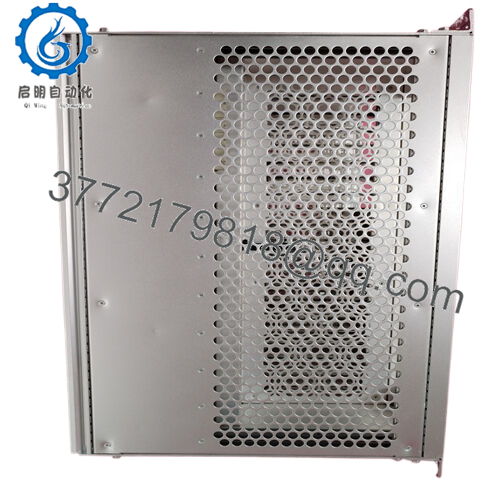
ALSTOM PS 441 is a numerical directional time-overcurrent protective relay used for selective short-circuit protection in high-voltage networks. It supports phase and residual current timing, fault recording, trip logic, and related protection functions that keep feeder and substation protection coordinated.
Buying PS 441 as New Surplus is a practical supply-chain decision for an installed base that cannot afford a protection gap. The part is likely legacy, so lead time variability and obsolescence risk make buffer stock and last-time-buy planning more economical than emergency sourcing. New Surplus also lowers Total Cost of Ownership compared with refurb uncertainty.

- PS 441
Installation & Configuration Guide
Stage 1: Pre-Installation
- Apply lock-out/tag-out and verify the protection panel is de-energized.
- Use an ESD strap, insulated hand tools, and a camera to document the original setup.
- Photograph the terminal wiring, current input assignment, and any selector settings.
- Confirm the replacement matches the exact PS 441 variant and revision.
Stage 2: Removal
- Verify all associated circuits are isolated and safe to handle.
- Remove conductors carefully and label them before disconnection if documentation is incomplete.
- Extract the relay straight out to avoid connector damage or bent pins.
- Inspect the backplane or case interface for dust, corrosion, or heat stress.
Stage 3: Installation
- Replicate all settings, selector positions, and terminal assignments exactly.
- Seat the module evenly and fully into the rack or case.
- Reconnect wiring according to the documented photographs, not memory.
- Double-check the current input wiring and trip output mapping before energizing.
Stage 4: Power-On & Testing
- Restore control power and verify there are no abnormal alarms at startup.
- Check LED indications and confirm the relay enters healthy operating status.
- Test trip and alarm outputs with a controlled functional test.
- Validate coordination logic and protection response before returning the circuit to service.
Firmware/Software Versions & Upgrade Notes
PS 441 is a legacy protection relay, so compatibility depends heavily on the exact hardware revision and site-specific setting set. The safest approach is to preserve the original configuration and match the existing logic as closely as possible during replacement.
Firmware upgrades can affect timing characteristics, communication behavior, or parameter handling, especially in older protection schemes. Downgrading can be just as risky if the replacement unit expects a different baseline. Record the original firmware, settings, and wiring map before any swap.
Frequently Asked Questions
Is this really new, or is it refurbished?
It should be treated as New Original / New Surplus inventory. For a protection relay, the difference matters because hidden wear can create a nuisance trip or a protection failure later.
Why is it cheaper than OEM new but not as cheap as refurb?
New Surplus usually comes from excess inventory or dormant stock, not active factory production. That keeps it below OEM list price while avoiding the uncertainty of prior-use parts.
Is PS 441 obsolete?
It should be considered a legacy item with obsolescence risk. That means buyers should focus on installed-base support, traceability, and availability protection.
Can I hot-swap it?
No, not as a default practice. Protection relays should be isolated and verified de-energized unless the site has a documented procedure that explicitly allows live maintenance.
Will settings carry over automatically?
No. You should assume the new unit needs the original settings copied or restored manually.
What warranty should I expect?
Warranty terms depend on the supplier and the traceability package. For this class of part, written warranty, serial verification, and QC records matter more than verbal claims.
How many should I stock?
For a critical substation or plant protection function, keep 1 to 2 units on-site as buffer stock. For lower-criticality sites, cross-site sharing and vendor consolidation usually provide better Total Cost of Ownership.