WhatsApp: +86 16626708626
 Email:
  Phone: +86 16626708626
Description
Key Technical Specifications
| Parameter | Value |
|---|---|
| Manufacturer | Applied Materials (AMAT) |
| Part Number | 0100-71224 |
| Product Family | AKT |
| Board Function | TSSL sensor distribution |
| Product Type | Sensor distribution / interface PCB |
| Reported Revision | Rev.01 |
| Application | Semiconductor manufacturing equipment |
| System Interface | TSSL sensor subsystem |
| Board Architecture | Tool-specific PCB assembly |
| Installation | AMAT equipment chassis / control assembly |
| Condition | New surplus, used, or refurbished depending on source |
| Lifecycle | Legacy |
The most specific parts reference I found identifies AMAT 0100-71224 Rev.01 as “TSSL SENSORS DISTRIBUTION”, which is more useful for identification than generic supplier descriptions.
There are conflicting third-party descriptions of this part. Some suppliers call it an AKT module, while another describes it as a multi-serial communication PCB. Because these descriptions disagree, I would not publish claimed voltage, communications protocol, dimensions, or signal counts without the physical board label or AMAT schematic.
Product Introduction
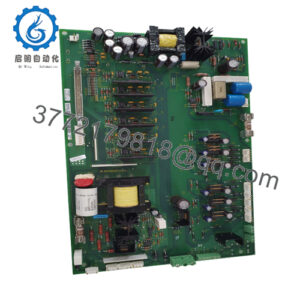
The Applied Materials 0100-71224 is a legacy AKT TSSL sensor distribution PCB used within semiconductor manufacturing equipment. A parts record specifically identifies the assembly as 0100-71224 Rev.01 TSSL Sensors Distribution, providing a stronger identification than generic industrial-control listings.
This board should be treated as a tool-specific sensor interface rather than a generic PLC I/O module. For replacement work, match the complete part number, PCB revision, connector population, and target AKT tool configuration before installation.
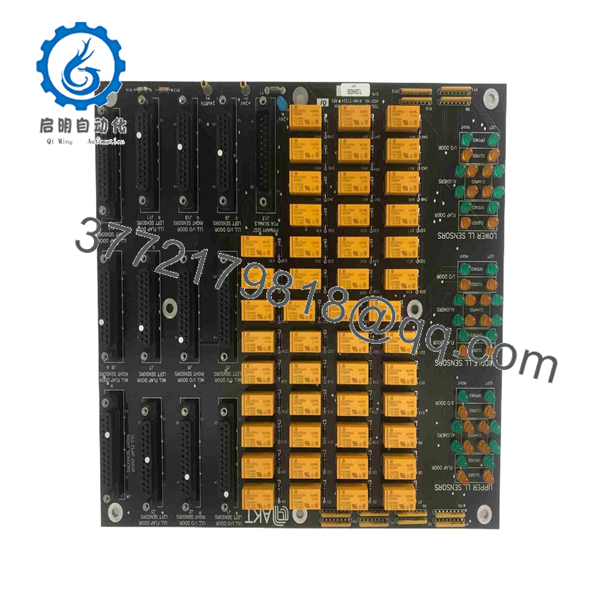
0100-71224
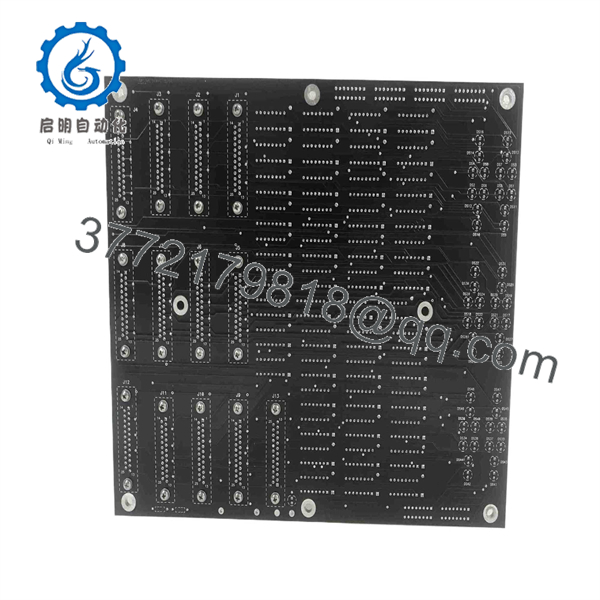
0100-71224
Installation & Configuration Guide
Stage 1: Pre-Installation Preparation
Estimated time: 15–25 minutes
⚠️ Safety First: Place the AMAT/AKT tool into its approved maintenance state. Apply the equipment-specific LOTO procedure before accessing the electronics chassis.
Tools Required:
- ESD wrist strap
- ESD-safe work surface
- CAT-rated multimeter
- Appropriate screwdriver
- Wire labels
- Smartphone/camera
- Current AMAT equipment schematic
Data Backup:
- Record 0100-71224 exactly.
- Record the PCB revision.
- Photograph both sides of the installed board where accessible.
- Photograph every connector before removal.
- Record cable and harness routing.
- Document the exact AKT tool model.
- Record relevant sensor diagnostic values.
- Save applicable tool configuration data.
⚠️ Do not rely on a supplier description alone. Public listings currently describe 0100-71224 inconsistently, while a parts record specifically identifies the board as TSSL Sensors Distribution.
Stage 2: Removing the Old Module
Estimated time: 10–15 minutes
- Place the equipment in the approved service state.
- Apply LOTO.
- Verify the applicable electronics supply is isolated.
- Establish ESD protection.
- Photograph the board and connectors.
- Label connectors where required.
- Disconnect the sensor harnesses carefully.
- Release the PCB mounting hardware.
- Remove the board straight from the chassis/backplane.
- Place the original board in an ESD-safe bag.
⚠️ Keep the original 0100-71224 until the replacement has passed the complete sensor diagnostic sequence.
Stage 3: Installing the New Module
Estimated time: 15–20 minutes
- Verify the replacement marking: 0100-71224.
- Compare the PCB revision with the original.
- Compare connector locations and populated components.
- Inspect edge connectors for oxidation or physical damage.
- Verify the sensor harness against the equipment schematic.
- Install the board in the original chassis position.
- Secure the mounting hardware.
- Reconnect each harness.
- Verify connector seating.
- Check that cables are not pinched or under mechanical tension.
- Maintain ESD precautions until the enclosure is closed.
Self-Checklist:
- 0100-71224 verified
- PCB revision matched
- Connector layout matched
- TSSL harnesses identified
- Board fully seated
- Mounting hardware secured
- No damaged connector pins
- ESD precautions maintained
Stage 4: Power-On & Testing
Estimated time: 20–45 minutes
- Perform a final visual inspection.
- Verify all connectors against the AMAT schematic.
- Restore power using the approved equipment procedure.
- Observe the controller/chassis startup sequence.
- Check for board or subsystem alarms.
- Open the applicable sensor diagnostics.
- Verify expected TSSL sensor states.
- Exercise the relevant sensor inputs under controlled conditions.
- Confirm the host system receives the expected sensor transitions.
- Run the applicable tool diagnostic.
- Perform a controlled equipment sequence.
- Record the final diagnostic results.
⚠️ If the board powers up but sensor data is incorrect, do not immediately condemn the PCB. Check sensor devices, harnesses, connector seating, board revision, chassis slot assignment, and the tool configuration first.
Frequently Asked Questions (FAQ)
What is AMAT 0100-71224?
0100-71224 is an Applied Materials AKT/TSSL sensor distribution PCB. A parts record specifically identifies the assembly as 0100-71224 Rev.01 TSSL Sensors Distribution.
What does the 0100-71224 board do?
The available part-specific evidence indicates that it performs TSSL sensor distribution/interface functions within an AMAT AKT system. It should therefore be considered a tool-specific sensor-interface assembly rather than a generic PLC card.
Is 0100-71224 a PLC module?
Not based on the most specific identification available. It is identified as a TSSL sensor distribution board for AMAT equipment. Some secondary suppliers categorize it generically as an industrial control module, but that description does not establish PLC functionality.
What voltage and communication protocol does 0100-71224 use?
I would not specify these values without the applicable AMAT schematic. Public supplier pages make conflicting claims about the board’s function and interface. One source describes it as a multi-serial communication interface, while the more specific part record identifies it as a TSSL sensor-distribution board.
Is Rev.01 important?
Yes. A parts record specifically identifies 0100-71224 Rev.01. When replacing a legacy semiconductor-equipment PCB, match the complete part number and revision where possible rather than assuming every revision is interchangeable.
Is 0100-71224 still available?
Secondary-market suppliers currently list 0100-71224 as available. However, availability and condition vary by supplier. One current listing marks it in stock, while other listings describe it as a specialized spare part.
What should procurement verify before purchasing?
For a production AMAT tool, specify:
- OEM: Applied Materials
- Part Number: 0100-71224
- Description: TSSL Sensor Distribution Board
- Revision: Match installed board; Rev.01 is documented
- Tool: Exact AKT equipment model
- Condition: New Original, New Surplus, Used Tested, or Refurbished
- Board Photos: Request photographs of the actual unit
- Connector Configuration: Verify against the installed board
- Functional Test: Request sensor/interface test evidence
- Warranty: State the required warranty period
Because public descriptions for this part are inconsistent, actual board identification and AMAT equipment documentation should take precedence over generic supplier specifications.