WhatsApp: +86 16626708626
 Email:
  Phone: +86 16626708626
Description
Key Technical Specifications
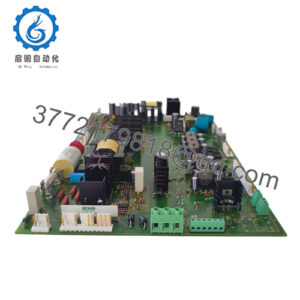
- Manufacturer Identification: ASM; some market listings use the description “Circuit Board ASM FICO”
- Part Number: 4552183
- Product Type: Circuit board assembly, I/O module, or equipment interface board
- Reported Designation: FICO circuit board assembly
- Likely Application: Semiconductor manufacturing equipment or related industrial equipment control
- Function Classification: Application-specific I/O or control-interface hardware
- System Compatibility: Must be confirmed from the original board label, equipment BOM, electrical drawings, and connector configuration
- Firmware: Not publicly confirmed; inspect label stickers, EPROMs, flash devices, or controller revision markings
- Power Requirements: Not publicly verified; confirm from equipment schematic before bench testing or installation
- Communication Interface: Not publicly verified; inspect connector labels and machine documentation
- Mounting: Verify mounting-hole pattern, board dimensions, standoff height, and enclosure location
- Replacement Rule: Match the complete 4552183 number plus any board revision, assembly revision, FICO designation, and serial-range requirement
Public product records conflict on the detailed function of 4552183. One listing calls it a “Circuit Board ASM FICO,” while other third-party listings broadly call it an ASM semiconductor-equipment I/O module. None of the accessible records provides a reliable OEM datasheet, pinout, voltage rating, or revision-interchangeability statement. Treat it as application-specific hardware until the physical label and machine documentation are verified.
Product Introduction
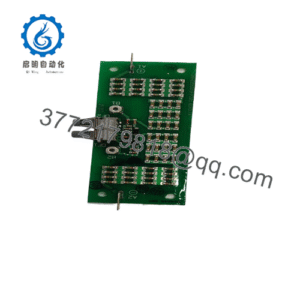
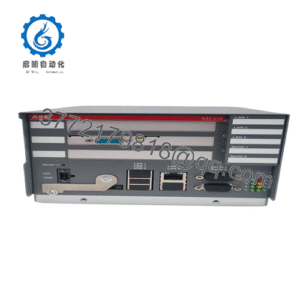
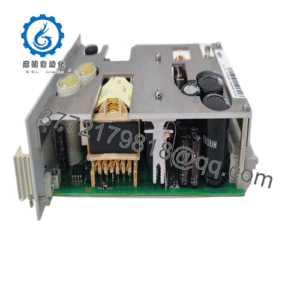
The ASM 4552183 is an application-specific circuit board assembly commonly described in resale records as a FICO PCB assembly or semiconductor-equipment I/O module. It likely interfaces machine sensors, actuators, or local equipment subsystems with the host controller, but the exact function depends on the machine configuration and board revision.
This is not a part to buy by number alone. Verify the complete label, installed-machine model, connector count, board revision, firmware or EPROM labels, and electrical drawings before ordering. A 4552183 board with an unmatched revision can fit mechanically yet fail to initialize, communicate, or drive the intended equipment correctly.
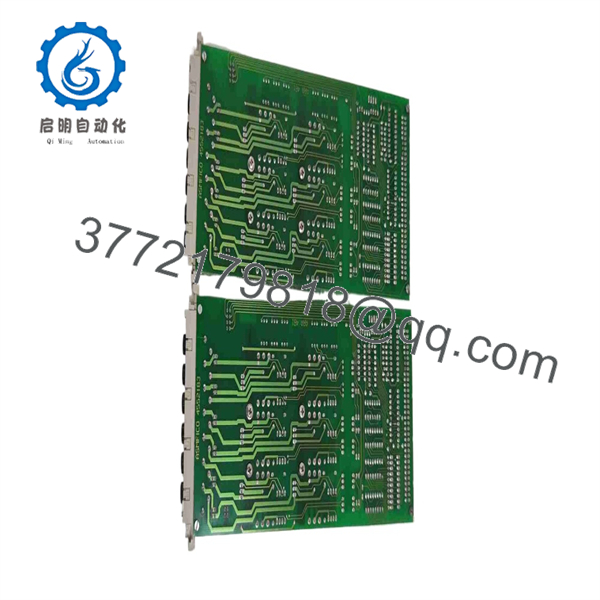
4552183
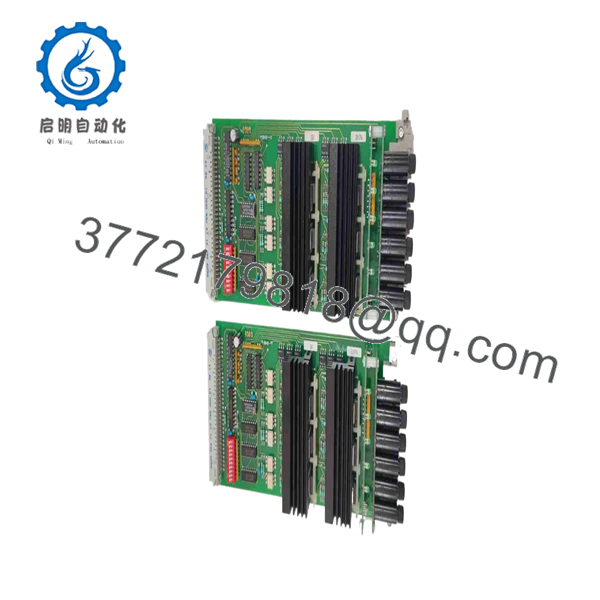
4552183
Troubleshooting Quick Reference
| Symptom | Possible Cause | Relevance to This Part | Quick Check Method | Recommendation |
|---|---|---|---|---|
| Machine does not boot after power-up | Failed power supply, safety-chain open, CPU fault, defective interface board | ⚠️ Medium | Check machine power rails at the power-distribution test points using the equipment schematic; inspect controller and safety-system diagnostics first | Confirm all specified DC rails and safety permissives before replacing 4552183 |
| Specific sensors or outputs are unavailable | Failed I/O channel, broken field cable, loose connector, blown output fuse | ✅ High | Compare input/output LED behavior with the machine I/O map; measure field supply and signal at the board connector per the OEM drawing | Check field wiring and external fuses before declaring the board defective |
| Board status LEDs remain off | Missing board supply, poor backplane connection, failed onboard power regulation | ✅ High | With approved lockout/tagout controls, inspect seating and connector pins; measure the specified board supply at the mating connector | Verify supply polarity and connector integrity before installing a replacement |
| Machine faults after board replacement | Wrong board revision, incompatible firmware, incorrect jumper settings, incorrect connector placement | ✅ High | Compare the old and replacement boards side by side: labels, revision codes, EPROM stickers, jumpers, component population, and connectors | Stop installation if any identifier differs until compatibility is confirmed |
| Intermittent equipment alarms | Connector oxidation, cracked solder joint, thermal failure, cable movement, grounding issue | ⚠️ Medium | Review fault timestamps; inspect connectors for contamination; check whether the fault correlates with vibration, temperature, or cabinet-door movement | Reseat connectors and inspect cable strain relief before replacing the board |
| Output remains energized or does not energize | External relay/contactor fault, output transistor failure, safety interlock condition, incorrect field supply | ⚠️ Medium | Verify commanded state in the host controller, then measure the output at the field device and board terminal using the schematic | Do not replace the board until command, field power, and load circuit are checked |
| Visible burn mark, electrolyte residue, or damaged component | Overvoltage, reverse polarity, failed load, contamination, component aging | ✅ High | Inspect under good lighting and magnification; compare with a known-good board if available | Remove from service; do not energize a visibly damaged PCB |
Field warning: A board-level fault often starts somewhere else. A shorted solenoid, failed relay coil, miswired field connector, or collapsing power supply can kill an output stage and make a replacement board fail immediately. Check the external load and field wiring before inserting a replacement.
❗ Revision mismatch: Document every marking before removing the original board: 4552183 number, board revision, assembly revision, serial number, barcode, EPROM label, FPGA or firmware sticker, and any handwritten service label. I have seen identical-looking boards install perfectly, then block a machine startup because the firmware expected a different I/O map.
❗ Jumpers and configuration: Take high-resolution photos of both sides of the existing board. Pay close attention to jumpers, DIP switches, removable links, daughterboards, and connector locations. It is the most common rookie mistake, but it happens constantly. Take a picture before you touch anything. Seriously.
❗ Connector and pinout verification: Do not wire from memory. Similar machine boards can use the same connector family with different pin assignments. Check every connector identifier against the OEM electrical drawings, especially 24 V DC distribution, analog references, shield drains, and interlock circuits.
❗ Power draw and external loads: Before installing the replacement, inspect downstream loads for shorts and measure resistance where the manufacturer procedure allows it. If a load fault caused the original board to fail, the replacement can fail on the first command.
❗ ESD protection: Wear a grounded wrist strap and place the board on an ESD-safe mat. I have watched a technician handle an expensive control board in dry winter air without a strap, power it up, and turn a usable spare into scrap. Use the wrist strap.
Keep these checks in mind and you will save yourself 90% of typical rework time. If the fault remains unclear, contact technical support with clear front-and-back board photos, all labels, machine model information, fault logs, and the relevant electrical-schematic page.
Frequently Asked Questions
What is ASM 4552183?
ASM 4552183 is a circuit board assembly associated with industrial or semiconductor-equipment control. Available resale records describe it either as a “Circuit Board ASM FICO” or broadly as an ASM I/O module. Public information does not establish its exact OEM electrical specification, so the equipment model and board revision must be verified before purchase.
Is 4552183 definitely an I/O module?
Not definitively. Some sellers classify it as an I/O module, while another identifies it as a FICO circuit board assembly. Those descriptions may overlap, but neither substitutes for an OEM parts list or schematic. Treat “I/O module” as a functional category, not a verified complete specification.
Can I use a board with the same 4552183 number but a different revision?
Only after confirming interchangeability through the OEM bill of materials, service documentation, or a qualified technical comparison. The base part number may remain unchanged while hardware revisions alter firmware, I/O mapping, component ratings, connector assignments, or machine compatibility. Match the revision, serial-range requirements, and any firmware labels whenever possible.
Can I hot-swap the ASM 4552183 board?
No, unless the equipment manufacturer explicitly documents hot-swap capability for that exact board and slot. Most application-specific machine control boards are not hot-swappable. Removing one under power can damage connectors, corrupt communications, trigger safety faults, or damage the replacement board. Isolate power and follow the machine’s approved lockout/tagout procedure first.
Will configuration be retained when I replace the board?
Maybe, but do not make that assumption. The configuration could reside in the machine controller, on the board itself, in a removable memory device, or in jumper and DIP-switch settings. Record all board labels and settings before removal. If the original board still starts, make a machine backup through the approved service software before replacing it.
Is this part obsolete, and is stock limited?
It should be treated as a legacy, application-specific spare. The available public records are resale listings rather than an accessible OEM product page or current datasheet, which usually means buyers should expect inventory to vary by condition, revision, and tested status. Confirm actual stock, lead time, photos, and warranty before issuing a purchase order.
Why is a New Surplus board less expensive than a factory replacement?
New Surplus typically means unused stock from a machine builder, project cancellation, warehouse liquidation, or old maintenance inventory. It may not arrive in original factory packaging, and date codes may be older. That does not automatically make it unsuitable, but require actual item photos, full label verification, connector inspection, ESD-safe packaging, and a stated warranty.
What test documentation should I request?
For a board with no publicly verified datasheet, request evidence tied to the actual offered unit:
- Front and rear high-resolution photographs showing every label and revision mark
- A complete connector and pin-condition inspection
- Visual inspection for corrosion, rework marks, cracked components, heat discoloration, and contamination
- Controlled power-up testing only after confirming the correct supply requirements
- Functional testing in a compatible machine or documented simulator when available
- Recorded test results, including observed LEDs, supply current, and I/O or communication checks
- ESD-safe bagging, protective packaging, QC sign-off, and written warranty terms
A supplier should state plainly whether the unit is New Original / New Surplus, Refurbished (tested), or Used Removed From Working Equipment. If they cannot identify the board revision or demonstrate compatibility with your machine, do not approve it as a direct replacement.