WhatsApp: +86 16626708626
 Email:
  Phone: +86 16626708626
Description
Key Technical Specifications
- Manufacturer: Automotion
- Model: ALC12DE-010-1312
- Product Type: Servo amplifier / motor drive
- Primary Function: Converts controller commands into regulated motor power for closed-loop position, speed, or torque control
- Motor Compatibility: Must match the original servo motor’s winding, feedback device, brake circuit, and current/voltage requirements
- Control-Loop Requirement: Requires compatible motor feedback and correctly configured servo-loop parameters
- Command Interface: Verify from the installed system drawing; do not assume analog, pulse/direction, resolver, encoder, RS-485, or CAN capability from the shortened part number
- Power Input: Verify directly from the original drive nameplate and system schematic before applying power
- Output Rating: Verify continuous current, peak current, motor voltage, and regenerative-energy requirements from the original nameplate
- Feedback Type: Verify motor feedback technology and wiring; encoder, resolver, tachometer, Hall, or proprietary feedback variants are not automatically interchangeable
- Protection Functions: Confirm actual installed drive behavior for overcurrent, overvoltage, undervoltage, overtemperature, feedback loss, and following-error faults
- Mounting: Panel or chassis installation; verify dimensions, heat-sinking, airflow clearance, connector positions, and grounding arrangement before replacement
- Configuration Retention: Do not assume parameters transfer automatically; preserve all existing drive settings and controller-axis configuration before removal
- Lifecycle Status: Legacy / obsolete motion-control unit; current information is limited, so the physical nameplate and original documentation are the final authority
Public product listings consistently identify the ALC12DE-010-1312 as an Automotion servo amplifier. However, publicly accessible primary-source specifications for voltage, current, feedback type, command interface, and connector pinout were not available in the retrieved material. Do not publish unverified electrical ratings or treat a similar Automotion drive as a direct substitute.
Product Introduction
The Automotion ALC12DE-010-1312 is a legacy servo amplifier used to drive a matched servo motor in closed-loop motion applications. It receives commands from the machine controller, regulates motor power, monitors feedback, and supports controlled position, velocity, or torque response depending on the installed system architecture. It is typically found in older automated machinery, motion platforms, machine tools, and specialty equipment.
For this unit, the complete model number alone is not enough to prove replacement compatibility. Confirm the original nameplate data, motor model, motor feedback type, power input, command signal, brake wiring, connector pinout, and controller configuration before purchase. This is one of those legacy drives where a physically similar unit can power up correctly yet fault immediately when the axis is enabled.
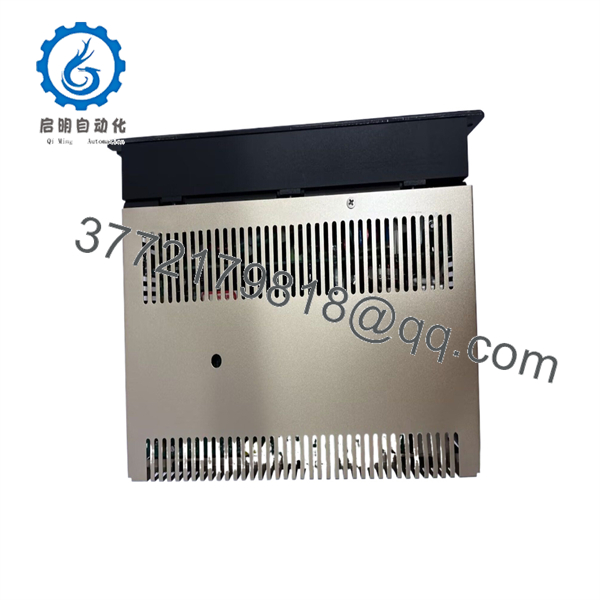
ALC12DE-010-1312
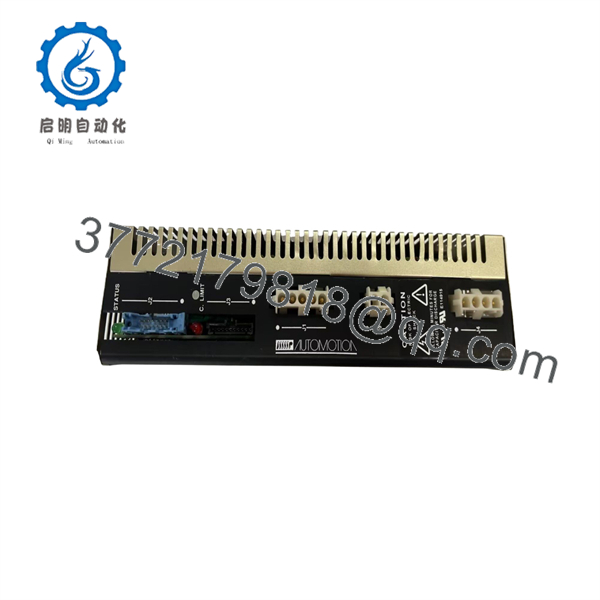
ALC12DE-010-1312
Troubleshooting Quick Reference
| Symptom | Possible Cause | Relevance to this Part | Quick Check Method | Recommendation |
|---|---|---|---|---|
| Drive has no LEDs or display indication | Missing incoming power, open fuse, failed control transformer, loose connector, internal drive failure | ⚠️ Medium | Measure incoming supply at the drive input terminals using an approved meter; check upstream fuses, contactor, control transformer, and protective devices | Verify correct incoming voltage at the actual drive terminals before replacing the amplifier |
| Drive powers up but motor will not enable | External enable missing, safety chain open, servo inhibit active, motor brake engaged, controller fault | ⚠️ Medium | Check controller enable output, safety relay contacts, interlocks, E-stop circuit, brake voltage, and drive fault indication | Do not bypass safety circuits. Confirm the enable chain before replacing the drive |
| Motor hums or locks but will not rotate | Brake not releasing, phase wiring issue, incorrect commutation, mechanical jam, feedback mismatch | ⚠️ Medium | With power removed, check mechanical freedom; then verify brake voltage during enable and inspect motor/feedback connectors | Check brake and mechanics first. Do not randomly swap motor phases |
| Drive faults immediately when enabled | Motor winding short, ground fault, damaged feedback cable, incorrect motor parameters, failed power stage | ✅ High | With the system isolated, compare phase-to-phase winding resistance, test phase-to-ground insulation, inspect feedback cable, and record exact fault code | If the motor and cables test good but the drive faults consistently at enable, replacement may be justified |
| Axis runs away or moves in the wrong direction | Feedback polarity error, phase sequence issue, incorrect parameter restoration, reversed command polarity | ⚠️ Medium | Command a very low-speed jog under safe conditions; compare actual position direction with controller command and feedback counts | Stop immediately if motion is unstable. Restore original parameter settings and verify feedback polarity |
| Following error increases during acceleration | Excessive load, loose coupling, encoder/resolver signal loss, poor tuning, drive current limit | ⚠️ Medium | Trend command, actual position, current, and fault history; inspect coupling, gearbox, belts, and feedback signal quality | Check mechanics and tuning before condemning the servo amplifier |
| Drive trips on overcurrent | Shorted motor cable, motor winding fault, mechanical stall, failed output transistor, acceleration too aggressive | ⚠️ Medium | Disconnect and insulation-test the motor cable; check phase resistance balance; inspect mechanics for binding | Eliminate motor, cable, and mechanical faults first. Replacing a drive into a shorted motor circuit can destroy the replacement |
| Drive trips on overvoltage during deceleration | Regenerative energy not absorbed, braking resistor fault, decel rate too fast, high bus voltage | ⚠️ Medium | Check DC bus voltage during deceleration, braking resistor wiring, resistor condition, and machine deceleration setting | Repair the regeneration path or increase deceleration time before replacing the drive |
| Drive trips on overheating | Failed fan, blocked airflow, undersized heat sink, excessive RMS current, high cabinet temperature | ⚠️ Medium | Inspect cooling fan and filters; measure cabinet temperature; compare axis duty cycle and current demand with the original application | Restore cooling and reduce overload first. A replacement drive will overheat in the same cabinet conditions |
| Resolver or encoder fault appears | Feedback cable damage, loose connector, incorrect feedback selection, failed motor feedback device | ⚠️ Medium | Inspect and reseat feedback connectors; test cable continuity and shielding; compare feedback settings to the motor nameplate | Test with a known-good compatible cable before replacing either motor or drive |
| Motor brake does not release | Missing brake supply, incorrect brake voltage, damaged cable, failed brake coil, drive brake-output issue | ⚠️ Medium | Measure brake voltage at the motor connector during enable; compare with the brake coil’s verified nameplate rating | Confirm brake voltage and pinout. Do not apply a guessed voltage to a legacy motor brake |
| Replacement drive powers up but shows a fault immediately | Incorrect model variant, unmatched motor feedback, missing parameter file, wrong connector wiring, incompatible controller command | ✅ High | Compare old/new labels, terminal assignments, motor configuration, controller wiring, and all saved parameters | Do not declare a replacement defective until complete compatibility is proven |
| Replacement drive operates but axis scaling is wrong | Encoder counts, gear ratio, electronic gearing, command scaling, or controller-axis parameters not restored | ❌ Low | Compare commanded and actual travel over a measured distance; check controller and drive scaling parameters | Restore the original configuration and verify travel limits at low speed |
| Drive fault occurs only when machine warms up | Thermal stress, weak power-stage component, loose connection, heat-related feedback fault | ⚠️ Medium | Log cabinet temperature, supply voltage, current, and fault code over time; inspect for heat discoloration and loose terminals | If the fault repeats after power, wiring, cooling, and load checks, a tested replacement is appropriate |
| Drive fails after a replacement motor is fitted | Motor winding or feedback mismatch, brake voltage mismatch, parameter error, incorrect cable pinout | ✅ High | Match the full motor code and original drive parameters; verify U/V/W phases, feedback pins, and brake circuit against drawings | Never assume a same-frame motor is electrically compatible with the existing Automotion drive |
❗ Nameplate warning: Do not apply power based on a reseller description. Obtain a clear photo of the original ALC12DE-010-1312 nameplate and verify input voltage, output-current rating, fuse class, terminal designations, and any jumper settings first.
❗ Motor-match warning: A servo amplifier is a matched system component. The drive, motor winding, feedback device, brake, cable, controller command, and tuning parameters must agree. A “close enough” motor-drive substitution can produce runaway motion, overcurrent faults, or mechanical damage.
❗ Regeneration warning: If the old drive failed on deceleration, check the braking resistor and DC-bus behavior before installing a replacement. I have seen a good replacement drive trip on the first fast stop because the actual fault was an open regeneration resistor.
❗ ESD and power warning: Isolate all incoming power, wait for the DC bus to discharge, verify zero energy with an approved meter, and use ESD precautions when handling feedback electronics. Do not unplug motor or feedback connectors while the drive is energized.
If troubleshooting remains unresolved, provide technical support with clear photos of the full drive label, motor nameplate, terminal blocks, power and feedback cables, controller command wiring, brake circuit, fault-code display, cabinet cooling arrangement, and the saved drive/controller parameter set.
Frequently Asked Questions
What is the Automotion ALC12DE-010-1312?
It is a legacy Automotion servo amplifier used to power and control a matched servo motor in a closed-loop motion system. It receives commands from the machine controller and uses motor feedback to regulate position, speed, or torque. Available listings identify this exact part number as an Automotion servo amplifier.
Can I replace it with any servo amplifier of a similar size?
No. That is a fast way to damage a motor or create unstable motion. The replacement must match or be engineered for the original motor winding, feedback type, nominal bus voltage, continuous and peak current, brake circuit, command interface, safety design, mechanical mounting, and controller configuration.
Is the ALC12DE-010-1312 obsolete?
It should be treated as a legacy, stock-dependent servo amplifier. The retrieved public sources identify the product category but do not provide a current OEM lifecycle document or a verified direct successor. Keep a tested spare, preserve original drive settings, and plan a retrofit around the complete motor-drive-controller system rather than replacing only the amplifier.
Can I hot-swap this servo amplifier?
No. Shut down the machine through the approved lockout/tagout process, isolate all AC and DC energy, wait for the drive DC bus to discharge, secure any suspended or back-drivable load, and verify zero voltage before disconnecting cables. Live removal can damage the drive, motor feedback electronics, controller, and replacement unit.
Will my motion settings stay after I replace the amplifier?
Do not assume they will. Legacy drives may store settings internally, use hardware jumpers, or rely on controller-side tuning and scaling. Before removing the old drive, document gain settings, current limits, velocity limits, motor parameters, feedback type, fault history, wiring, jumpers, and controller-axis configuration. Take photos before touching anything.
Why does a replacement drive power up but fault when I enable the axis?
The common causes are a wrong motor feedback type, incorrect motor parameter set, phase wiring error, brake not releasing, damaged feedback cable, open safety chain, motor winding problem, or an incompatible drive variant. Check these items before deciding that the replacement is faulty.
Why does the drive trip during deceleration?
A deceleration trip often indicates regenerative overvoltage, not a failed drive. Check the braking resistor, resistor wiring, regeneration circuit, DC bus voltage, and programmed deceleration rate. Slow the deceleration only after verifying that doing so remains safe for the machine and process.
Why is a new-surplus unit cheaper than a factory replacement?
New-surplus inventory can originate from canceled projects, machine-builder stock, shutdown spares, or distributor overstock. It may be less expensive because it is outside the current OEM supply chain. Request actual product photos, full nameplate confirmation, storage condition, test results, warranty, return terms, and lead time.
What condition should I require for a production-critical spare?
Request New Original / New Surplus with clear photos of the full label, terminals, connectors, seals, and original packaging. For Refurbished (tested) stock, require documented power-up testing, output-stage checks, motor-feedback verification, current-limited run testing with a compatible motor, fault monitoring, cooling-fan operation, and sustained load testing. Ask for a dated test report, video or photos on request, written warranty, confirmed stock, and return terms before purchase.