WhatsApp: +86 16626708626
 Email:
  Phone: +86 16626708626
Description
Key Technical Specifications
- Series: AVENTICS ED07
- Device Type: Dynamic direct-acting electropneumatic pressure regulator
- Valve Type: Poppet valve
- Nominal Width: 7 mm
- Nominal Flow: Up to 1,300 L/min
- Supply Voltage: 24 VDC
- Pressure Range: Variant-dependent; ED07 family versions cover approximately −1 to 20 bar
- Working Pressure: Variant-dependent; some versions specify up to 12 bar or 21 bar
- Control Signal: Variant-dependent; analog, EtherCAT, or AES configurations are available
- Actual-Value Signal: Variant-dependent; digital or 4–20 mA feedback
- Electrical Connection: M12 connector; exact pin count and coding depend on version
- Protection Rating: Up to IP65 for documented ED07 configurations
- Operating Temperature: Variant-dependent; commonly 5 to 50 °C for analog versions
- Medium: Filtered compressed air
- Minimum Working Pressure: Approximately 0.5 bar for documented configurations
- Hysteresis: Approximately less than 0.03 to 0.09 bar, depending on variant
- Maximum Current: Up to 1,400 mA for documented configurations
- Mounting: Stackable base plate or compatible ED07 subbase
- Weight: Approximately 2.05 kg for a documented 4–20 mA variant
- Ordering Code Warning: Verify the full code; ED07 pressure range, control method, feedback type, connector, and fieldbus option change by suffix
The exact code ED07-SE8CR414006780 is not fully decoded in the publicly indexed AVENTICS documents located here. The family contains multiple control and feedback versions, so do not publish a definitive pressure range or wiring pinout without reading the product label or OEM configuration data.
Product Introduction
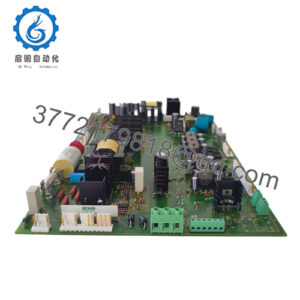
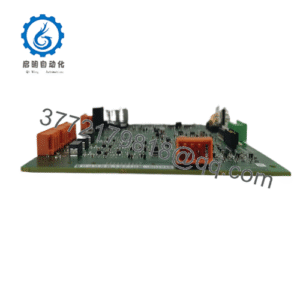
The AVENTICS -SE8CR414006780 is an -series electropneumatic pressure regulator for closed-loop control of compressed-air pressure. It combines a proportional valve, integrated pressure sensing, and electronic regulation for pneumatic actuators, clamping systems, test equipment, and process machinery.
The platform provides dynamic pressure control with a nominal flow capacity up to 1,300 L/min. Because AVENTICS offers analog, EtherCAT, AES, and multiple pressure-range variants, verify the exact control interface, feedback signal, pressure range, connector, and compatible subbase before ordering.
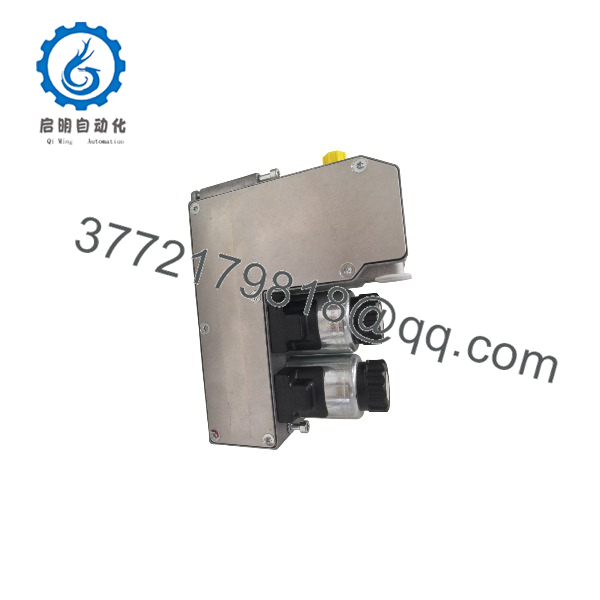
ED07-SE8CR414006780
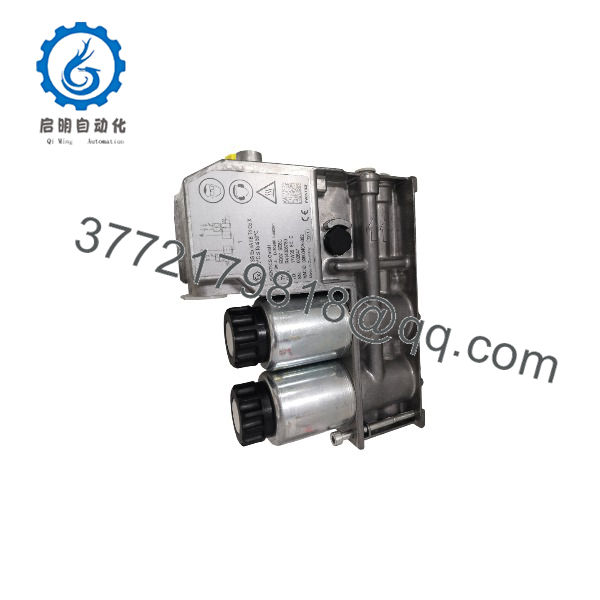
ED07-SE8CR414006780
Troubleshooting Quick Reference
| Symptom | Possible Cause | Relevance to This Part | Quick Check Method | Recommendation |
|---|---|---|---|---|
| No pressure at the outlet | No compressed-air supply, closed isolation valve, blocked filter, or incorrect port connection | ❌ Low | Measure inlet pressure at the supply port and confirm the outlet port and exhaust path | Restore clean supply air and verify pneumatic porting before replacing the regulator |
| No response to the command signal | Missing 24 VDC, wrong signal type, incorrect connector pinout, or failed electronics | ✅ High | Measure 24 VDC at the M12 supply pins and inject the correct command signal for the exact variant | Confirm whether the unit requires analog, EtherCAT, or AES control before testing |
| Outlet pressure remains at zero | Command below the configured regulation range, blocked supply, or internal valve fault | ⚠️ Medium | Apply a known valid setpoint and monitor the actual-value signal | Check supply pressure and command scaling; replace only after the valve fails a controlled test |
| Outlet pressure remains at maximum | Exhaust path blocked, command wiring shorted high, or valve spool/poppet fault | ✅ High | Remove the command signal safely, verify the actual-value response, and inspect the exhaust circuit | Depressurize before disassembly; do not continue operation if pressure can exceed the machine limit |
| Pressure oscillates or hunts | Unstable supply, incorrect control tuning, contaminated air, or incompatible load volume | ⚠️ Medium | Monitor inlet pressure, outlet pressure, and command signal simultaneously | Stabilize the air supply, check filtration, and confirm the regulator is correctly sized |
| Pressure is consistently inaccurate | Wrong pressure-range variant, scaling error, sensor drift, or incorrect feedback wiring | ✅ High | Compare a calibrated external gauge with the actual-value reading across several setpoints | Verify the nameplate range and recalibrate or replace the unit if the sensor fails comparison |
| Communication fault on EtherCAT or AES | Wrong network type, node configuration, cable, termination, or incompatible firmware | ✅ High | Check network status LEDs, node address, cable, topology, and controller diagnostics | Match the exact fieldbus version; an analog cannot be substituted for an EtherCAT unit |
| M12 connector overheats | Incorrect pinout, short circuit, excessive current, or damaged cable | ✅ High | Isolate power, inspect connector pins, and measure resistance to ground before re-energizing | Replace damaged cables and confirm the OEM pinout before applying power again |
| Slow pressure response | Restricted tubing, undersized fittings, clogged filter, or incorrect regulator selection | ❌ Low | Compare flow path, tubing size, inlet pressure, and response with a short test line | Correct the pneumatic installation before replacing the regulator |
| Pressure leaks after shutdown | Seat contamination, worn seals, damaged poppet, or external fitting leak | ⚠️ Medium | Isolate supply and use a calibrated pressure decay test with leak detection fluid on fittings | Identify whether the leak is external or through the regulator before ordering a replacement |
| Unit fails after exposure to oil or water | Contaminated compressed air, unsuitable installation, or enclosure protection exceeded | ❌ Low | Inspect the connector, housing, filter, and air line for oil or moisture | Correct air preparation and environmental protection; replace contaminated components |
| Regulator will not initialize | Incorrect supply voltage, excessive current demand, fieldbus configuration error, or internal fault | ✅ High | Verify stable 24 VDC, current draw, status LEDs, and controller diagnostic code | Compare the installed unit with the machine’s configured variant |
The converts an electrical setpoint into pneumatic pressure, so a bad result can originate in the signal wiring, air preparation, supply pressure, load volume, or feedback scaling. Isolate pressure and electrical power before removing the regulator. If the problem remains, provide technical support with the complete nameplate, M12 connector photographs, pressure-range marking, supply measurements, command signal, actual-value signal, and controller diagnostics.
Frequently Asked Questions (FAQ)
What is the AVENTICS -SE8CR414006780?
It is an -series electropneumatic pressure regulator used to convert an electrical pressure command into controlled compressed-air output. The unit includes integrated electronic regulation and pressure feedback, but the exact interface and pressure range must be confirmed from the full ordering code.
Is this an analog or EtherCAT version?
The public results do not conclusively decode the full SE8CR414006780 suffix. products are available with analog control, EtherCAT, and AES fieldbus connections. Check the nameplate, connector labeling, controller hardware configuration, and wiring diagram before connecting it.
What pressure range does this unit support?
Do not infer the range from “” alone. The family includes versions covering ranges from vacuum-related applications through positive pressures up to approximately 20 bar. The maximum working pressure and regulation range depend on the exact variant. cite
Can I use any regulator as a direct replacement?
No. Match the pressure range, control method, feedback signal, connector, electrical supply, mounting base, flow requirement, and firmware or fieldbus configuration. A unit with the same body size but a different signal interface can be mechanically suitable and electrically unusable.
What compressed air quality does the require?
Use clean, dry, filtered compressed air within the pressure and temperature limits stated for the exact version. Avoid oil contamination unless the OEM documentation specifically permits it. Contaminants can cause the poppet to leak, slow the response, or make the internal pressure sensor read incorrectly.
Can I hot-swap this pressure regulator?
Do not hot-swap it. Shut off and bleed the compressed-air supply, isolate the 24 VDC or fieldbus power, and verify that the actuator cannot move before disconnecting the unit. Pneumatic energy can remain trapped downstream even after the inlet valve is closed.
Why is a surplus cheaper than a factory-supplied unit?
It may be unused project inventory, discontinued stock, refurbished equipment, or a used regulator. Ask the supplier to state the condition and provide photographs of the label, connector, mounting base, and sealing surfaces. A meaningful functional test should include 24 VDC startup, command-to-pressure response, actual-value verification, leak testing, and a pressure hold test.
What should I provide when requesting a replacement?
Send the complete ordering code, serial number, pressure-range marking, electrical connector details, control method, actual-value type, supply pressure, required outlet range, compatible base or manifold number, and application symptoms. Include a photograph of the installed regulator and the machine’s wiring diagram whenever possible.