WhatsApp: +86 16626708626
 Email:
 Phone: +86 16626708626
Description
Core Product Summary
The Babcock & Wilcox SQ-300i is an automatic voltage control (AVC) for electrostatic precipitators — the controller that regulates the high-voltage power delivered to each precipitator field by its transformer-rectifier (T/R) set. It is the redesigned generation of the SQ-300 product line, whose SQ-200 and SQ-300 predecessors have been in operation for roughly 30 years, and it is an integral component of the precipitator control system: it simultaneously controls power to the T/R set, analyzes alarms, and interfaces with computer-based data acquisition software.
The SQ-300i line uses a spark response algorithm with automated tuning of setback and spark rate to increase the average power delivered to the precipitator field, improving collection efficiency. On-board waveform analysis, a built-in oscilloscope function and V-I curve generation support electrical diagnostics of the T/R set and field in real time. The SQ-300i Hybrid variant can control either a conventional single-phase T/R set or a low-ripple 3-phase T/R set, switching between the two with a firmware change. Communication is via Modbus TCP/IP with a configurable IP address, integrating directly with the plant DCS, and the controller ships with SQControl configuration and control software, is configurable to run with an optional touch-screen operator interface, and is MET, CMET and CE certified.
Key Technical Specifications
| Parameter | Value |
|---|---|
| Product type | Automatic voltage control (AVC) for electrostatic precipitators |
| Product line | B&W SQ-300i AVC line (redesigned generation of the SQ-300 product line); SQ-300i Hybrid variant |
| Controlled load | Transformer-rectifier (T/R) set of a precipitator field; power control via silicon-controlled rectifiers (SCRs) |
| Hybrid capability | SQ-300i Hybrid controls a conventional single-phase T/R set or a low-ripple 3-phase T/R set; switching between modes via firmware change |
| Voltage detection | Automatic line voltage and control voltage detection |
| Spark handling | Spark response algorithm with automated tuning of setback and spark rate for increased average field power |
| Diagnostics | On-board waveform analysis, built-in oscilloscope feature, on-board V-I curve generation, real-time diagnostics, trending, command history and alarm log |
| Monitoring | Key functions of the T/R set and precipitator field monitored during operation; local viewing of real-time and historical electrical data, alarm history, waveforms, V-I curves and short trends |
| Communication | Modbus TCP/IP, direct communication with the plant DCS; configurable to a unique IP address and subnet mask |
| Software | Ships with SQControl configuration and control software; optional color touch-screen operator interface and auxiliary touch-screen display; Precipitator Manager software for Ethernet-connected AVCs |
| I/O | User-selectable digital and analog I/O with optional hardware; optional digital/analog I/O modules supporting custom I/O including tumbling hammer and acoustic horn control |
| Cooling | No active cooling system required (single-phase and 3-phase power supply designs) |
| Calibration | No hardware or software potentiometers for calibration |
| Circuit protection | Conformal coating on printed circuit boards for environmental protection |
| Certification | MET, CMET, CE certified |
| Language support | Multi-language support |
| Safety design | Built-in oscilloscope feature provides an additional layer of protection from arc flash |
Engineering Selection Highlights
- Hybrid design protects the upgrade path. The SQ-300i Hybrid controls both conventional single-phase T/R sets and low-ripple 3-phase T/R sets, so a plant can replace aging single-phase controls today and keep the same controller when the T/R sets are later upgraded to 3-phase — the switch is a firmware change, not a hardware replacement.
- Automated spark tuning targets collection efficiency. The automated tuning of setback and spark rate raises the average power delivered to the precipitator field; because collection efficiency follows average field power, this is the parameter that directly affects emissions performance.
- Modbus TCP/IP makes DCS integration native. The controller communicates directly with the DCS over Modbus TCP/IP and accepts a configurable IP address and subnet mask, so no gateway is inherently required for supervisory integration.
- On-board electrical diagnostics reduce troubleshooting scope. Waveform analysis, V-I curve generation and the built-in oscilloscope allow the T/R set and field electrical health to be assessed at the controller, with the oscilloscope feature also adding a layer of arc-flash protection by reducing the need to open the T/R cabinet for measurement.
- No potentiometers means repeatable configuration. Calibration without hardware or software potentiometers removes a drift and adjustment-wear mechanism, and configuration is fully managed through SQControl software.
- Environmental hardening suits the ESP environment. Conformal coating on the printed circuit boards protects the electronics in the dusty, high-resistivity environment around precipitator power supplies, and the design needs no active cooling.
- One spares strategy across the precipitator. A single-component solution for both single-phase and 3-phase power supplies decreases the spare-parts inventory a plant must hold across mixed T/R fleets.
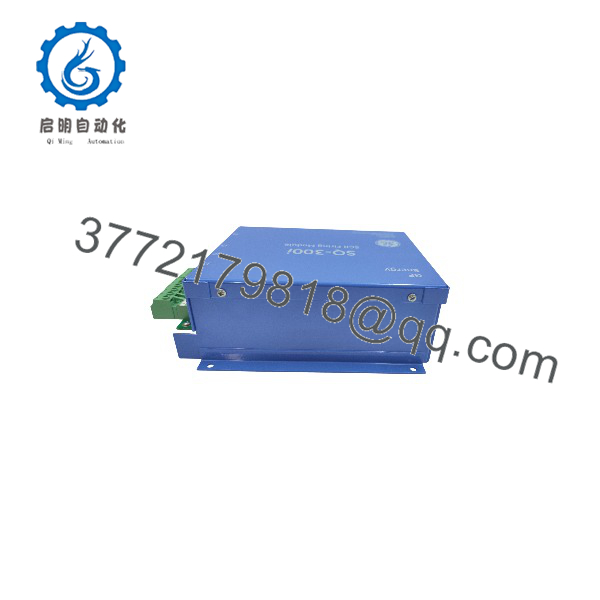
SQ-300i
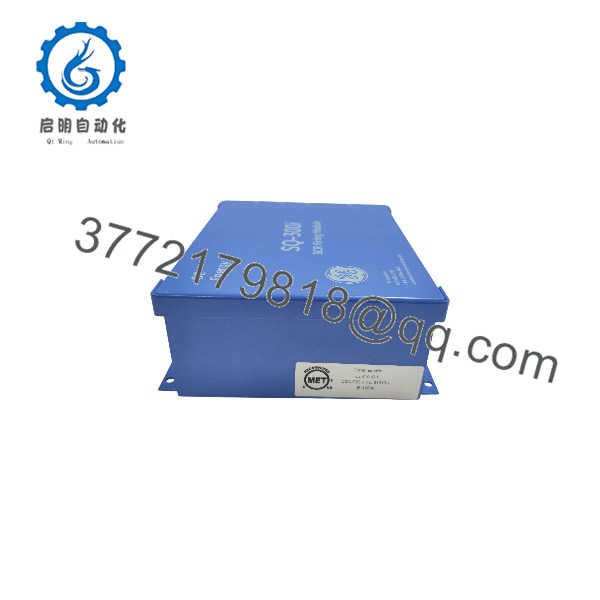
SQ-300i
System Compatibility & Integration Requirements
| Item / Dependency | Verified Compatibility or Requirement | Practical Note |
|---|---|---|
| Controlled equipment | Conventional single-phase T/R sets and low-ripple 3-phase T/R sets (SQ-300i Hybrid) | Confirm the T/R set type and mode before configuration; mode switching is a firmware change |
| Precipitator control system | Integral component of the B&W precipitator control system; controls power to the T/R set and analyzes alarms | Part of the ESP electrical control architecture, not a standalone meter |
| DCS / SCADA integration | Modbus TCP/IP, configurable unique IP address and subnet mask | Direct DCS communication; verify network addressing plan during installation |
| Data acquisition | Interfaces with computer-based data acquisition systems; improved connectivity to customer DAQ systems | Supports plant electrical performance monitoring programs |
| Configuration and control software | Ships with SQControl configuration and control software | Runs on the optional operator interface, laptop or PC |
| Operator interface options | Optional color touch-screen operator interface; smaller-scale touch-screen auxiliary display for basic local control | Select based on whether full local control or DCS-based supervision is planned |
| I/O expansion | Optional digital and analog input/output modules for custom I/O, including tumbling hammer and acoustic horn control | Specify at ordering if rapper/sootblowing auxiliaries are to be driven from the AVC |
| Supervisory software | Precipitator Manager software for Ethernet-connected AVCs | Plant-wide monitoring and control of the AVC network |
| Installation | Quick installation kit or upgrade kit available for faster installation and setup | Relevant for retrofit of existing SQ-300 installations |
| Certification scope | MET, CMET, CE certified | Supports North American and European panel compliance |
Detailed Product Overview
Precipitator voltage control looks deceptively simple — raise the voltage until the field sparks, then back off — but the economics of the whole precipitator are decided in that loop. Hold the voltage too low and collection efficiency drops, with opacity and emissions consequences; hold it too aggressively and sparking wastes power while stressing the T/R set and internal electrodes. What distinguishes a modern AVC is how intelligently and quickly it walks that line, and the SQ-300i line is built around exactly this discipline.
The core of the controller is B&W’s spark response algorithm, combined with automated tuning of setback and spark rate. Rather than depending on a technician to find the right operating point with manual settings, the controller tunes itself toward the maximum average power the field will sustain under current conditions. Because dust resistivity, inlet loading and field condition all change over time — between fuels, across load swings and as the fields foul — this automated tuning keeps each field near its practical limit continuously instead of at the setting left over from the last manual optimization.
The measurement side of the SQ-300i is what makes this tuning credible to an engineer. On-board waveform analysis and the built-in oscilloscope function expose the electrical behavior of the T/R set and field directly at the controller: the primary current and voltage waveform shape, spark events and their recovery, and the characteristic V-I curves generated on-board for each field. These are the standard diagnostic signatures used to distinguish normal operation from problems such as excessive spark rates, back corona, plate misalignment or broken wires — diagnosed without opening the T/R cabinet or instrumenting the circuit, which is also where the arc-flash protection benefit of the oscilloscope feature comes from. Trending, command history and alarm logs preserve this electrical history locally and make it available to plant data acquisition systems.
The Hybrid variant addresses a procurement problem that only precipitator owners have. The industry’s installed base is dominated by conventional single-phase T/R sets — a design in service for roughly eight decades — while new and upgraded fields increasingly use low-ripple 3-phase T/R sets for better power density and collection performance. Because both power supply types use SCR-based control and share a common design philosophy, B&W built the SQ-300i Hybrid to control either, with the change between modes made by firmware rather than hardware. The practical consequences are a smaller controller with fewer calibration components, one spare-parts strategy across a mixed fleet, and a straight retrofit path: replace failing conventional controls now, and the same unit remains valid if the T/R sets are later upgraded to 3-phase.
Integration follows modern plant-network practice rather than legacy analog telemetry. Modbus TCP/IP communication with a configurable IP address and subnet mask allows the DCS to exchange data with each controller directly, and the line ships with SQControl configuration and control software for local work on the optional color touch-screen operator interface, a laptop or a PC — including multi-language support and real-time diagnostics. For plant-wide supervision, Precipitator Manager software provides monitoring and control across the Ethernet-connected AVC fleet. Optional digital and analog I/O modules extend the controller to custom inputs and outputs, including the rapping side of the precipitator (tumbling hammers, acoustic horns), so electrical and mechanical collection functions can be coordinated from one control platform.
Two design choices deserve attention for maintenance planning. First, the SQ-300i requires no active cooling system — one fan or pump fewer to fail in a hot electrical room. Second, calibration uses no hardware or software potentiometers, removing an aging adjustment mechanism; instead, the printed circuit boards carry conformal coating for environmental protection, appropriate to the dust-laden environment in which precipitator power supplies live. Certification is MET, CMET and CE, supporting both North American and European installations, and quick installation or upgrade kits are available for faster replacement of existing controls.
Applications & System Role
An electrostatic precipitator collects fly ash and other particulate from a flue gas stream by charging the particles in a high-voltage field and collecting them on grounded plates. The voltage for each field is produced by a transformer-rectifier (T/R) set, and how that voltage is regulated determines how much collection power the field actually receives. The SQ-300i AVC occupies exactly this position: it is the field-level controller that continuously regulates the SCR power circuit feeding each T/R set, so each precipitator field operates as close as possible to its spark and back-corona limits without tripping.
Electrically, the SQ-300i is the bridge between the precipitator power supply hardware and the plant supervisory layer. Downward, it drives the T/R set and monitors the electrical health of the field during operation. Upward, it reports alarms, waveforms, V-I curves and trends to plant systems over Modbus TCP/IP, to SQControl on a local operator interface, and — across a whole precipitator — to the Precipitator Manager supervisory software. Optional I/O modules extend its role from voltage control to auxiliary equipment such as tumbling hammers and acoustic horns, allowing rapping to be coordinated with power control.
The product’s documented application context covers utility and industrial boilers fired on coal and similar solid fuels, and the broader industrial applications of electrostatic precipitation such as cement kilns, steel furnaces and paper mill recovery boilers, where precipitator collection performance depends directly on the quality of T/R set voltage regulation. The Hybrid variant addresses the specific transition many plants face: legacy single-phase T/R sets operating alongside or being upgraded to low-ripple 3-phase power supplies, with one controller type covering both.
FAQ
What is the Babcock & Wilcox SQ-300i?
It is an automatic voltage control (AVC) — the field-level controller that regulates the high-voltage power a transformer-rectifier (T/R) set delivers to an electrostatic precipitator field, while monitoring electrical health and communicating with plant systems.
What does the SQ-300i AVC do?
It controls power to the T/R set through the SCR power circuit, automatically tunes setback and spark rate to raise the average power delivered to the precipitator field, analyzes alarms, and interfaces with data acquisition, DCS and supervisory software.
What is the difference between SQ-300i and SQ-300i Hybrid?
The SQ-300i Hybrid can control either a conventional single-phase T/R set or a low-ripple 3-phase T/R set, switching between the two with a firmware change; it is otherwise based on the same SQ-300i technology and feature set.
How does the SQ-300i improve precipitator performance?
Through its spark response algorithm and automated tuning of setback and spark rate, which increase the average power delivered to the field — the parameter collection efficiency follows — under changing dust and operating conditions.
How does the SQ-300i connect to plant systems?
Via Modbus TCP/IP with a configurable IP address and subnet mask, allowing direct DCS communication; it also interfaces with computer-based data acquisition systems and, across an installed fleet, with B&W Precipitator Manager software.
What diagnostics does the SQ-300i provide?
On-board waveform analysis, a built-in oscilloscope feature, on-board V-I curve generation, real-time diagnostics, and local viewing of real-time and historical electrical data, alarm history, waveforms, V-I curves and short trends.
Which certifications does the SQ-300i hold?
The SQ-300i line is MET, CMET and CE certified.
Does the SQ-300i require cooling or manual calibration?
No active cooling system is required, and calibration uses no hardware or software potentiometers; configuration is handled through the SQControl software supplied with the controller.
Can the SQ-300i control rapping equipment?
Yes, with the optional digital and analog I/O modules it supports custom I/O including the control of tumbling hammers and acoustic horns.