WhatsApp: +86 16626708626
 Email:
  Phone: +86 16626708626
Description
Key Technical Specifications
| Parameter | Value |
|---|---|
| Manufacturer | Baumer Hübner |
| Product Family | HOG10 |
| Base Model | HOG10 DN 1024 I |
| Product Type | Heavy-duty incremental rotary encoder |
| Sensing Method | Optical |
| Supply Voltage | 9–30 V DC |
| No-Load Consumption | ≤100 mA |
| Pulses per Revolution | 1,024 |
| Phase Shift | 90° ±20° |
| Duty Cycle | 40–60% |
| Reference Signal | Zero pulse, 90° width |
| Output Frequency | ≤120 kHz |
| Output Signals | K1, K2, K0 plus inverted signals |
| Output Stage | HTL-P power line driver |
| Transmission Distance | Up to 350 m at 100 kHz with HTL-P |
| Flange Diameter | 105 mm |
| Shaft Type | Blind hollow shaft |
| Shaft Diameter | 16 mm H7, depending on suffix |
| Shaft Load | Up to 450 N axial; 600 N radial |
| Mechanical Speed | Up to 6,000 rpm; verify exact configuration |
| Protection Rating | IP66 |
| Operating Temperature | −40 to +100 °C for the KLK-AX configuration |
| Typical Operating Torque | 6 N·cm |
| Housing Material | Die-cast aluminum |
| Shaft Material | Stainless steel |
| Vibration Resistance | IEC 60068-2-6; up to 20 g for the KLK-AX configuration |
| Shock Resistance | IEC 60068-2-27; up to 300 g, 6 ms for the KLK-AX configuration |
| Connection | Terminal cover; exact orientation depends on suffix |
| Approximate Weight | 1.6 kg for HOG10 DN 1024 I LR 16H7 KLK-AX |
Important identification note: “HOG10DN1024I” is a base designation, not a complete Baumer ordering code. Baumer suffixes such as SR, LR, 16H7, KLK, KLK-AX, FSL2, and FSL3 change the sealing, terminal arrangement, shaft configuration, or speed-monitoring function. The final suffix must be confirmed before purchase.
The HOG10 DN 1024 I LR 16H7 KLK-AX configuration provides 9–30 V DC supply, 1,024 pulses per revolution, HTL-P outputs, a 16 mm blind hollow shaft, IP66 protection, and up to 6,000 rpm mechanical speed.
Product Introduction
Baumer HOG10DN1024I is a heavy-duty incremental rotary encoder base model for motor, generator, and machinery-speed feedback. It uses a 9–30 V DC supply, provides 1,024 pulses per revolution, and produces HTL-P quadrature signals with an index pulse.
The final suffix controls critical mechanical and electrical details. Confirm whether the required unit is radial or axial terminal style, LR or SR sealing, standard encoder or FSL speed switch, and the exact 16 mm shaft arrangement before ordering.
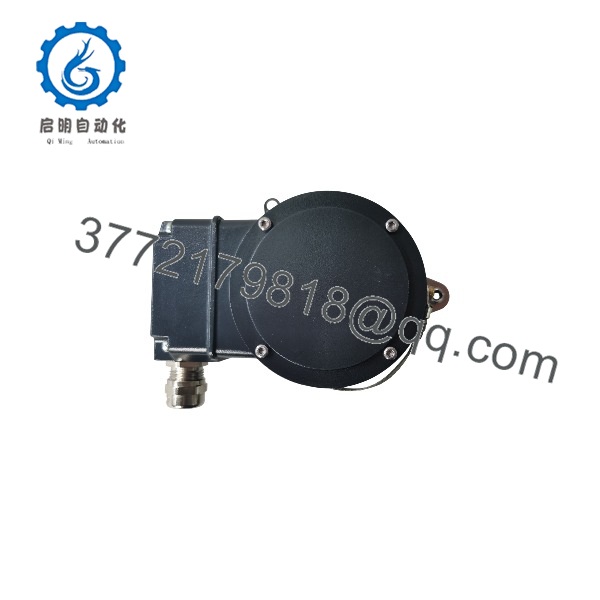
HOG10DN1024I
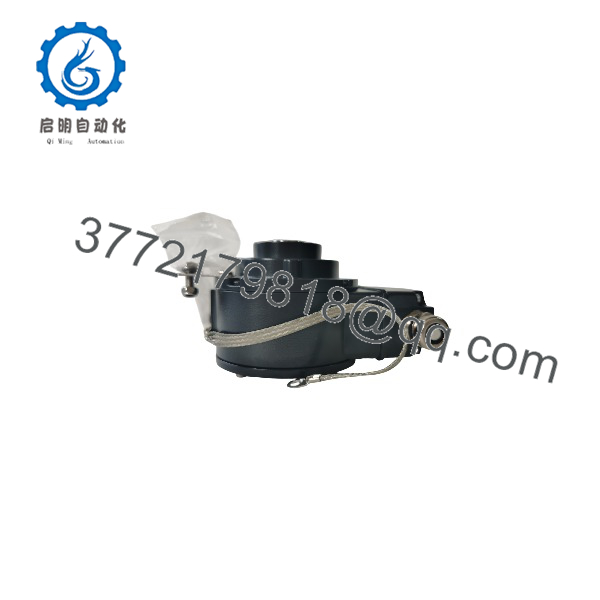
HOG10DN1024I
Troubleshooting Quick Reference
| Symptom | Possible Cause | Relevance to This Part | Quick Check Method | Recommendation |
|---|---|---|---|---|
| No encoder pulses | Missing 9–30 V DC supply, reversed polarity, or open cable | ✅ High | Measure supply voltage directly at the encoder terminals and verify polarity | Repair power or wiring before replacing the encoder |
| PLC or drive shows encoder loss | Damaged cable, incorrect terminal assignment, or failed output driver | ✅ High | Check K1, K2, and K0 signals with an oscilloscope or suitable HTL input tester | Compare the terminal assignment with the exact suffix datasheet |
| Position counts are reversed | Encoder rotation direction or K1/K2 wiring reversed | ✅ High | Monitor K1 and K2 phase sequence while turning the shaft in the defined positive direction | Correct channel assignment or reverse the configured direction |
| Counts are unstable | Electrical noise, poor shield grounding, loose terminal, or bearing movement | ✅ High | Inspect shield termination and trend K1/K2 with an oscilloscope at operating speed | Correct shielding, grounding, and mechanical mounting |
| Index pulse is missing | K0 wiring fault, incorrect input configuration, or damaged index output | ✅ High | Rotate the shaft slowly and verify one K0 pulse per revolution | Check K0 and K0-inverted terminals before replacing the encoder |
| Signal amplitude is too low | Supply drop, excessive cable length, overloaded input, or wrong output standard | ✅ High | Measure HTL high and low levels at the encoder and receiving input under load | Verify the receiver accepts HTL-P and keep the supply within 9–30 V DC |
| Encoder works at low speed but fails at high speed | Receiver bandwidth, cable quality, or output-frequency limit | ✅ High | Calculate pulse frequency and compare it with the 120 kHz output limit | Reduce speed, use the correct receiver, or select a suitable encoder |
| Mechanical vibration or runout | Incorrect shaft fit, excessive radial load, loose torque arm, or coupling misalignment | ✅ High | Check the 16 mm H7 fit, torque-arm mounting, shaft runout, and loads | Correct installation before replacing the encoder |
| Water or oil ingress | Damaged sealing, wrong LR/SR configuration, or cable-gland problem | ✅ High | Inspect the housing, terminal cover, gasket, and cable entry for contamination | Replace compromised seals and confirm the IP66 configuration |
| Encoder overheats | Ambient temperature above rating, motor heat transfer, or excessive friction | ✅ Possible | Measure housing temperature and inspect shaft alignment and bearing condition | Correct heat transfer and mechanical loading |
| Speed switch does not operate | Unit lacks FSL option, wrong threshold, or switch wiring fault | ❌ Low if standard encoder | Confirm the nameplate suffix; standard HOG10 DN 1024 I does not automatically include FSL | Order an FSL2 or FSL3 configuration if speed switching is required |
| Replacement cannot be mounted | Wrong suffix, shaft bore, terminal orientation, or flange arrangement | ✅ High | Compare the complete code, bore, flange, terminal position, and dimensions | Do not order from the base string alone |
Critical warning: Do not connect an HTL encoder to a 5 V TTL input or an incompatible line driver. Verify the receiver input voltage, termination, cable shield, K1/K2 phase relationship, and the complete Baumer suffix. If the fault remains, provide the encoder nameplate, terminal-cover photos, supply voltage, measured K1/K2/K0 waveforms, motor speed, and receiving-drive model.
Frequently Asked Questions (FAQ)
What is Baumer HOG10DN1024I?
It is the base designation for a Baumer HOG10 heavy-duty incremental encoder with 1,024 pulses per revolution and a 9–30 V DC HTL output configuration. The complete product code requires additional suffixes that define the mechanical and monitoring options.
What does 1024I mean?
“1024” identifies the pulse count per revolution. The “I” configuration uses a 9–30 V DC supply and HTL output circuitry. It does not, by itself, specify the shaft bore, terminal orientation, sealing option, or centrifugal speed switch.
Is HOG10DN1024I an HTL or TTL encoder?
The documented DN 1024 I configurations use an HTL-P power line driver. Confirm the receiving PLC, counter, or drive accepts HTL signals and the correct supply range before wiring.
What shaft size does it use?
Common DN 1024 I configurations use a 16 mm H7 blind hollow shaft, but the final suffix must be checked. Baumer lists different shaft and connection configurations within the family.
Does the encoder include a speed switch?
Not necessarily. Standard DN 1024 I configurations are encoder-only. The FSL3 version adds an integrated centrifugal speed switch, with a defined switching range and separate switch output.
What is the difference between SR and LR?
The suffix changes the mechanical configuration and sealing arrangement. Do not treat SR and LR as interchangeable without checking the complete dimensional drawing, terminal arrangement, shaft fit, and environmental requirements.
Can I run the encoder over a long cable?
The HTL-P output driver is specified for transmission lengths up to 350 m at 100 kHz under the stated conditions. Actual performance depends on cable type, shielding, grounding, receiver input, speed, and pulse frequency.
Is the unit new or refurbished?
The base model does not establish condition. State the actual status as New Original, New Surplus, or Refurbished (tested). A proper test record should include supply-current check, K1/K2 quadrature output, K0 index pulse, shaft rotation, bearing condition, insulation, terminal inspection, and any FSL speed-switch test.